When AI skills and human strengths work hand in hand
From streamlining workflows to improving decision-making, three professionals share how AI training at NTUC LearningHub is helping them navigate changing job demands.

Ms Chua Yeh Ming believes the value of AI lies in understanding where it can make a difference, not just how to use the tools. (Photos: NTUC LearningHub)

This audio is generated by an AI tool.


Presented by
While working in the hospitality sector as a leader in revenue strategy, Ms Chua Yeh Ming, 41, saw how artificial intelligence (AI) and automation tools were quickly reshaping operations. Keen to harness these tools, she enrolled in the Agentic AI for Business Process Workflow Automation course at NTUC LearningHub.
Now head of revenue and strategy in the education sector, Ms Chua has applied what she learnt to optimise enrolment workflows. By combining business process management principles with AI tools, she identified manual steps that could be automated. She also tapped on ChatGPT to support communication and content tasks, thus reducing turnaround time and improving efficiency.
At NTUC LearningHub, AI is treated as a language that learners can acquire. At the same time, human skills such as critical thinking, communication, collaboration, judgement and decision-making remain just as important. Together, these capabilities empower mid-career professionals like Ms Chua to adapt, take on new roles and deliver stronger outcomes.
SHARPENING DECISION-MAKING AND COMMUNICATION
The Agentic AI for Business Process Workflow Automation course offers a mix of theory and practical exposure to tools such as ChatGPT and Microsoft Power Automate, which helped Ms Chua connect concepts to real work scenarios. However, she emphasised that tools alone are not enough.
“The biggest value comes from knowing what to optimise, not just using the tools,” she said.
Beyond technical knowledge, the course strengthened her approach to problem-solving. “Learning how to break down processes, identify inefficiencies and apply automation tools helped me think more systematically,” she said.
Ms Chua also uses AI to refine the tone of her messaging, ensuring that her communications are clear and appropriately calibrated for different audiences.
A believer in continuous learning, Ms Chua plans to deepen her expertise in workflow automation and AI integration. “I hope to explore more advanced AI tools to drive efficiency and innovation in my organisation,” she added.
APPLYING AI AND JUDGEMENT TO SOLVE WORKPLACE CHALLENGES
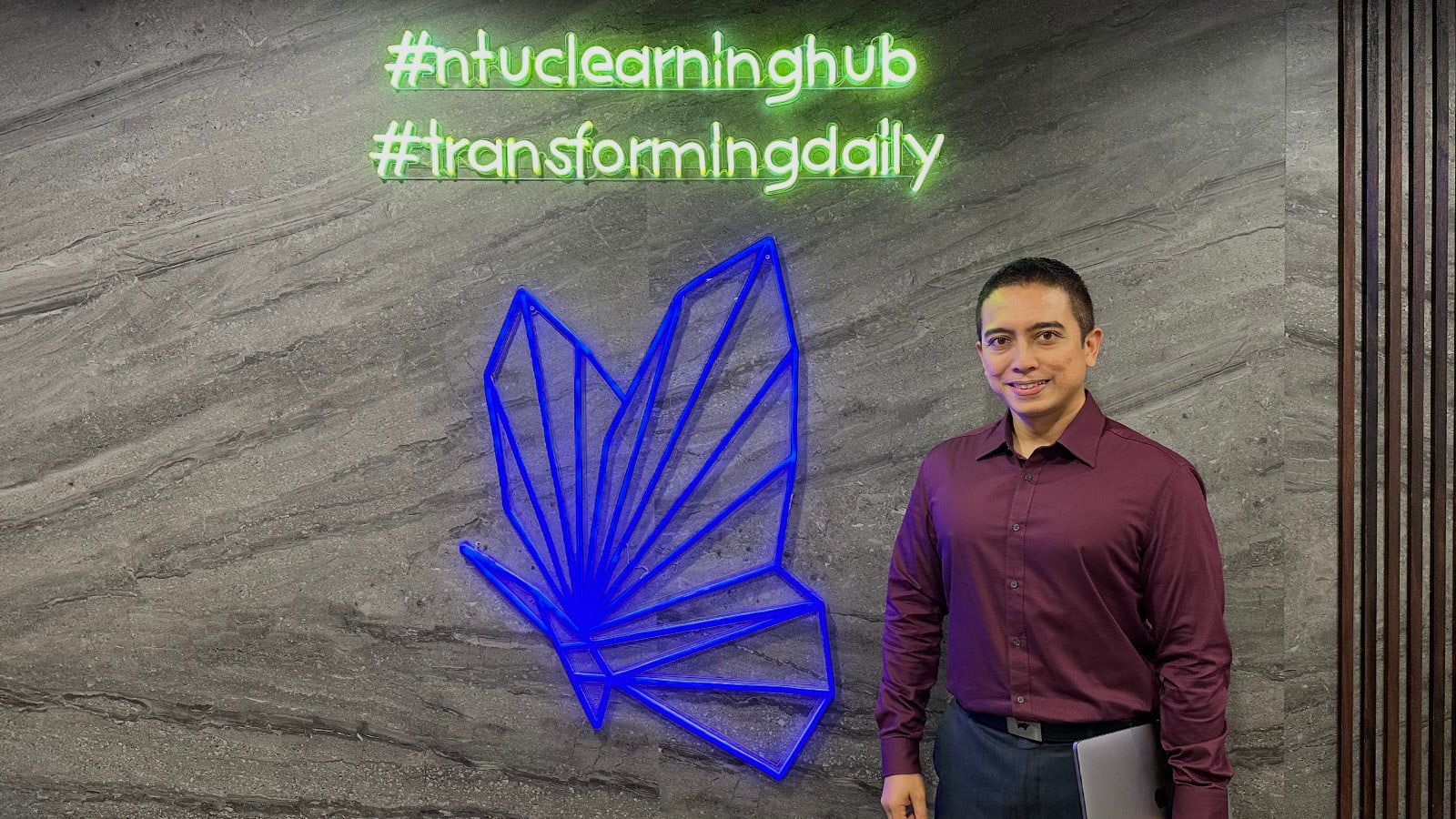
Like Ms Chua, Mr Muhammad Danial Fadzlon and Mr Gue Kit Wan also turned to upskilling to sharpen both their technical and human skills at work.
Using prompt techniques he picked up from the Generative AI Essentials and Tools for Business Professionals: ChatGPT, Media Synthesis, and Beyond course at NTUC LearningHub, Mr Danial was able to help a former colleague develop a process improvement proposal in just 10 minutes. “Saving him hours of frustration made me realise how AI can significantly improve productivity,” said the 41-year-old.
A senior operations manager in the logistics and marine sector, Mr Danial oversees daily operations, manpower coordination and workflows across land and sea support services. As AI adoption grows in his industry, he enrolled at NTUC LearningHub to build skills in using tools such as ChatGPT, Microsoft Copilot and Gemini to draft reports, analyse data and automate tasks.
Since completing the course, Mr Danial has applied these tools to support scenario planning and improve processes at work.
Faced with recurring delivery delays, he used ChatGPT and Copilot to consolidate information, analyse the causes and generate possible solutions. He then applied his critical thinking and judgement to assess which ideas were feasible, taking into account manpower, scheduling and operational constraints. To put the changes into practice, he drew on his communication and collaboration skills to explain the approach to his team and refine it based on their feedback. This combination of AI-enabled analysis and human decision-making led to a 15 per cent reduction in delivery delays, he said.
He added that learning alongside peers from sectors such as human resources, finance and retail enriched classroom discussions, while trainers shared real-world insights, reinforcing the value of collaboration and diverse perspectives.
Mr Danial, who plans to pursue further training in data analytics and supply chain AI, encourages others to start with courses that address workplace needs.
“Lifelong learning goes beyond formal education,” he said. “Short, practical courses can be just as effective in building resilience, curiosity and adaptability in a fast-changing economy.”
MOVING INTO HIGHER-VALUE WORK
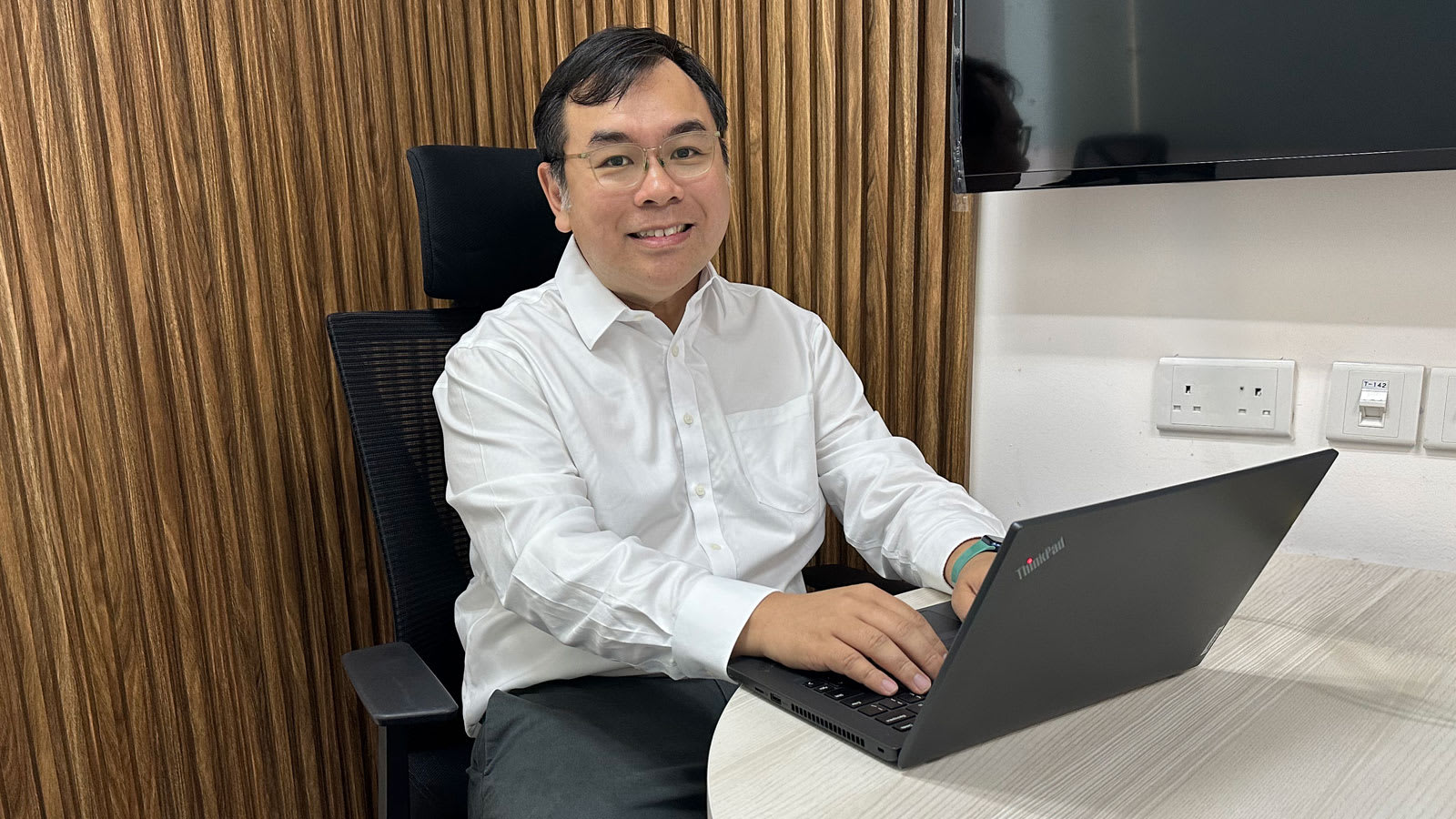
As a services coordinator in the infrastructure and built environment sector, Mr Gue, 43, spent much of his time summarising information, drafting reports and coordinating follow-ups. Recognising that AI could streamline these tasks, he enrolled in the Prompt Power: Elevate your Microsoft 365 Copilot Skills (SF) course at NTUC LearningHub.
The programme’s structured and hands-on approach helped him build confidence in using AI tools, even without a technical background.
Now in a role overseeing operations and stakeholder coordination, Mr Gue uses AI to turn information into structured drafts for reports and briefs. But he sees these drafts as a starting point rather than a finished product, applying his professional judgement to check for accuracy, decide what is relevant and refine the tone for the intended audience.
“This approach allows me to exercise judgement on complex issues, deciding what to keep or omit to improve clarity and focus,” he said. “It also shifts my workload from basic information processing to higher-level work, giving me more time for analysis and decision-making.”
While he previously viewed learning as a requirement, he now sees it as an ongoing process.
“I plan to continue building my AI capabilities to improve my work and contribute more effectively,” he said.
Looking to master both AI and human skills? Learn how you can at NTUC LearningHub.