'It’s like diving into coffee': Rescuers in Laos describe risky mission to free men trapped in cave
Cave diving experts warn of tight and dangerous conditions in the cave, including mud walls at risk of collapse and the potential for more flooding.
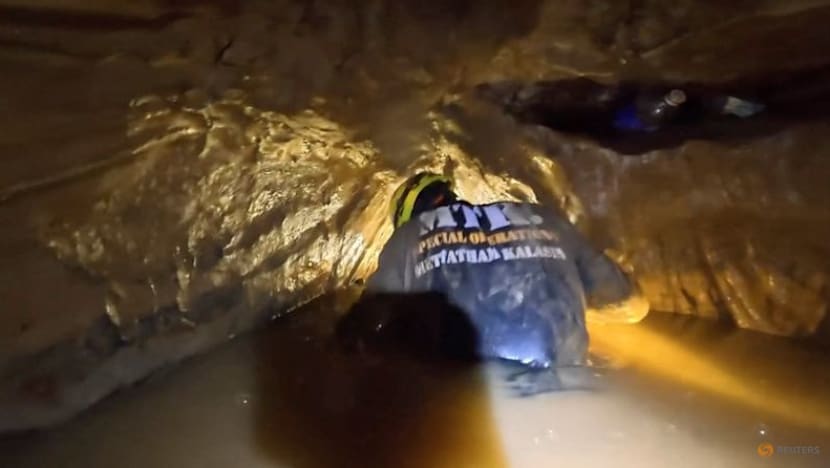
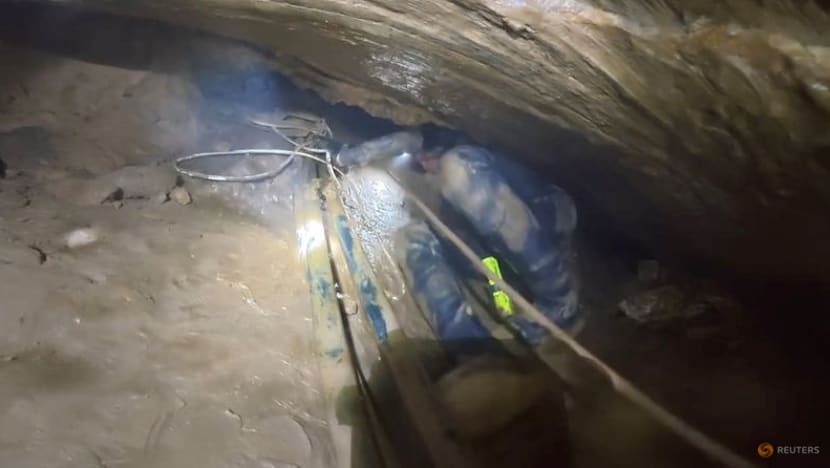
A member of a rescue team works to save people trapped in a cave, in Xaisomboun Province, Laos, on May 25, 2026. (Image: Reuters/Metta Tham Kalasin Rescue)
Rescue efforts are underway on Friday (May 29) to extract five men trapped in a cave in Laos, but cave diving experts warn of the significant risks involved.
The men had entered the cave in central Laos' Xaisomboun province last week in search of gold, but a landslide triggered by heavy rain blocked their exit, a local volunteer group and the state-run Lao Phattha News reported.
Seven people were initially said to be missing, but Thai-based Finnish cave diver Mikko Paasi, who was involved in locating the men, said the group of five said no one else was with them.
Paasi was part of the team in the dramatic rescue of a youth football team in Thailand in 2018.





Speaking to Australia’s ABC News, Paasi described finding the Laos group as an "emotional" and "overwhelming" moment.
"That was an emotional moment (when we found them), like what are the chances? We believed they were still alive, but the odds were quite low given everything," he said.
"Ascending to the final chamber where they were and seeing them sitting there all grey and all pale but in good spirits. They were very happy, there were tears, big smiles from both sides," he added.
"The feeling of not giving up, and succeeding … now we are one step closer to getting them back out to their families and kids. It was overwhelming."
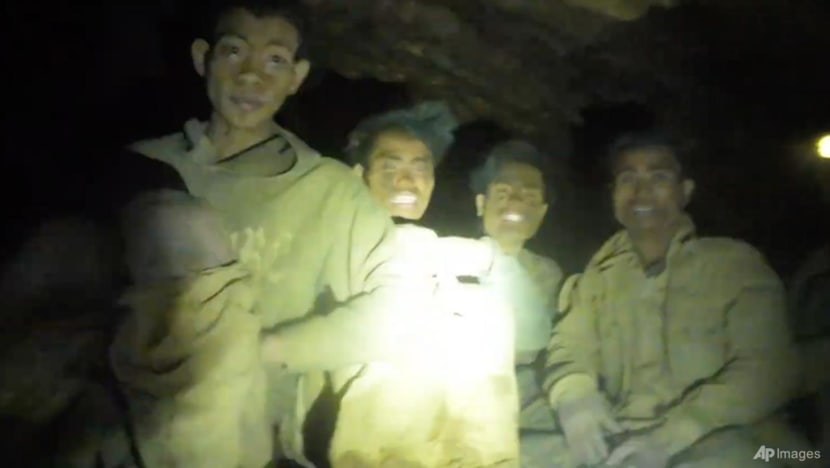
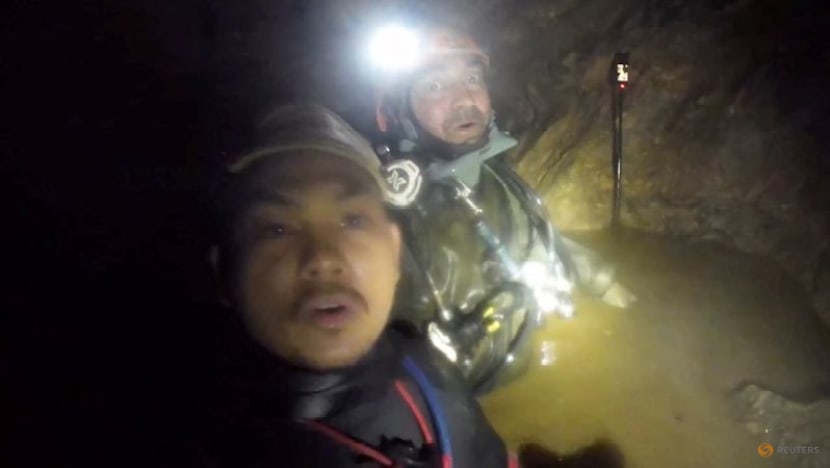
The group had prepared to remain inside the cave for several days due to the difficulty of entering and exiting, but were not equipped for a longer stay, Paasi added.
Since locating them, Paasi and Thai diver Norrased Palasing have returned to deliver food and water, pulling supplies through the labyrinthine cave system.
"IF CLAUSTROPHOBIA HAD A FORM"
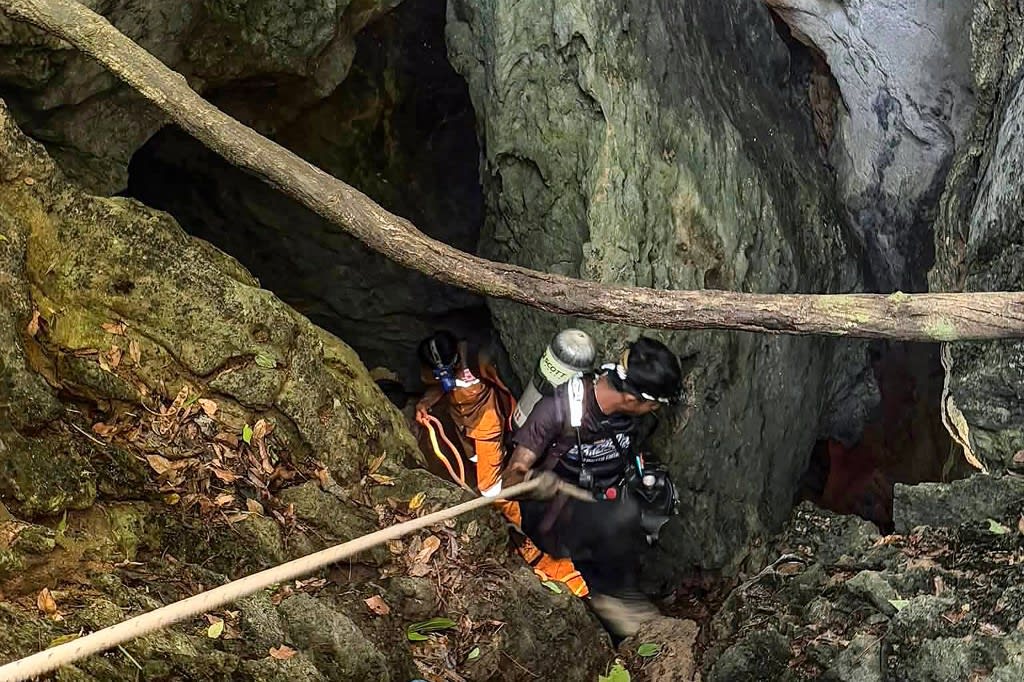
The cave passages are so narrow that divers have to be "slim", "hard-headed" and weigh "less than 70kg or 60kg" to navigate them, Paasi told ABC.
He said that the men are about 300m into the cave, with the final 30m flooded.
"If claustrophobia had a form, this would be it," Paasi said, describing how rescuers must "wriggle through like a worm" to get to the flooded chamber.
"Moving inside the tunnels - hundreds of metres of tunnels - is done by fingertips or toe-tips," he said.
"You take a tank in your hand and you reverse into a hole that you can barely fit your chest in.
"It's a really dangerous way of diving. If something happens, you are so deep in the ground, behind such long, tight tunnels, that you're pretty much on your own."
Australian diver Josh Richards, who will join rescue efforts in Laos when he lands on Friday morning, told Australian news outlet 7News that he was chosen because of his small build.
"Being included in this is really about having a strong connection with Mikko Paasi, the lead cave rescuer who’s out in Laos right now, and being kind of a small, wiggly guy who squeezes into small spaces," he said.
Richards is known in Australia for navigating deep and narrow underground caves in the Limestone Coast region.
Despite his experience, he told ABC that the cave the survivors are trapped in looked "scary as hell".
"I'm pretty scared, if I'm honest," he said. "The stuff that Mikko has shared via video should scare anybody who watches it."
A Malaysian cave diver has also joined the rescue operation. Additional divers from Japan, France, Indonesia and Thailand were expected to arrive on Friday.
Local villagers, rescue groups and logistics workers are also supporting the operation, with more than 20 people standing by at the cave entrance.
The most significant risk was the mud walls of the cave, Richards pointed out.
"It's all clay, it's all soft, it's all mud. There's not a lot holding the roof up. If you've seen the water that we're heading into, you can't see anything," he said.
"It’s like diving into coffee."
While comparisons have been drawn to the 2018 Thai cave rescue, Richards said the situations are "very different", noting the Laos cave is significantly smaller and tighter.
"The cave is significantly smaller than the one that the soccer team was rescued from in Thailand, not just in length, but actually in physical size," he told 7News.
“The actual diameter of the cave that we’re going into is a major factor in why I’m being incorporated and why other divers from around Southeast Asia are being incorporated as well.”
RAINY SEASON RISKS
Laos authorities are trying to pump water out of the cave to reduce risks, but a flooded section remains, Richards told 7News.
"At this stage it sounds like there’s still a significant sump of water that we’ll need to try and get people out through in order to get them out of the cave," he added.
The rainy season in Laos has just begun. Storms may quickly refill the cave.
Getting the men out while sections are flooded will prove extremely challenging, Paasi told ABC.
"We're waiting for the next weather forecast for this area, to see exactly what we're looking at and then we will have to make a decision according to the weather," he said.
"When it starts to rain, we're going to be in big trouble. The pumping systems are not that efficient."