Commentary: I survived Ebola. This is what scares me most about this outbreak
Much of the infrastructure to catch and contain Ebola outbreaks early has been dismantled over the past year, as the United States abdicated its role as leader in global health, says emergency doctor Craig Spencer for Bloomberg Opinion.
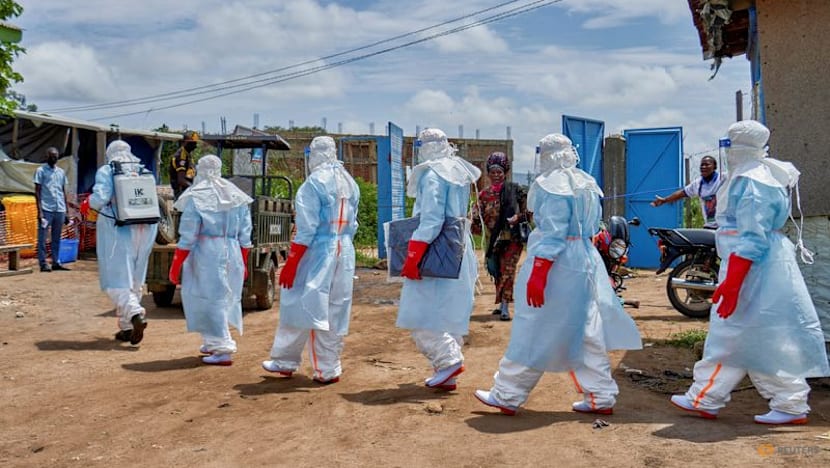
PROVIDENCE, Rhode Island: As soon as I heard about the Ebola outbreak in the Democratic Republic of Congo (DRC), I knew it was going to be catastrophic.
On Friday (May 22), the DRC reported 246 suspected cases. Most Ebola outbreaks end before they get that big. The same day, reports emerged that someone had died of Ebola hundreds of miles away in Kampala, Uganda’s most populous city. Less than a week after it was first declared, this is already the third-largest Ebola outbreak in history.
I’ve seen Ebola up close. I got it while treating patients in West Africa in 2014.
I know how destructive the disease can be - and how unprepared we are for its return.





After the 2014 outbreak, which killed over 11,000 people, the world strengthened systems to catch and contain Ebola outbreaks early. Much of that infrastructure - surveillance networks, rapid response teams and diplomatic partnerships - has been dismantled over the past year, as the United States abdicated its longstanding role as a leader in global health and humanitarian response.
Ebola is often called a disease of compassion because it finds its victims among the people who stay close when loved ones or their patients fall ill. This means parents taking care of their sick children, family members who wash the bodies of their dead relatives and healthcare providers who take care of patients at the most contagious stage of their illness.
When I was working in Guinea, I admitted seven members of one family into our Ebola treatment unit. Even as the parents battled Ebola, they spent all day taking care of their children. In the end, only the parents survived.
If the outbreak were caused by the more common Zaire strain of Ebola, we’d now be able to provide a recently developed vaccine to family members of infected patients and to healthcare workers. But we have no effective treatments or vaccines for the rare Bundibugyo strain of Ebola driving the current outbreak.
RESPONSE MEASURES
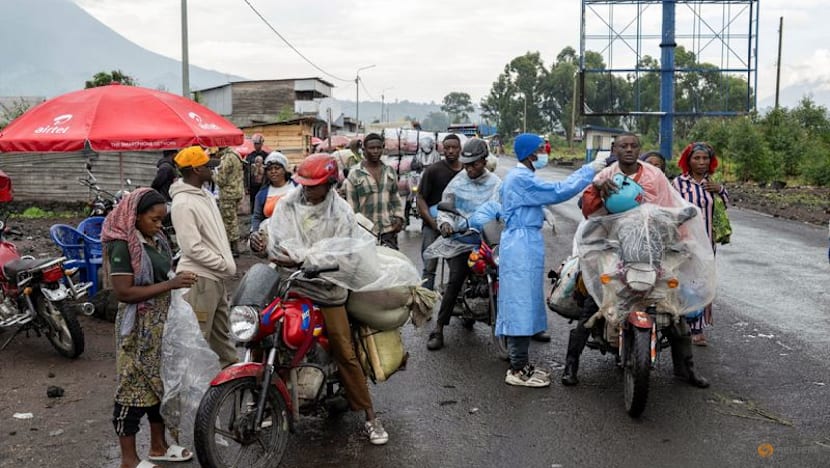
We’ll need to rely on bread-and-butter outbreak response measures, like contact tracing, isolation and community support. These are hard to carry out under ideal conditions.
And the eastern part of Congo, where this outbreak is concentrated, is anything but ideal. Armed conflict has forced millions from their homes and left many health facilities damaged or destroyed. An Ebola outbreak in the region in 2018 took nearly two years to contain.
This time around, we have far less capacity to respond. In the first weeks of the second Trump administration, Elon Musk gleefully boasted about feeding the United States Agency for International Development (USAID) into a “wood chipper”. The dismantling of US foreign aid left clinics, community health workers and humanitarian organisations that formed the backbone of healthcare across eastern Congo without crucial funding.
Slashed alongside the agency was a specialised rapid response team - dozens of experts, including people with direct Ebola response experience, trained and ready to deploy for exactly this kind of moment. During previous Ebola outbreaks, these teams would fund efforts to train communities on safer burial practices to limit spread from highly contagious corpses and set up airport screening to prevent symptomatic travelers from boarding planes.
At a Cabinet meeting weeks after his wood-chipper post, as an Ebola outbreak was developing in Uganda, Mr Musk sheepishly admitted that “one of the things we accidentally canceled, very briefly, was Ebola and Ebola prevention,” but assured everyone that the funding had been restored.
We’re already seeing the fallout of these cuts. The New York Times reported that the delay in detecting the virus stemmed in part from the fact that samples had been transported to a lab in Kinshasa at the wrong temperature, something USAID would have previously overseen. By the time US officials learned of the outbreak, it had been nearly a month since the first death.
CONSEQUENCES OF THE TRUMP ADMINISTRATION
In his first term, Mr Trump dissolved the National Security Council’s global health security team, put in place after the 2014 Ebola epidemic, and now, in his second term, he has hollowed out the White House’s Office of Pandemic Preparedness and Response Policy.
The Centers for Disease Control and Prevention (CDC) - which helps coordinate early response and contact tracing in a crisis like this - lost a quarter of its staff members in the past year and has had no permanent director for 15 of the last 16 months.
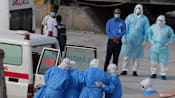

In 2015, after surviving Ebola, I returned to Guinea with Doctors Without Borders. I distinctly remember CDC and World Health Organization (WHO) colleagues working side by side, tracking the outbreak and chasing down new cases.
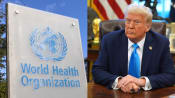
Such collaboration would be much more difficult today; ever since the Trump administration withdrew from the WHO, CDC staff members have been barred from working with the organisation.
The United States cannot quickly reverse our abdication of leadership on the global health stage. But we can bolster our response to this crisis.
There should be a steadfast commitment to working closely and coordinating with essential partners like the WHO. We need to mobilise funding and experts, speed up the development of new treatments, and increase resources for protective equipment and expanded testing.
I’ve responded to many outbreaks and conflicts, but treating Ebola patients was the hardest thing I’ve ever done. Ebola is a cruel and horrific disease. I’d often speak to patients in the morning and come back in the afternoon to find them dead.
In 2014, I treated two brothers, just 6 and 8 years old. After their mother died, their grandfather brought them to our treatment centre. When I first met them, they were rambunctious and relentlessly smiling. We found them toys to play with, and every day I encouraged them to eat, drink and rest.
Over the next week, both rapidly declined. I was in their room when they died.
Weeks later, when I was in the hospital with Ebola myself, I thought of them every day. And 12 years later, I still start crying as I think about losing them.
Craig Spencer is an emergency medicine physician and an associate professor at the Brown University School of Public Health, where he is an affiliated faculty member of the Pandemic Center. He is also a faculty fellow at the Watson School of International and Public Affairs. The article originally appeared in The New York Times.