Cartier owner Richemont beats luxury slowdown with strong jewellery sales
The Swiss luxury group behind Cartier and Van Cleef & Arpels outperformed rivals including LVMH and Kering as resilient demand for high-end jewellery helped offset weaker fashion sales and a tourism slowdown in the Middle East.
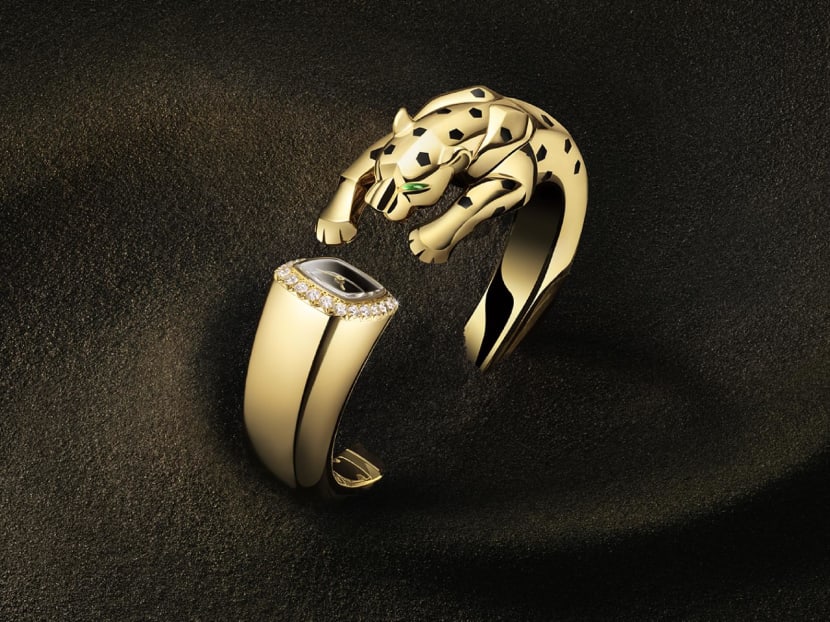
Panthere Bangle in yellow gold. (Photo: Cartier)

This audio is generated by an AI tool.
Richemont defied a broader luxury slowdown as demand for the Swiss luxury group’s high-end jewellery helped it shrug off a sales hit in the Middle East and outpace rivals including LVMH and Kering.
Fourth quarter sales beat expectations despite disruption resulting from the US and Israel’s war with Iran, as many luxury shoppers pivot from buying handbags and fashion to jewellery.
Sales at Cartier owner rose 13 per cent to €5.4 billion (US$6.28 billion; S$8.04 billion) at constant exchange rates in the three months to the end of March, ahead of analyst expectations, powered by jewellery sales that rose 16 per cent.
That offset a hit to Middle East and Africa sales, which fell 3 per cent in the fourth quarter on a like-for-like basis.
Chair Johann Rupert said the hit was largely due to a decline in tourist shopping in a region that had been one of luxury’s fastest-growing markets before the conflict.
“Tourism has dropped to zero,” Rupert told reporters, adding that local consumers were continuing to shop, especially in Abu Dhabi. “Until the tourists return I don’t think anyone can hope for a big uptick. It will come back, it always does.”
Operating profits for the year came in slightly below expectations at €4.5 billion, weighed down by €164 million in one-off costs, foreign exchange movements and higher raw material costs at a time when gold prices remain elevated.
The one-off costs were linked to asset impairments and a writedown related to the sale of watch brand Baume & Mercier.
Richemont has consistently outperformed the wider luxury sector in recent quarters as its leading jewellery businesses flourish while demand for soft luxury — bags, shoes and fashion — comes under strain.
LVMH revenues rose 1 per cent in its most recent quarter while Kering’s were flat as sales of the fashion and accessories that form the backbone of their businesses remained weak.
Richemont sales in every region except Europe and the Middle East were up by double-digit percentages, led by the US. Revenues in Europe ticked up 5 per cent.
“Richemont closes a volatile and generally downbeat luxury reporting season with standout fourth-quarter sales performance and slight foreign exchange-driven profit miss,” wrote Thomas Chauvet at Citigroup. “Richemont is, in our view, a fundamentally stronger business than in the past.”
Sales in the group’s watchmaking division rose 2 per cent at constant rates, showing “some encouraging signs after a challenging 24-month period for the watch market”, Rupert said, supported by growth outside China.
He added that the company had not yet decided whether it would pursue tariff refunds from the US after elevated levies on Swiss exports by the Trump administration were struck down by a wide-ranging Supreme Court order. That exposure totalled about €300 million for Richemont, executives said.
Adrienne Klasa © 2026 The Financial Times.
This article originally appeared in The Financial Times.