87,000 beneficiaries received S$130 million under ComCare in FY2015
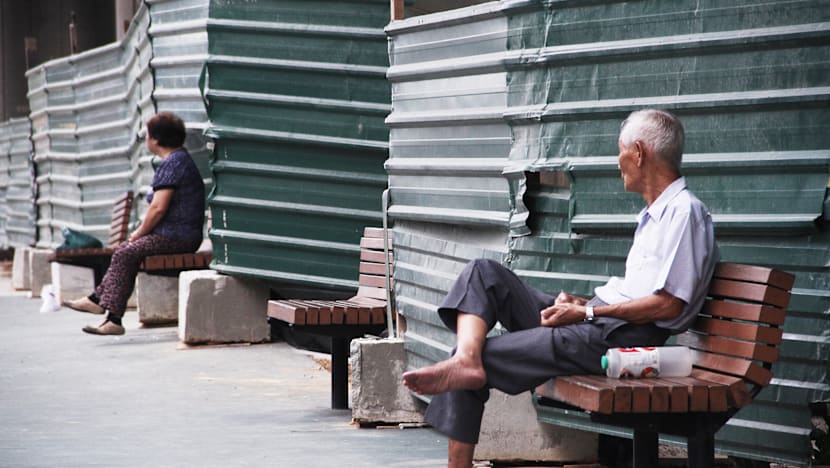
TODAY file photo


SINGAPORE — Government aid given out under various ComCare schemes in financial year (FY) 2015 jumped 10 per cent from the year before, to reach a new high of S$130 million, said the Ministry of Social and Family Development (MSF).
About 87,000 beneficiaries received help from ComCare, the Community Care Endowment Fund that has been set up by the Government to address the socio-economic needs of needy Singaporeans and their families, between April last year and March this year, the MSF said in its ComCare Annual Report and Trends Report released on Friday (Dec 9).
The majority of households on ComCare received help under the Short-to-Medium Term Assistance (SMTA) scheme, with 29,511 households seeking help, compared with 27,461 households in FY2014.
This group comprises low-income families and individuals, such as those temporarily unable to work due to illnesses, or those unemployed and in need financial support while they look for a job.





The report noted that a growing number of households on SMTA were headed by older persons aged between 55 and 64 years, with the number rising from 18 per cent in FY2012 to 22 per cent in FY2015.
Apart from the SMTA, there is the Long-Term Assistance scheme to help those who cannot work due to old age, illness or disability, and have limited income and little family support.
The number of households under such long-term aid increased by 10 per cent to 4,248 households, from 3,846 in FY2014.
Meanwhile, more children were getting help via the Student Care Fee Assistance (SCFA). It provided aid to 9,605 children in FY2015, compared with 8,339 in the previous year.
The MSF said the increase was likely due to the expansion of student- care centre places, and its move to raise the household monthly income eligibility level for SCFA from S$3,500 to S$4,000 in January this year.
The report also noted that the overall number of unique households and beneficiaries getting help from ComCare had increased from FY2011 to FY2015, which the MSF attributed to “policy enhancements and greater accessibility to help, in the context of economic changes”.
Separately, an MSF report on the profiles and trends of households assisted under ComCare between FY2012 and FY2015 showed that the profiles of those on long-term assistance and SMTA remained broadly similar.
About half of the households on SMTA had their main applicants aged between 45 and 64, with secondary level education or below, and about half of them were employed or seeking employment.
As for those on long-term assistance, they comprised mainly elderly one-person households who were aged 65 years and above, with education at primary level or below, and 70 per cent of these households lived in one- to two-room HDB flats.
Commenting on the trends, Minister for Social and Family Development Tan Chuan-Jin noted that Singapore is seeing more households with older persons or retirees requiring social assistance.
“This could reflect the realities of shrinking family sizes and an ageing population. While the proportion of unemployed ComCare applicants has remained stable, MSF will continue to monitor the situation and work closely with community partners to provide help to these families,” he said.
Associate Professor Irene Ng, from the National University of Singapore’s Department of Social Work, said the increase in ComCare financial assistance was “a needful response” to the trend of real-wage stagnation faced by lower-wage workers in the last two decades.
She added that while Singapore’s spending on social welfare is “low”, when compared on an international basis, and there is “room to increase further”, such financial assistance is only a short-term solution.
“As a society, we must tackle the root reasons why low-income families need help.
“These include uplifting wages and enhancing job conditions so that families have enough and ensuring affordability to necessary services such as healthcare, childcare, eldercare, housing, educational resources,” Assoc Prof Ng said.
SIM University senior lecturer Walter Theseira felt that beyond ComCare, it is also important to look at other policies to help the recipients overcome the personal challenges they are facing, so they can “stand on their own feet”.
“The budget devoted to more general types of social assistance — including Workfare Income Supplement, Silver Support, Pioneer Generation Package, and housing subsidies — is far greater than the ComCare budget ... So, a holistic look at how Singapore is helping low-income citizens requires looking far beyond ComCare,” he added.