Alcohol, gambling problems tackled in the heartlands
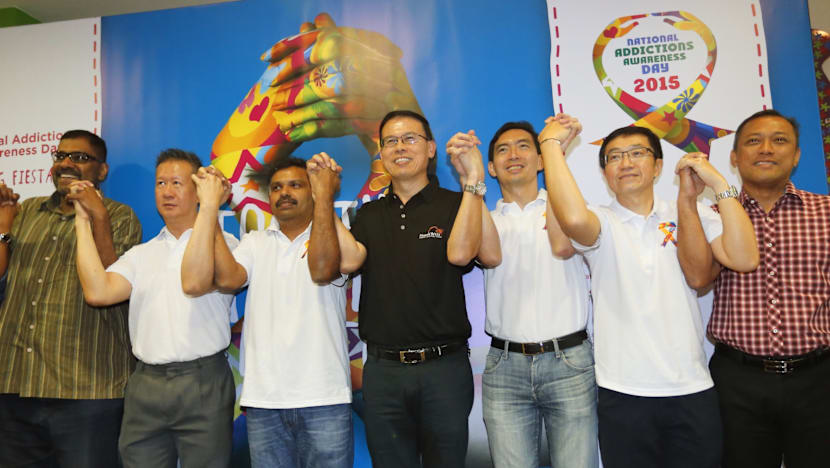
Mayor Dr Teo Ho Pin (in black) and Dr Christopher Cheok (right of Dr Teo) show their support at the launch of the National Addictions Management Service’s education arm on Nov 22, 2015. Photo: Ernest Chua


SINGAPORE — Mental health professionals have gone into the community and the heartlands to make addiction treatment more accessible, and one recent initiative includes a joint collaboration between the National Addictions Management Service (NAMS) and the Credit Counselling Singapore (CCS).
Since August, clients who have indicated gambling or other forms of addiction as a factor in their financial debts will see their CCS counsellor for advice, with a NAMS counsellor stationed on-site once a week to see them for free after their sessions on the same day.
“What I do is to find out more about the extent of their addiction, and educate (them) about how gambling has contributed to their financial debts and affected their life,” said NAMS senior counsellor Eliza Yong.
Clients are encouraged to go to NAMS for follow-ups. People tend to focus more on their debts and not seek treatment for addiction, so it is an opportunity for NAMS to plant the seed that gambling is a contributing force, added a spokesperson.





Since the end of last month, about 48 clients have attended such sessions, most of whom are men. Besides gambling issues, Ms Yong also sees some with gaming and alcohol addiction. About four people have made follow-up appointments so far, she added.
NAMS also started a partnership with Club HEAL in September as part of its efforts to develop community-based addiction care in Bukit Batok.
Similarly, a NAMS counsellor goes down weekly to provide community-level care and help assess cases, especially for individuals who might be ashamed to come forward for help, said a NAMS spokesperson. “Recovery from addictions is a complex process involving the individual’s determination to want to get well, treatment and counselling from medical professionals,” said NAMS Medical Board vice-chairman Christopher Cheok.
“Positive support and care from the family, employers, colleagues and friends are also important. It takes many hands to keep the individual on track and work towards recovery.”