Amid global uncertainty, S’pore set to look closer to home for growth
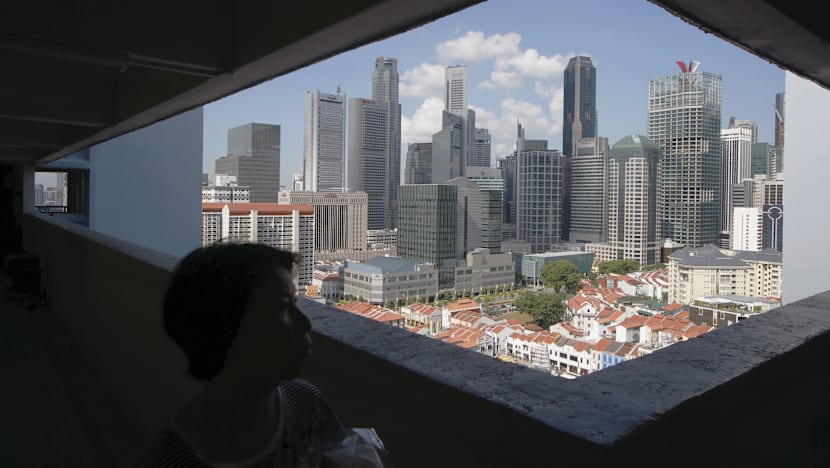
A woman passes the skyline of the Central Business District, in a public housing estate in Singapore. Reuters file photo


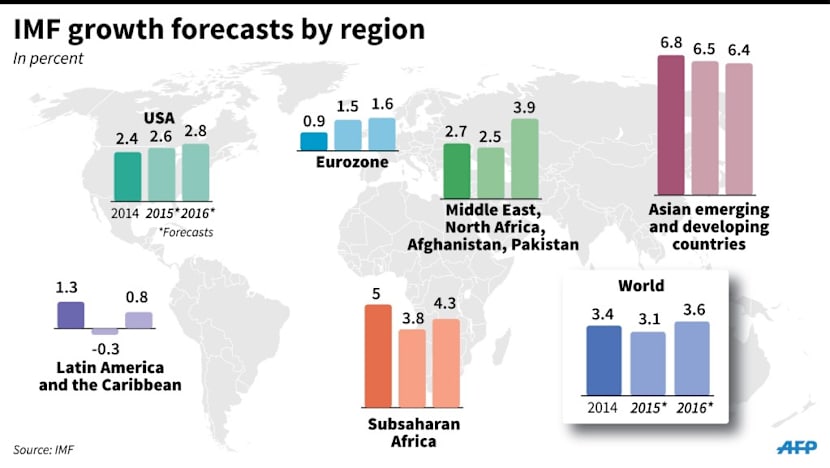
Given China’s stuttering economy and the United States struggling to get out of first gear, Singapore will need to look closer to home for drivers of growth next year while it repositions itself for longer-term prosperity.
This was the consensus among the experts interviewed by TODAY. They added that export-oriented sectors will bear the brunt of the weak global economic environment, and the Republic will have to lean on its services segment for the time being, even as it strives to increase productivity and innovation in order to maintain its competitive advantage.
The soon-to-be-established ASEAN Economic Community (AEC) will provide ample opportunities, and companies should look to cash in on the country’s thriving backyard, the experts said.
Noting that Singapore’s open economy will continue to be affected by the volatile external environment, UOB economist Francis Tan said: “The shift towards innovation, upskilling workers, improving productivity if done appropriately can allow the local economy to cope with the current headwinds.”





Credit Suisse economist Michael Wan stressed the need for Singapore to enhance its services sector by, for example, focusing on the tradeable segments such as finance and insurance, as well as information and communications. “Over time, as technology improves, what was non-tradeable services might eventually become tradable too,” he said.
Mr Tan added: “Take credit cards in Myanmar for example, we can (develop) our services there as the local banks may not have the technology to provide these services. Singapore, in this regard, is still way ahead compared with our neighbours, however we must constantly be on our toes and not rest on our laurels.”
The Government has formed a high-powered committee to chart the way forward for the Republic’s economy. The committee has identified five areas that will be crucial to economic development in the coming years: Future growth industries and markets, corporate capabilities and innovation, jobs and skills, urban development and infrastructure, as well as connectivity.
Some experts have touted “servitisation” — a concept that involves firms developing the capabilities to provide services and solutions that supplement their traditional product offerings — as the future of manufacturing. The economists interviewed suggested that, in the meantime, more could be done to enhance this aspect of the economy by getting manufacturers to deliver a service component in tandem with their traditional product — for example, by adding services to products or even replacing a product with a service.
ANZ Research economist Ng Weiwen said the integration of manufacturing and services could be done both upstream — in terms of design, research and development — as well as downstream (after-sales support).
Mr Tan pointed to the example of Infineon, a company that conducts testing of chips instead of just manufacturing them. “We could expect manufacturing’s gradual shift to a hybrid of manufacturing services,” he said, adding that manufacturing remains an important sector, despite being in the doldrums.
“Almost every sector requires and benefits from manufacturing. For example, when exporting manufactured goods overseas, we require legal services such as (the protection of) intellectual property, we also
require warehouse spaces to store these goods.”
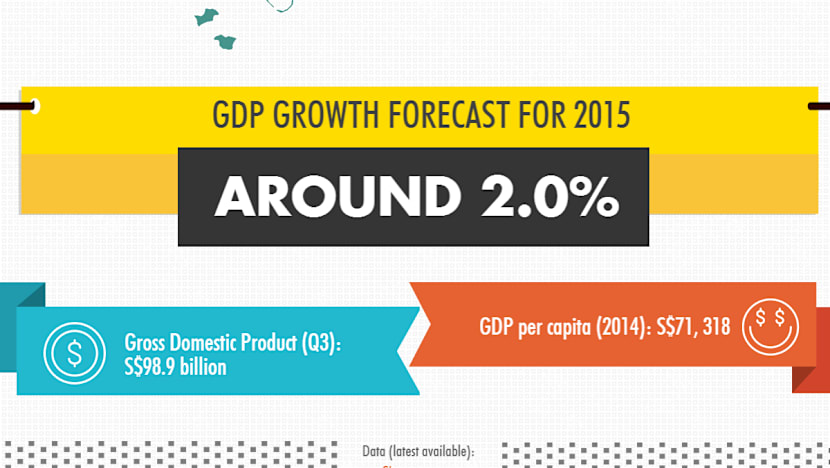
The manufacturing sector and non-oil domestic exports (NODX) have been hit by the weak external demand.
Last month, the Ministry of Trade and Industry (MTI) narrowed its growth forecast for Singapore this year to “close to 2 per cent”, compared with its earlier forecast of an expansion of between 2 and 2.5 per cent. For next year, the MTI expects Singapore’s economy to expand at a “modest pace” of between 1 and 3 per cent. Mr Charles Phua, who is the president of the Association for Public Affairs at the Lee Kuan Yew School of Public Policy, said the Republic must “design and engineer a competitive advantage”.
“The Government and people need to decide whether we anticipate emerging trends and focus on our niche areas and endowments, or we diversify broadly and hedge our bets,” he said.
CHANGING THE PRODUCTIVITY CONVERSATION
In recent years, the Government has made a determined push to raise productivity — putting its money where its mouth is by investing huge sums in various initiatives — with various leaders stressing the importance of doing so, amid the restructuring of an economy striving to become more manpower-lean for the future. The efforts, however, have yet to fully bear fruit, as experts pointed out that a mindset change cannot be achieved overnight.
CIMB Private Banking economist Song Seng Wun said that in general, commitment was still lacking from businesses. “It really depends on each company. The top management must ask itself: Does it want to survive amid an increasingly competitive environment?” said Mr Song.
Singapore Management University law don Eugene Tan called for a shift away from a simplistic, “numbers-oriented” understanding of productivity. For instance, the number of hours worked is often seen as a proxy for productivity, but long work hours may in fact reduce creativity and job satisfaction, he said.
“Changing (such) mindsets will be the perennial challenge. Getting out of the straitjacket of formal targets is crucial … Measures for value-add should also consider people outcomes, how we motivate employees,” he said.
Mr Song also pointed out the need to focus on human capital — specifically, making workers happy. “The Government was very pro-business in the last 50 years … It now has to look at the nuts and bolts, such as how to motivate workers. Better-paid workers are usually happier and more creative,” he said.
Singapore companies foresee a challenging year ahead, but say the show must still go on. “We acknowledge that the Singapore market in the year ahead will be tough. At the same time, the entire industry is tough and competitive, with no new segments of growth,” said Mr Charles Tan, executive director of construction company Sunray Woodcraft.
“In such times, looking beyond our shores and upgrading our technology/capability is one of the key strategies for our company. We are also looking to diversify our model, however, just like the global market, the local market has a strain in talent and it will be an upward hill climb to find the right people in this non-sexy but essential industry.”
Managing director of food catering company Purple Sage Group, Alan Tan, also expects tougher business conditions in 2016, citing a slowdown in economy and fewer events after the end of SG50.
“The Singapore Government can continue to help us with their ongoing support on productivity grants and create a vibrant economy through tourism,” he said.
GUARDING AGAINST HEADWINDS
Jobs growth in Singapore hit a six-year low in the first nine months of this year, with unemployment rising marginally for citizens and permanent residents, reflecting a cautious hiring sentiment amid a tougher external environment and economic restructuring at home.
Going forward, multiple headwinds will continue, including a slowdown of China’s economy, the US Federal Reserve’s interest rate hike — resulting in a weaker Singapore currency compared with the greenback — and a shrinking NODX.
Domestically, the biggest risks for Singapore will be the ongoing trade slump, rising corporate debt levels and the moderating labour growth.
“The risk of the trade recession morphing into a more generalised growth recession will be the principal risk for 2016, though that is not in our base case scenario at this juncture,” said ANZ economist Ng. He cautioned that Singapore could be dragged into a recession by companies’ poor balance sheets.
“With revenues in US dollar terms remaining muted amid the ongoing trade recession, debt servicing costs denominated in rising foreign currency could necessitate balance sheet adjustments in the Singapore corporate sector, which will subsequently lead to reductions in capital expenditure, operating expenditures and employment,” he said.
He noted that, in recent years, firms’ overall level of leverage has risen significantly.
“Depreciating local currency against the US dollar, combined with Fed rate hikes, will hence increase the debt servicing burden of corporates substantially,” Mr Ng added.
Nevertheless, a recovering US economy — and a stronger US dollar — could provide some respite to Singapore’s domestic economy further down the road. Mr Tan of UOB noted that Singapore’s exports will become relatively cheaper should the US dollar continue to strengthen in the first six months of next year.
In the shorter term, the AEC —which will be formally established on Thursday — could provide a boost to the Republic.
Mr Ng said: “We expect ASEAN to take China’s place as the world’s manufacturing centre within the next decade, especially with the advent of the AEC. Singapore is uniquely positioned as a centre of trade, investment and high value-add manufacturing but (it) will need to work hard to maintain its competitiveness.
“Specifically, Singapore needs to be ready for more competition from the Mekong economies as they climb up the value chain and will need to carve out new niches in order to maintain economic competitiveness.”
HSBC economist Joseph Incalcaterra noted that Singapore companies are prepared to take advantage of the formation of the AEC.
He felt that Singapore stands to benefit the most, with the removal of trade restrictions and barriers in the region allowing the Republic’s companies to venture out. Mr Incalcaterra said: “With the setup of production bases overseas, Singapore investors and the government can take advantage of the land in Johor and Indonesia, and also tackle the labour and land constraints here.” ADDITIONAL REPORTING BY KELLY NG