Amid heightened threats, 1 in 10 Bills passed related to security and defence
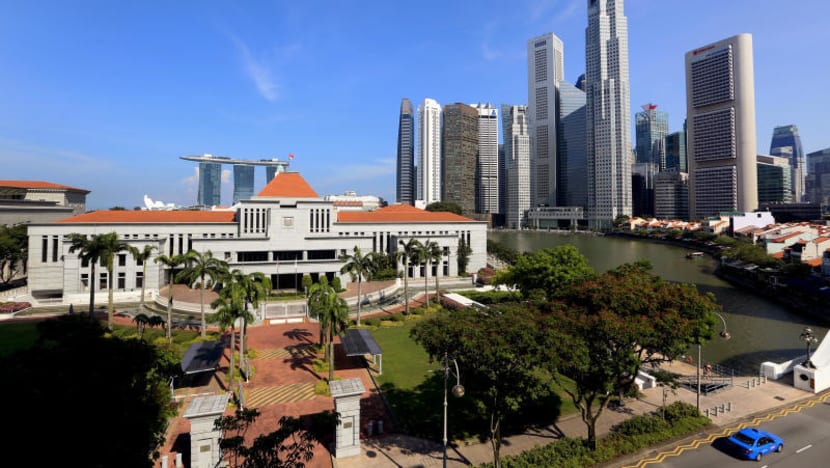
Since the 13th Parliament session opened in January 2016, the House has passed 108 Bills that dealt with security challenges, the criminal justice system and the environment, among other things.


SINGAPORE — It has been a busy first half of the 13th Parliament: Since the session opened in January 2016, the House has passed a total of 108 Bills on areas ranging from security challenges and the criminal justice system to the environment, among other things.
The figure was more than a fifth higher than the 89 Bills passed in the first half of the 12th Parliament, and a shade lower than the 111 Bills passed by the 11th Parliament before it took a mid-term break.
Political observers said the quantity and range of Bills passed in the first half of the Government’s current term reflected the increasingly complex society and policy landscape, as well as the global threat of terror.
For instance, almost one in 10 of the Bills were related to national security and defence. These included the Public Order and Safety (Special Powers) Bill, which grants the police wide-ranging new powers to act during major security incidents, and the landmark Cybersecurity Bill that sought to fortify Singapore’s essential services against cyberattacks. Other examples were the Infrastructure Protection Bill and the Terrorism (Suppression of Misuse of Radioactive Material) Bill.





As with countries around the world, Singapore faces heightened security issues today, noted former People’s Action Party Member of Parliament (MP) Inderjit Singh.
“Whether it is something related to terrorist attacks or cyber security, governments have to react a lot faster than the past. Especially in the area of cyber security, we have already seen cyber-attacks on our public institutions and universities,” he added.
Nonetheless, Mr Singh said the raft of new laws to beef up security has led to concerns among some sections of society that they give greater power to the authorities.
While he did not think the laws were overbearing, the Government has to be vigilant to ensure appropriate use of the powers, said Mr Singh.
Singapore Management University law don Eugene Tan added that much depends on how these laws are enforced as and when the need arises. “Public perception matters and if the laws are seen as unnecessarily draconian, that could affect the legitimacy of those laws,” he added.
Bills were also passed to create new public agencies, which Nanyang Technological University Assistant Professor Woo Jun Jie said reflected efforts by the Government to address policy complexities. These Bills included one that merged International Enterprise Singapore and Spring Singapore into Enterprise Singapore, as well as the SkillsFuture Singapore Agency Bill.
Dr Felix Tan, an associate lecturer at SIM Global Education, noted that there were also several Bills related to the economy and finance which are also of national concerns.
Apart from the regular Supply and Supplementary Supply Bills that cover the expenditure of the public service, there were amendments to the Economic Expansion Incentives Act that extends the tax relief period for foreign firms to set up substantive operations here, and changes to the Monetary Authority of Singapore Act which allows the regulator to resolve distressed financial institutions.
Apart from the Bills, Assoc Prof Tan noted the ministerial statements delivered during the first half of the 13th Parliament. These showed that the Government recognises the need to be accountable and explain its decision on topical matters.
They include statements on the death of 14-year-old Benjamin Lim, the alleged abuse of power surrounding the 38 Oxley Road saga and on the criminal reference on the City Harvest Church court case.
“It’s a signal by the Government that they are taking a matter seriously enough and they are putting out this statement which represents their position or what they plan to do on that matter. That sets the stage for MPs to debate,” added Assoc Prof Tan.