An anchor for generations to come
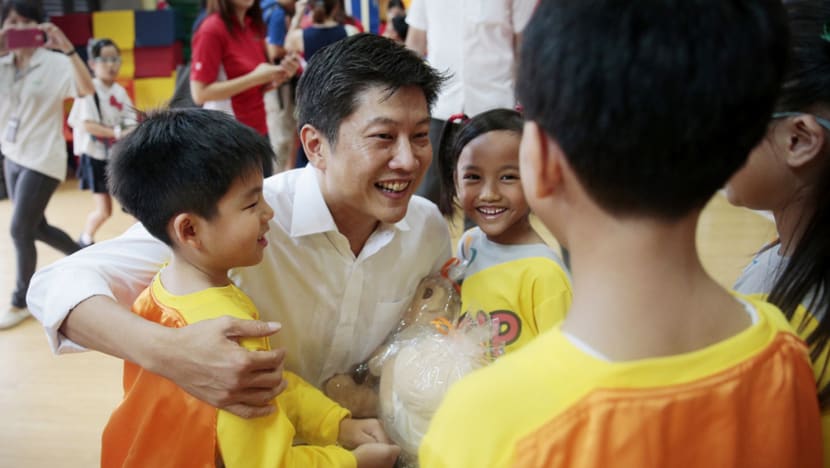
Acting Education Minister Ng Chee Meng at Frontier Primary School last October. Mr Ng said Singapore is changing, and policies will have to shift accordingly. Photo: Jason Quah


The next generation of Singaporeans will have to decide whether they want to hold on to the values and principles that the late Mr Lee Kuan Yew cherished, such as meritocracy and clean government, but Acting Minister for Education (Schools) Ng Chee Meng is confident that they will be able to make the right call.
In an interview with TODAY to mark the death of the late founding Prime Minister on March 23 last year at the age of 91, Mr Ng acknowledged that society is changing, bringing with it an increasing range of voices clamouring to be heard.
However, he added that his experience in helming the organising committee for Mr Lee’s State Funeral showed him that Singaporeans would be able to rally together for the good of the country when the need arises. “When we come to it, we will have the wherewithal. I have the confidence in that in our young people.”
When asked about the values held dear by Mr Lee, and whether Mr Ng is worried that the younger generation will no longer hold on to them as society changes, he pointed to the late leader’s “context-independent” principles, such as clean government and meritocracy.





He said Mr Lee and the other founding fathers had put in place these values to promote harmony and peace in a multiracial and multi-religious society. Such principles have also helped to ensure equal opportunities for all Singaporeans.
And along with the diversity in today’s Singapore society — proving the importance of these fundamental values — “Mr Lee was really ahead of his time”, Mr Ng added.
He believes that many Singaporeans will cherish these principles as they will provide people with an equal opportunity to succeed in life, among other benefits.
Even bilingualism, which was strongly backed by Mr Lee but might have been challenging for some, has proven to be right along with the rise of China, Mr Ng said.
Nevertheless, he agrees that Singapore is changing and policies have to shift along with society’s needs.
The nation’s fourth-generation leaders, in today’s “collaborative leadership”, will have to be far-sighted and convince the majority that their policy decisions will set the right direction for Singapore.
At the same time, the Government will have to be flexible and adapt to change, Mr Ng added, as he drew an analogy with last year’s State Funeral to illustrate his point.
As its chief organiser, Mr Ng had to make decisions on the go, such as extending the hours for people to pay their respects during Mr Lee’s lying-in-state at Parliament House, as the turnout was larger than expected.
Based on planning parameters of past state funerals, the planning committee had catered for three times more than the numbers expected, the former Chief of Defence Force said. However, the number of people paying their final respects to Mr Lee was “way off the charts”.
Thus, he said, even if policies have been planned, there will be a need to assess and change.
“If things are off, admit that you are wrong, if need be, say sorry. We plan and set the assumptions, but if need be, let’s try again,” said Mr Ng.
This was also the case with Mr Lee, who made several adjustments along the way, such as proposing the Elected Presidency and Non-Constituency Member of Parliament schemes during his time.
“(Mr Lee) had done it (assessing and making adjustments) very well, but without losing sight of what are the fundamental principles that will keep Singapore successful,” said Mr Ng.
The current generation of leaders will have to maintain the trust between the Government and the people, and ensure that Singaporeans remain at the heart of all policies, which are the legacies left behind by the founding fathers.
Singaporeans will then be able to assess and come to their own reasonable conclusions, Mr Ng added.
And while the Government will do its part to pass on Mr Lee’s values through education in schools and future policies, Mr Ng stressed that it is for Singaporeans to decide whether his principles are worth holding on to.
“They will be able to judge for themselves what would be the best way forward for Singapore,” he said, as he recalled some of the scenes he saw during Mr Lee’s lying-in-state.
These included Singaporeans waiting patiently in the sun, with queues snaking out all the way from Parliament House to Hong Lim Park; the elderly bowing at Mr Lee’s coffin; and five sisters coming in the early morning to pay their respects.
“We are not very expressive people, day to day, we have our gripes ... (but when) it came to what mattered ... it comes back to the unity of people. This is something that I really cherish,” Mr Ng said.
He drew a parallel between the State Funeral and the aftermath of the nuclear reactor meltdown in Fukushima, Japan, in March 2011, when Japanese rallied behind their affected countrymen.
“I think Singapore will evolve again but I think this (the State Funeral) is really one anchor of our history that will actually guide quite a few generations ahead,” Mr Ng said.
Harking back at the question about whether he is concerned that younger Singaporeans may not hold on to Mr Lee’s principles, Mr Ng said: “Let me put it the other way around. I am confident that the younger generation, having lived through this period, having seen this (the State Funeral), and given the values system we have in Singapore, given the education, I think they will be able to make the right decisions and calls”.