ASEAN must move on from its ‘ad hoc’ ways and develop a legal culture: Walter Woon
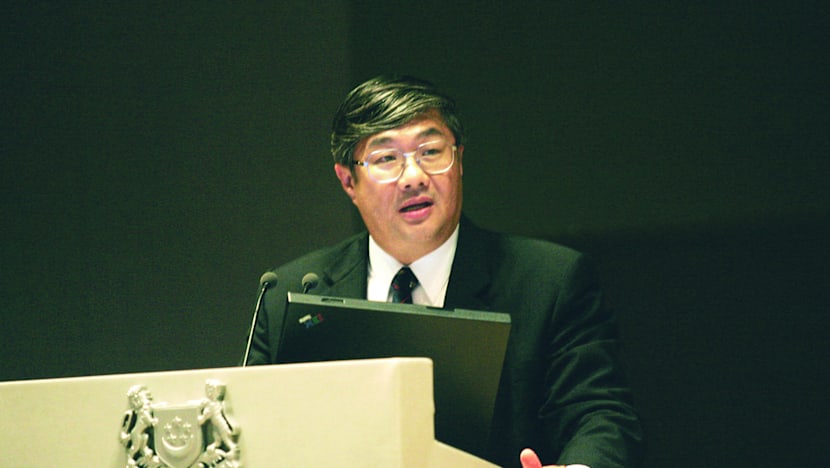
Former Attorney-General Walter Woon spoke at a public lecture at the National University of Singapore on Nov 13, 2015. TODAY file photo


SINGAPORE — As busy as the Association of Southeast Asian Nations (ASEAN) may be with making and drafting declarations, it falls short when it comes to fulfilling them, and the rule of law remains overshadowed by politicking in the region, said former Attorney-General Walter Woon at a public lecture at the National University of Singapore (NUS) yesterday (Nov 13).
When disputes arise, they are more likely to be guided by political whim, national interests, or military power, and settled by the charisma of leaders, said Professor Woon, a former diplomat who represented Singapore in drafting the ASEAN Charter, which was signed in 2007.
In his lecture, titled “Building the Rules-Based ASEAN Community: Strengthening the Centre”, Prof Woon said ASEAN was formed as a “confidence-building measure” for a region of politically unsettled countries in 1967.
But despite aspirations to a formalised charter — which he described as a “camel” that is serviceable but inelegant — rules-based measures have not been carried out in practice.





ASEAN, he said, is an organisation “propelled by a mixture of hot air and idealism” and the ASEAN way has been “ad-hoc”, where problems are first fixed, and rules and institutions are formed later. Nearly 1,200 ASEAN Summits and meetings are held each year, trailed by volumes of treaties and memoranda. “We have ambition to create a Rolls-Royce organisation, but fit it with a Volkswagen model with dodgy software,” said Prof Woon to laughter.
This must change, if ASEAN is to deliver its promises of being a truly rules-based and democratic community. “Without having that strong legal culture at the centre of the secretariat… ASEAN will function like it has always functioned, driven by the pragmatism and realpolitik...Maybe that’s ASEAN’s destiny,” said Prof Woon.
He cited the long-running Thai-Cambodian dispute over the ownership of Preah Vihear in 2008, where both parties were unwilling to let get ASEAN involved. It was then-Indonesian foreign minister Marty Natalegawa, the ASEAN chairman at the time, who managed to eventually intervene, while the ASEAN’s secretary-general from Thailand was “absent” from the process.
“So we have a situation when the ability of ASEAN to settle disputes depends on the personality of the people who hold the chair. We can’t be sure of being so lucky the next time there’s a problem...There’s got to be a better system,” said Prof Woon.
ASEAN, he said, must have a legal culture and a strong centre to run the organisation to monitor and enforce its rules. A challenge is that some countries lack lawyers with the right expertise, while not all member states are comfortable with English as the working language.
Former Foreign Affairs Minister George Yeo took a more positive stance on ASEAN’s progress, when he spoke at the lecture. Referring to the National League for Democracy led by Ms Aung San Suu Kyi in Myanmar, he attributed Myanmar’s “incredible, peaceful” transit to democacy to the work of ASEAN itself.
He said: “It’s a long journey, but it’s a necessary journey, because with China and India rising, we who are the principalities and kingdoms in between, if we don’t stick together, the region will be Balkanised…We should hold together, little by little, piece by piece, and form connections together and create a sense of commonwealth.”
Professor Tommy Koh, who spoke after Prof Woon, also defended ASEAN. Using the camel analogy, he argued that despite its inelegance, it is able to “walk the shifting sands” across vast distances without food or water — reflecting the tenacity of ASEAN.
He also reiterated the importance of ASEAN’s role to foreign policy – in successfully maintaining peace and stability in the region, promoting a stable economic climate, and uniting members to “speak with one voice” and multiply its influence on the gobal stage.
“So don’t be skeptical of the ASEAN.. it has perfomed miraculously (from its beginnings)… I do believe we can achieve our goal of being a rule- based organisation.. Some members will fall behind than others, but we will arrive there eventually,” he said.
The lecture was organised by the NUS Faculty of Law Continuing Legal Education Programme and the Centre for International Law. Prof Woon’s book, The ASEAN Charter – A Commentary, was also launched yesterday in conjunction with the lecture. The book explains how the provisions of the Charter came to be drafted, and how they relate to ther realities of diplomatic practice.
Paperback copies will be available at selected bookstores here.