Connectivity, few disruptions to infrastructure top analysts’ wish list
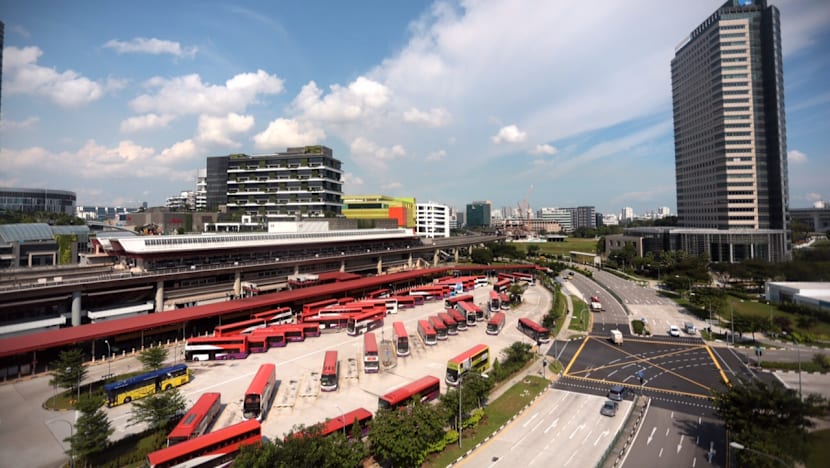
Ideally, the High Speed Rail terminus in Jurong should be in close proximity to Jurong East MRT Station, and connected seamlessly through underground passageways, say analysts. Photo: Jason Quah


SINGAPORE — As the authorities mull over the location of the Singapore-Kuala Lumpur high-speed rail terminus, some property analysts yesterday suggested that the planners dig deep and follow the example of countries such as Japan, where as many as four levels of tracks are built underground.
The analysts also chimed in with the considerations behind the siting of the terminal station. Topping their list are connectivity to the rest of the island and minimal disruption to the existing infrastructure.
Citing Japan’s underground train system, Mr Ku Swee Yong, chief executive of real estate firm Century 21, said: “The technology is there. It’s just a matter of expense.”
Mr Chris Koh, director of property firm Chris International, also felt that building underground is the way to go because it minimises disruption. “It’s too inconvenient to put it above. The construction will be a headache, and residents will complain about having tracks beside them because that might affect the value of their property,” said Mr Koh.





Ideally, the terminus should be in close proximity to Jurong East MRT Station, and connected seamlessly through underground passageways, said the analysts. The area around the MRT station is currently occupied by a bus interchange and three malls, with little empty land around.
“The nearer you put it to Jurong East MRT station, the better,” Mr Ku said. “You’ll have business travellers coming through, and to them, time is of the essence.
“There’s also going to be a massive flow of traffic in the area, and these people come with baggage,” he added. “They don’t want to walk too far.”
Analysts were split over whether a 1.02 million sqf plot of land between Jurong Town Hall Road and the Ayer Rajah Expressway, which was marked out in the Urban Redevelopment Authority (URA) Master Plan 2014 as a reserve site meant for future development, was a possible location. The site is currently occupied by JTC Corporation’s iHUB, the Science Centre and its Omni-Theatre as well as the Jurong Country Club golf course.
The lease for the golf course still has 20 years left. While some felt that this location was near enough to the other transport nodes, others felt that the terminal station should be integrated with the existing Jurong East MRT station and bus interchange.
Mr Nicholas Mak, SLP executive director for research and consultancy, had also pointed out that the ground at this parcel of land would be too soft as it is near the lake, and that valuable waterfront plots would serve better as a residential or recreational zone.
Even if a large part of the terminal station is built underground, some analysts pointed out that massive overcrowding could result if it is integrated with the other transport nodes.
“The roads are going to be congested, and there’s little room to expand the roads around this area,” said Mr Alan Cheong, a senior director of real-estate research at Savills Singapore.
Should the Government decide to build the station on the reserve site, it would most likely have to acquire Jurong Country Club, said Mr Cheong.
Apart from the reserve land, much of Jurong East has been marked out as business, residential, park, port or airport sites under the 2014 Master Plan. Nevertheless, the URA reclassifies sites from time to time, subject to approval by the Minister for National Development.
A 12ha land parcel along Yuan Ching Road, previously occupied by the now-defunct Tang Dynasty City theme park, has also been mooted as a potential site for the terminal station. Since the theme park was demolished in 2008, JTC has not announced any plans for this area.