Despite pharma boost, factory output falls for 12th straight month
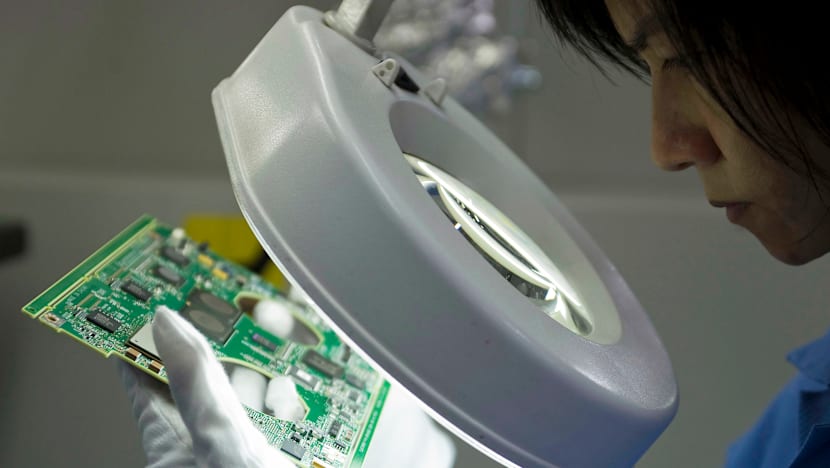
The manufacturing sector, which contributes about one-fifth of Singapore’s gross domestic product, has been a drag on economic performance. Photo: Bloomberg


SINGAPORE — Manufacturing output got a shot in the arm from a surge in pharmaceutical production last month, but still fell for the 12th straight month, the longest stretch of declines on record.
Industrial production fell 0.5 per cent year-on-year last month, easing from the revised 11.9 per cent plunge in December, data from the Economic Development Board showed on Friday (Feb 26). The performance, much better than the 4.8 per cent decline predicted by economists polled by Reuters, was helped by the rebasing of the data to base year 2015 from 2010.
On a seasonally adjusted basis, industrial production increased 9.3 per cent in January from the previous month, better than the 1.8 per cent slide forecast in the Reuters poll.
Despite the better-than-expected report card, there is little to cheer about as economists attributed last month’s performance to seasonal factors, a low base effect and a spike in the volatile biomedical manufacturing cluster. Excluding biomedical manufacturing, output fell by 7 per cent year-on-year in January.





“The current downtrend in Singapore’s industrial production is the longest period of contraction on record, even longer than the recession periods since the 1980s (10 consecutive months in 1985/1986),” said UOB senior economist Alvin Liew.
“The improvement in January industrial production is certainly encouraging even though we acknowledge that it is too early to tell if Singapore’s manufacturing sector is out of the doldrums yet,” he added.
Mr Liew maintained this year’s industrial production growth forecast at 2.5 per cent, as an improving United States economy fuels Singapore manufacturing demand while the low base effect of last year will provide some support for growth.
Biomedical output was the star performer last month with a 28.9 per cent year-on-year surge, the highest since April 2013, lifted by growth in both its pharmaceuticals and medical technology segments. The key electronics cluster, which carries about one-third of the total weight in the industrial production index, expanded by 1.7 per cent, reversing from the decline of 13.7 per cent in the previous month, boosted by the growth in semi-conductors and other electronic modules and components.
“Electronics, particularly semi-conductors, provided some support in January,” said ANZ Research economist Ng Weiwen, but he added that the growth was likely mainly due to inventory rebuilding ahead of the Chinese New Year holidays this month and not in response to higher global demand.
The other four clusters in the industrial production index — chemicals, precision engineering, transport engineering and general manufacturing products — contracted. Transport engineering output plunged 23.3 per cent year-on-year last month, as the marine and offshore engineering segment plummeted 29.7 per cent due to slowing rig-building activity and weaker demand for oil and gas field equipment amid the low oil price environment.
The manufacturing sector, which contributes to about one-fifth of Singapore’s gross domestic product (GDP), has been a drag on economic performance. In the latest GDP results released on Wednesday by the Ministry of Trade and Industry, the sector contracted by 5.2 per cent last year, reversing from the 2.7 per cent growth of 2014.
For this year, MTI expects the Singapore economy to grow at a modest pace of 1 to 3 per cent amid global headwinds such as low oil prices and weak external demand.