First, more options in secondary education, then PSLE changes
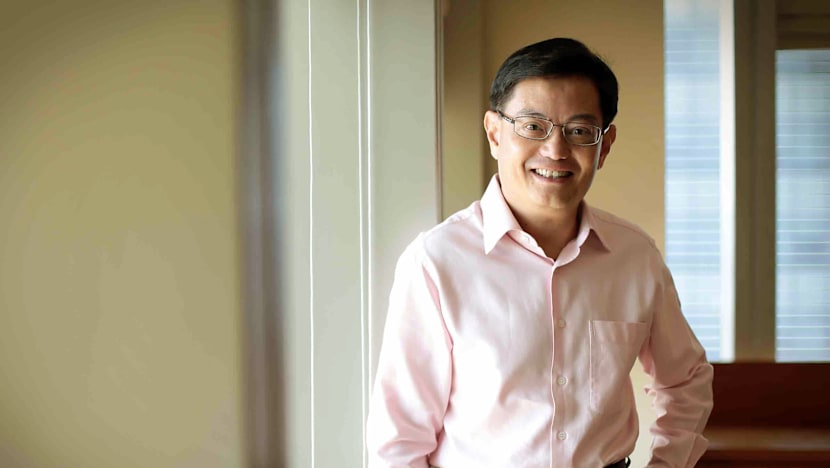
Education Minister Heng Swee Keat. Photo: Jason Quah


SINGAPORE — Creating a “more diversified landscape” among secondary schools to provide students with a wider range of opportunities will be the main focus before any changes to the Primary School Leaving Examination (PSLE) are introduced, said Education Minister Heng Swee Keat.
In an interview with TODAY earlier this week, Mr Heng said work has started since Prime Minister Lee Hsien Loong announced a review of the PSLE in 2012. But over the past two-and-a-half years, the Ministry of Education’s priority has been to help schools build distinct identities.
He explained: “The concern of the PSLE is not about the exam per se, but about the consequence in terms of the placement of students in their secondary schools. If parents feel there are many schools that can meet the learning needs of (their children) … I hope the anxiety will go down”.
Anxiety over PSLE has dominated headlines for years, be it over the difficulty of exam questions or the perennial question of whether students should sit for a major exam so early.





During his National Day Rally in 2013, Mr Lee also announced plans to scrap PSLE scores in favour of placing students in “wide bands” to remove distinctions that are “meaningless and too fine”.
Listing several policy enhancements made at the secondary level — the Applied Learning and Learning for Life programmes as well as more schools offering enhanced music and art programmes, Mr Heng was proud to report that “schools now have a better positioning in terms of what they stand for and how they can develop students (better)”. He hopes to see this momentum continue, as well as the full implementation of the Applied Learning and Learning for Life programmes by 2017. Then, “we can talk about changes of the PSLE”, he said.
He also gave away little where details of PSLE changes were concerned, saying only that they would be very complementary to the varied secondary-school landscape and would help students avoid focusing on achieving that “last mark”.
Looking back, Mr Heng felt the call to stop publishing the names of top PSLE scorers, which took effect in 2012, was right. Without PSLE scores as a blunt tool to determine the standing of schools, parents were nudged towards looking at schools “more carefully and what a school offers”, he said.
Asked about abolishing PSLE, Mr Heng reiterated that the exam serves as an “important feedback” to parents and students after six years of primary education. “I would have to think about (abolishing it) very carefully because the basic question we have to ask is: What are we trying to achieve with that?” he said.