Foreign spouses, needs of elderly the focus of NUS programme on community leadership
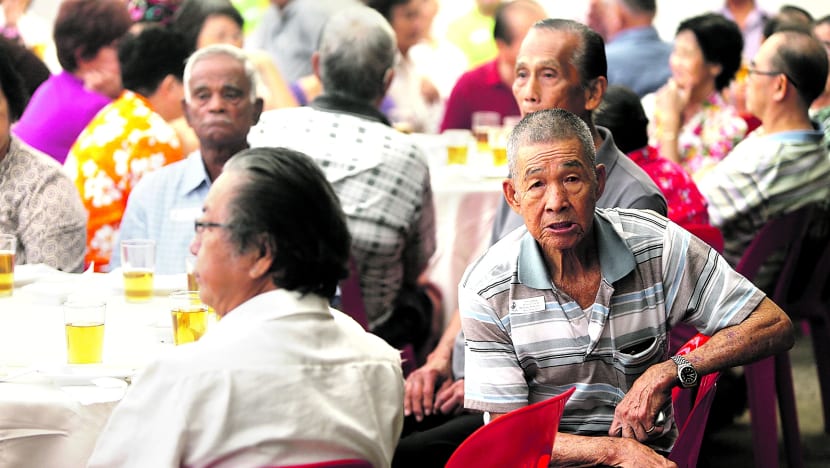
Interactions among elderly residents in older estates such as Telok Blangah are among the issues explored in an NUS programme on community leadership. TODAY file photo
SINGAPORE — For 24-year-old Alfred Wan, daily interactions with relatives who hailed from different countries got him thinking about how “migrant wives” or the foreign women who marry Singaporean men feel about their situation.
“My day-to-day interaction with them make me realise that they are not Singaporeans but they are not foreigners. They are somewhere in between, and i wanted to know what policy treated this dilemma, how they negotiated this (not) Singaporean but not foreign thing,” said Mr Wan, a fourth-year student at the National University of Singapore (NUS) Faculty of Arts and Social Sciences.
Together with his project partner, Mr Goh Wei Leong, a third-year business student, the duo met with over ten foreign spouses of Singaporeans to find out more their difficulties to assimilate into society. They found that language was the biggest barrier for these women to assimilate.
Their project, which aimed to change the local perspective of these foreign spouses, is among the five showcased at the Chua Thian Poh Community Leadership Programme Symposium yesterday, which was attended by Minister for Culture, Community and Youth Lawrence Wong.





The programme is aimed at developing future generations to help tackle social issues by mobilising the community to solve problems. As part of the programme, students are tasked to research social and community issues in Singapore and recommend solutions.
Other issues examined in this cohort include the interactions among elderly residents in older estates such as Telok Blangah, the experiences of borrowers and moneylenders, examining follow-up care and quality of life for cancer survivors — who have to struggle with post-treatment issues and long-term cancer effects — as well as documenting oral histories of Pulau Brani residents, a Southern island once inhabited by locals but now serves as the Singapore Police Force’s Police Coast Guard Headquarters.
On the issue of foreign spouses, Mr Goh, also 24, added that often, foreign spouses are put at a disadvantage due to a communication barrier. “It’s not as if the solutions and resources are not there, it’s more of whether we can bridge them. Is there something we can do? And we find that language is one and networks are another,” said Mr Goh, who is able to relate to the issue of assimilating, being a Malaysian who became a Singapore permanent resident at age 13.
Speaking during a dialogue session with students, Mr Wong said the systemic changes in policies proposed by some of the presenters to help address issues raised were not as “straightforward” as it seemed.
He also noted the importance of the human aspect when changing policies, commending on efforts by the groups for interacting with their respondents to get a better picture of the situation on the ground. “Policy is also about human-level interaction, it is very much about what we feel, what we do on the ground. So implementation is policy and that’s why it’s always good to have a ground sensing of what is happening and to do ground surveys,” the minister said.