Innovative services, greater productivity measures to boost preschool sector
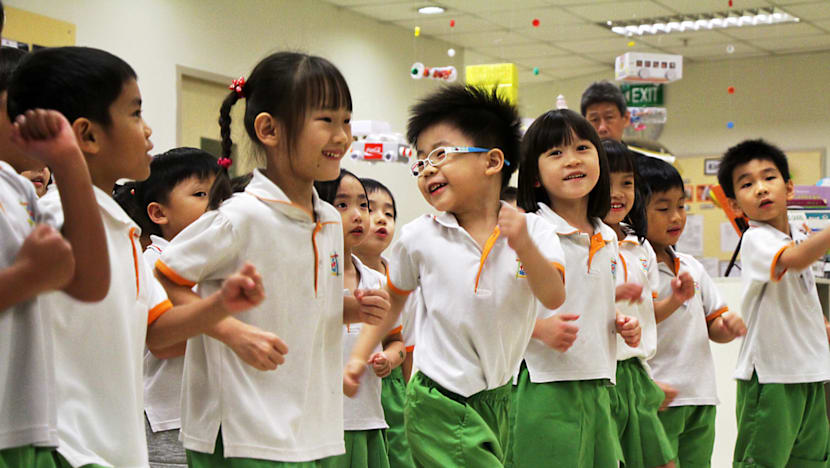
To better support parents and children with innovative services, the Early Childhood and Development Agency (ECDA) is piloting the co-sharing of spaces for infants and toddlers at 12 centres under the anchor operators (AOPs) scheme. TODAY File Photo


SINGAPORE — A pilot for preschools to co-share spaces, having more of them offer Malay or Tamil language, and centralising catering and bus services to boost productivity are among some of the new initiatives to enhance the early childhood sector.
Speaking at the Ministry of Social and Family Development’s (MSF) Committee of Supply of Debates on Wednesday (March 7), Senior Parliamentary Secretary Muhammad Faishal Ibrahim announced these changes to build on earlier plans to enhance the accessibility, affordability and quality of early childhood services.
Associate Professor Faishal outlined the early childhood industry transformation map (ITM), which is focused on injecting more innovation and productivity into the sector, as well as growing and uplifting the profession.
To better support parents and children with innovative services, the Early Childhood Development Agency (ECDA) is piloting the co-sharing of spaces for infants and toddlers at 12 centres under the anchor operators (AOPs) scheme.





Currently, infants (aged two months to 18 months) and toddlers (18 months old to 30 months old) are physically segregated.
The pilot is aimed at making it easier for the children to transition from infantcare to childcare in a more familiar setting, ensuring that infantcare spaces are fully utilised, and allowing operators to enrol more infants and toddlers. ECDA will review the pilot before deciding on plans for wider roll-out.
More initiatives will be introduced to ramp up productivity and streamline work processes in preschools to reduce the administrative workload, so as to “free up teachers’ time for higher-value work, such as lesson planning”, said Assoc Prof Faishal.
For example, administrative responsibilities will be simplified through centralised services and the use of technology, such as smart solutions for attendance and temperature-taking.
The Association of Early Childhood and Training Services (Assets) and its partners are also piloting shared or centralised services such catering and bus services. More than 50 preschools have already taken up centralised meal catering services.
Complementing the ITM, ECDA will work with the AOPs to enhance the career prospects for early childhood educators.
With the rising demand for preschool services, the sector will require 20,000 early childhood educators by 2020, up from the current 17,000.
As the AOPs set up more and larger capacity centres, teachers can take on larger job roles to mentor junior teachers or manage a larger centre or a cluster of centres. This could enhance the teaching quality and overall management of such services.
The AOPs are also set to create some 1,000 more senior professional positions — double the current number — which span roles like cluster leaders, centre leaders and senior teachers.
To prepare teachers for such positions, they will provide more structured career development, such as by mentoring, engagements with AOP senior management, short attachments or special projects in AOP headquarters or other centres, and Continuing Professional Development courses.
Salaries for the preschool sector is also expected to rise. Over the last three years, median salaries in the sector have grown by about 15 per cent — outpacing the general market which grew by 8 per cent over the same period.
Urging operators to recognise their employees’ growing contributions and remunerate them based on their job responsibilities, competencies and performance, Assoc Prof Faishal added: “This way, they will be able to retain good teachers with passion, and raise career prospects across the whole sector.”
Finally, in line with efforts to foster a love for Mother Tongue languages and cultivate bilingualism, the number of AOPs offering Malay and Tamil languages will also jump from 200 now to 350 by 2022.
Currently, all 550 AOP centres provide Chinese language, and all three Mother Tongue languages are also offered at the 18 Ministry of Education (MOE) Kindergartens, which will be expanded to 50 by 2023.
Assoc Prof Faishal reiterated that mother tongue language is important, and “starting early helps”.
ECDA will work with the new National Institute of Early Childhood Development (NIEC) and other partners to boost training for these Mother Tongue language teachers, and encourage more locals to teach it at preschools.