ITE offers four new work-learn diplomas
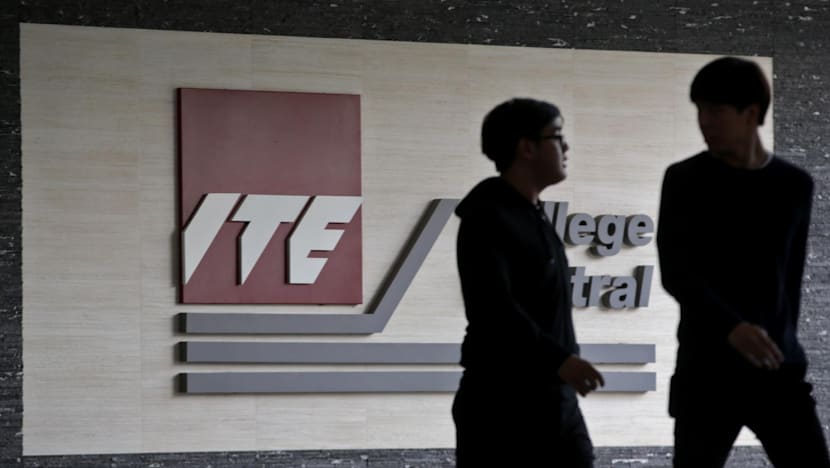
ITE College Central. TODAY file photo
SINGAPORE — Institute of Technical Education (ITE) students will soon be able to work and study after graduation, with the launch of four new technical diplomas to be awarded by the institution.
Announcing more details of the ITE Work-Learn Technical Diploma at the ITE graduation ceremony yesterday, Education Minister (Higher Education and Skills) Ong Ye Kung said the programme will allow graduates to apply for a diploma based on the ITE’s criteria, which “need not necessarily be purely academic”.
The four courses — marine and offshore engineering, mechanical and electrical services supervision, rehabilitation care, and security systems engineering — will be offered in collaboration with industry partners including Certis Cisco, St Luke’s Eldercare and ST Electronics.
Up to 120 places across the four courses will be offered for the first intake. Depending on student interest, more courses may be offered, or student intakes may go up, Mr Ong said.





The technical diplomas will last between two-and-a-half to three years and 70 per cent of curriculum time will be devoted to on-the-job training.
The expansion of the work-learn programme at post-secondary level was first announced by Mr Ong during the Education Ministry’s Committee of Supply debate earlier this year.
Speaking to more than 700 graduates during the ceremony held at the ITE Headquarters in Ang Mo Kio yesterday, Mr Ong noted that many ITE graduates aspire to study at polytechnics after graduation. But this means they have to gain admission based on criteria set by the polytechnics — which are mostly academic.
While there are other options, such as the Early Admissions Exercise for aptitude-based admission into the polytechnics, he said there “will also be others who miss the academic bar, even though they may excel at their vocational skills”.
Likening the ITE Work-Learn Technical Diploma to an apprenticeship, Mr Ong said: “Trainees will develop skills mastery through hands-on training and practice, grounded in deep knowledge of their employers’ operations. With this experience and knowledge, they will be better placed to become masters in their trade and rise through the ranks.”
He also pointed out that applications for the new technical diplomas will not be based solely on academic qualifications. Instead, ITE will place “strong emphasis” on employers’ recommendations, which “will favour (graduates) who decide to work first, and perform well at their work”.
The scheme is part of the SkillsFuture Earn and Learn Programme, in which employers partner education institutions to offer work-learn programmes to give graduates a head start in careers related to their study.
The ITE programme is open to fresh ITE graduates or those currently in employment and starts next April. The application period will last from Nov 27 until Feb 2, 2018.
Hidayah Cooper, a first-year ITE student, said the new technical diploma is akin to “killing two birds with one stone”. “Some fresh graduates are not sure what to do after graduation, so this opportunity really comes in handy,” said the 18-year-old.
Second-year student Damien Li said he had already set his mind to pursue further studies at a polytechnic, adding: “This option is not something I would consider.”