‘Laws alone not enough to deal with errant retailers’
TODAY file photo


SINGAPORE — Nearly two years after the bullying antics of a now-defunct Sim Lim Square retailer sparked an outcry over unethical business practices, Parliament passed changes to consumer laws on Tuesday (Sept 13) to give the authorities more powers to go after errant retailers.
These include giving Spring Singapore, a statutory board under the Trade and Industry Ministry, the authority to order shops to hand over information for investigations and to enter their premises to take evidence.
However, Dr Koh Poh Koon, Minister of State for Trade and Industry, said that legislation is merely one aspect, and consumer education remains the “key plank” in the consumer protection regime.
The changes to the Consumer Protection (Fair Trading) (Amendment) Bill will come into effect by the end of the year.





Starting this month, the Consumers Association of Singapore (Case), the industry watchdog, will be partnering five Community Development Councils over the next three years to organise consumer education talks and educate heartlanders.
Parliamentary Secretary (Trade and Industry) Low Yen Ling said: “The talks will teach consumers what they should look out for when making purchases, especially for products and services that have attracted a high volume of complaints.”
An earlier review of the legislation pointed to an existing gap in the injunction process, where the Singapore Tourism Board (STB) and Case have been hindered by their lack of investigation and enforcement powers.
With Spring Singapore to be appointed as the administering agency for the Bill, STB and Case will highlight problematic retailers to Spring for investigation, and the agency will investigate and submit injunction applications against the retailers to the courts.
Other changes include accompanying orders that a court could make on top of the injunction order, such as requiring businesses to display notices of the injunction orders at their shops, on their websites, or on invoices.
Dr Koh said that these accompanying orders would make it harder for errant businesses to side-step injunction orders by closing the business and setting up new ones using another person’s name. Injunctions may also be issued to others to dissuade them from helping errant retailers manipulate the system by setting up new businesses.
The compliance period for these accompanying orders is capped at five years, and could be extended to a decade in cases of non-compliance. Failure to comply constitutes contempt of court.
Of the 13 Members of Parliament (MPs) who spoke, six pushed for more protection for consumers of prepaid deals.
MP Lim Biow Chuan, who is also Case president, called for “strong action” to be taken against companies which continue to collect prepaid fees even though they are insolvent.
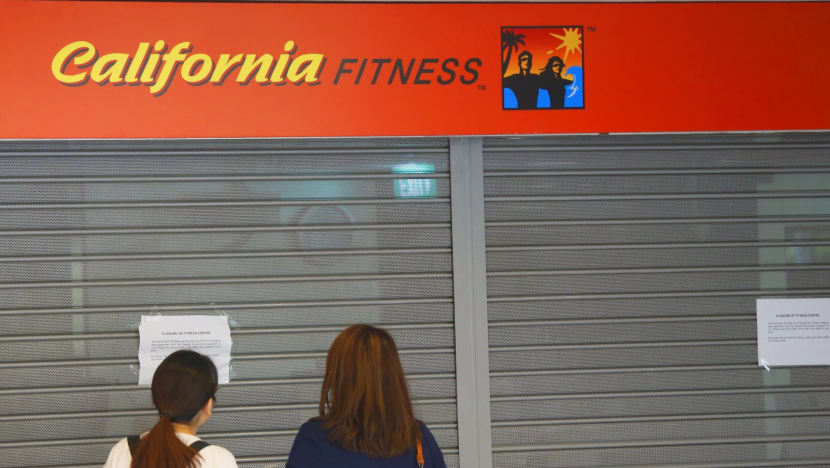
Citing the example of gym chain California Fitness, which closed all Singapore branches in July, Mr Lim said: “I was appalled that even though the company was clearly in negative equity position … (it) continued to sell platinum memberships and collect prepayment from (its) customers.”
MP Saktiandi Supaat proposed a maximum six-month period of advanced payment, and laws to stop further promotions once owners know that they are in “dire straits”.
Dr Koh replied: “Prepayment in itself is a common practice worldwide. It’s not necessarily unfair or illegal.” He added it would be challenging to have sweeping measures to protect consumers from the loss of advanced payments, given the diverse business landscape, and the buck was on consumers to make “informed purchasing decisions”.
Spring will be working with Case on a blacklist of errant retailers who were issued injunction orders.
Non-constituency MP Dennis Tan questioned if the laws allowing investigation officers to enter premises without a court warrant — and only after giving owners two days’ notice — was “rather draconian”.
Dr Koh said that such measures would be used only in urgent situations: “In certain circumstances in which the egregious behaviour requires more urgent action, where tourists ... in large numbers may be harmed or fleeced by an egregious retailer (for example), then there could be reasons for us to enact a search of the premise to gather evidence much earlier without a court warrant.”