Malfunctioning brakes blamed for AMK lift that shot up 17 floors
On Monday (March 7), 36-year-old maid Evi Lisnawati was trapped in Lift A of Block 317 Ang Mo Kio Street 31 for 90 minutes after it shot up 17 floors. Photo: Channel NewsAsia


SINGAPORE — Malfunctioning brakes — possibly due to jammed mechanical parts, an oily brake drum and worn-off brake liners — caused the incident earlier this month where a lift in Ang Mo Kio suddenly shot up 17 floors, said the Building and Construction Authority (BCA) on Tuesday (March 29).
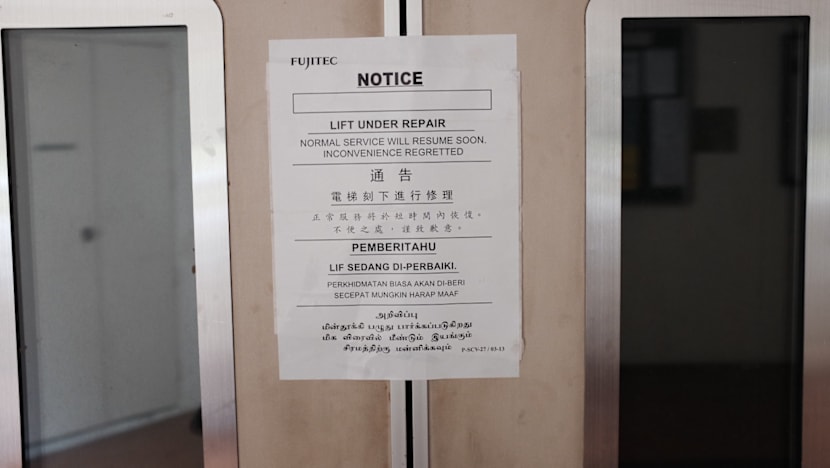
Although it has restored the use of the lift in question on Monday after repairs carried out by a lift contractor hired by Ang Mo Kio Town Council (AMKTC), the BCA is investigating if there had been contraventions of lift maintenance regulations that led to the incident.
“BCA takes a serious view on any non-compliance of our safety regulations and will take enforcement action against the parties responsible, where appropriate,” the authority said in a statement on Tuesday.
At the same time, the authorised examiner that investigated the incident has asked AMKTC to carry out brake tests on the lift every quarter for the rest of this year to verify that the brakes are functioning normally. This is over and above the brake test that the lift contractor is required to carry out during the monthly maintenance of the lift, said the BCA.





In response to TODAY’s queries on the extent of checks on the brakes during its routine maintenance, an AMKTC spokesperson said: “AMKTC is committed to ensuring residents’ safety when using lifts in our estate and we will continue to strengthen our safety protocol through working with BCA, the lift company and the authorised examiner to uplift our inspection and maintenance regime.”
The authorised examiner that AMKTC appointed to inspect the lift after the incident on March 7 had found that “it was likely the brakes were not functioning well” that day as they could not hold the lift car in a stationary position, causing it to ascend abruptly.
The examiner assessed that this could be due to the jammed mechanical parts of the brakes, oily brake drum and worn-off brake liners, in his investigation report submitted to the BCA last Thursday.
The BCA’s own investigations, including tests and inspections of the brakes, corroborated the examiner’s findings. It allowed the lift to resume operation after confirming the authorised examiner’s certification that it was safe for use.
The BCA said: “Lift owners, including the town councils, are required by law to engage registered lift contractors to maintain their lifts, and lift contractors should do so with due diligence. Lift owners play an important role in ensuring that their lifts are maintained in accordance with prevailing standards.”
There have been three high-profile lift incidents in five months. In the present case, 36-year-old domestic helper Evi Lisnawati was trapped in Lift A of Block 317 Ang Mo Kio Street 31 for 90 minutes after the lift shot up from the third floor to the 20th floor. She was freed by the Singapore Civil Defence Force at around 9pm that evening.
Following that incident, the BCA said it had stepped up its audit checks on lifts across the island — especially those in Housing and Development Board blocks — ahead of legislative changes to be introduced later this year to beef up lift regulations and standards.
National Development Minister Lawrence Wong told Parliament last week that the BCA was looking at a performance-based regime to assess lift contractors in the maintenance of lifts. Mr Wong had said then that many town councils “do not have a lot of oversight over the performance regime that is in place for the lift contractors” and “how they actually go about doing their job”.