MAS Green Bond Grant scheme not limited to Singapore issuers
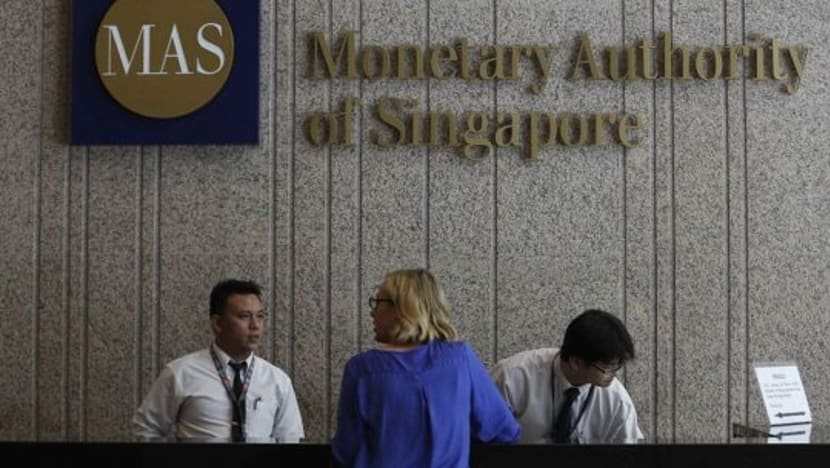
The Monetary Authority of Singapore. Reuters file photo


SINGAPORE — It is not realistic to expect the Monetary Authority of Singapore’s (MAS) Green Bond Grant Scheme to be restricted to Singapore issuers, as the domestic market is too small and such bonds are international by their nature, a senior central bank official said on Friday (June 23).
“It doesn’t make sense to limit the grant scheme to just Singapore issuers. You look at the Singapore bond market… we have more foreign issuers even in the Singapore dollar,” said MAS executive director for financial products & solutions Bernard Wee during a panel discussion at the Standard Chartered Green Bond Conference 2017.
Flagging the importance of sustainable development, he said the Green Bond Grant scheme unveiled in March serves to “level the playing field between conventional issuers and green bond issuers.” Green bonds are fixed-income securities that raise capital for use in projects or activities with environmental benefits, such as those to cut greenhouse gas emissions.
“If we want to grow an international bond market that sells A-Z, that provides a one-stop shop, comprehensive services, you have to sell to everyone… It’s not just a Singapore financial centre, it’s not just a Singapore bond market. It is an international bond market and that’s really how we think about it,” Mr Wee added.





Several panelists at the discussion said that as the green bond market takes off in the Association of Southeast Asian Nations (Asean) and the rest of Asia, there is a need for standardisation without stifling the growth of the market.
Mr Wee noted that ASEAN regulators have been working with the International Capital Market Association (ICMA) on a green bond standard.
“The reality is that green bonds (may be) fast growing but it is still a very nascent market. The nature of a nascent market is that it is small, messy and commercially might not make sense as it is such an early stage,” he said.
“It is a sensible approach for a porous, international market to adopt a standard or recognized standards that are already being used by issuers. That to me is practical… A big bond market like India and China can set their own standards because they are big. If you have a smaller market like ASEAN that is very international, it doesn’t make sense to try to,” he added.
In March, Second Minister for Finance Lawrence Wong announced the MAS Green Bond Grant scheme to kick-start the development of a green bond market in Singapore. He noted that the global green bond market has grown rapidly in recent years, reaching more than US$80 billion (S$112 billion) last year.
Under the scheme, qualifying issuances can offset 100 per cent of expenses attributable to obtaining an external review for green bonds, up to a cap of S$100,000 per issuance. The bonds can be denominated in any currency but has to be issued and listed in Singapore, with a minimum size of S$200 million and tenure of at least three years.
Property developer City Developments (CDL) in April became the first Singapore company to issue a green bond. The two-year secured bond raised S$100 million at a 1.98 per cent fixed rate due 2019, with investors comprising mainly financial institutions and fund managers, CDL said.