More community partnerships among steps to strengthen S’pore’s security
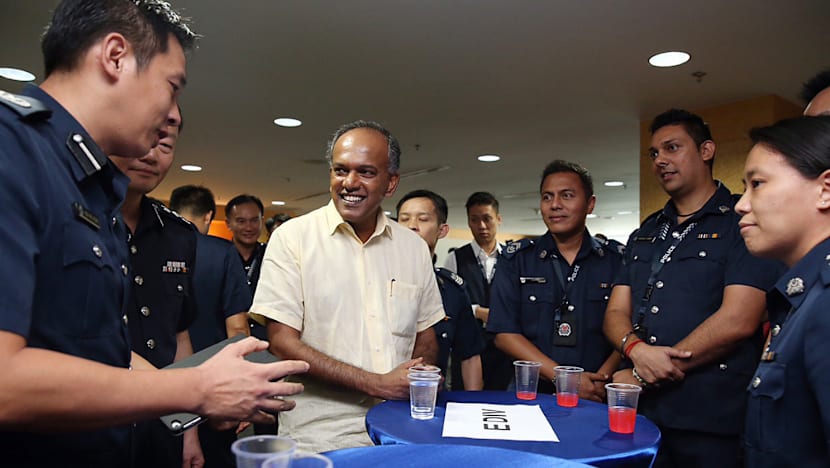
Minister for Home Affairs and Law, K Shanmugam meeting police officers during his visit to the Central Division, Police Cantonment Complex, to thank SPF officers for keeping Singapore safe and secure during a hectic 2015. TODAY file photo
SINGAPORE — Making better use of technology to tackle crimes and overcome manpower constraints, and strengthening partnerships with international agencies are among the key focus areas for the Home Affairs Ministry, as it aims to keep Singapore safe and secure in the next five years.
Home Affairs Minister K Shanmugam said yesterday in the Addendum to last Friday’s President’s Address: “In the coming years, we will take community partnerships to a high level.” The Singapore Police Force would reach out to millions of mobile-device users for real-time crime-reporting and leads, and it would extend its crowd-sourcing reach to mobile platforms, he said.
The ministry has been working closely with communities here, for example, through the police force’s Citizens-on-Patrol initiative where residents and grassroots leaders help with crime prevention in their neighbourhoods, and the Save-a-Life programme by the Singapore Civil Defence Force (SCDF) where residents are trained to help heart-attack victims before rescuers arrive. To cope with increasing demands amid manpower constraints, the SCDF will also be reviewing the way it operates and develop new operating models.
TODAY has previously reported that the SCDF has put up a Request for Information exercise in October 2014 for a data analytics-based Dynamic Resource Optimisation system. Since then, it has established a team of officers within the force to leverage the use of data analytics across the organisation to improve operational efficiency, and to better allocate scarce resources to areas of critical needs.





Mr Shanmugam said the SCDF will review how it can “better tier” its emergency ambulance response — in terms of speed of response and manpower deployed — based on the severity of cases. Another key area for the MHA is to reinforce its cooperation with international organisations such as INTERPOL, ASEAN and the United Nations.
“This is critical, given the transnational nature of crime and security threats,” Mr Shanmugam said, adding that transnational crime and cybercrime “will pose a challenge”.
Additionally, law-enforcement agencies have “detected the work” of transnational syndicates behind serious criminal offences such as drug trafficking and illegal bookmaking, he said.
Public education will play a role as well, so the Central Narcotics Bureau, for example, is expanding its outreach to parents to get them involved in keeping their children away from drugs.
To gear up security responses to the evolving terror threats in the region, the Immigration and Checkpoints Authority will strengthen border security capabilities. The police will also consider the feasibility of installing more surveillance cameras in public housing estates and public areas to better “prevent, deter and detect criminal and terrorist threats”.