New banding structure for courts to decide on penalties for rape cases
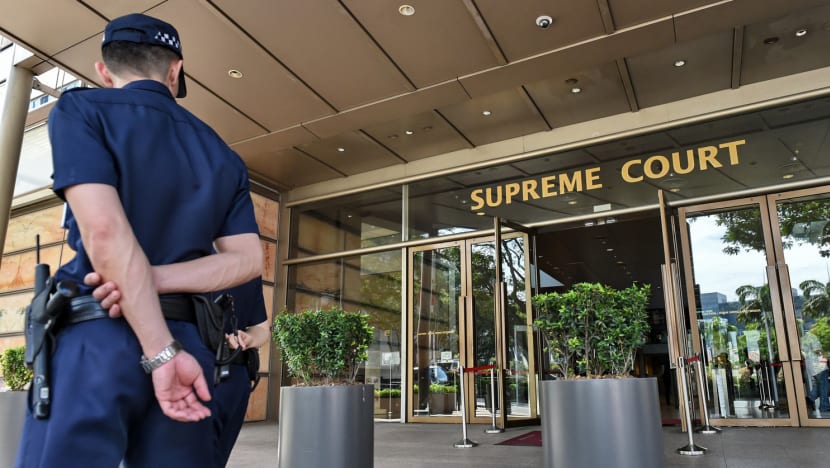
AFP file photo


SINGAPORE — The courts will now decide on sentences for rape cases using a new framework set out by the apex court on Friday (May 12).
This is after they found that the previous approach, which had been in place for about a decade, led to sentencing outcomes that tend to cluster in the middle of a spectrum of penalties made available by lawmakers, and the whole range of penalties are not fully used.
The opportunity to review the longstanding framework came up during the appeal made by cobbler Terence Ng, who was sentenced to 14 years’ jail and 14 strokes of the cane for statutory rape and digital penetration of a minor.
His appeal was dismissed by the three-judge panel made up of Chief Justice Sundaresh Menon and Judges of Appeal Chao Hick Tin and Andrew Phang.





Delivering the findings on behalf the judges, Justice Chao said that the new framework would involve three sentencing bands of increasing levels of severity, and each band would carry a different range of sentences.
This is different from the framework laid down by the High Court in 2006, which classified rape cases into four broad categories, with each category carrying a different benchmark sentence.
While this earlier framework brought a “measure of consistency” in the sentences imposed in rape offences, Justice Chao said that it also faces several recurrent problems, such as how these four categories do not adequately cover the full range of circumstances under which the rape offence could be committed.
“As a result, there has been a clustering of sentencing outcomes and a failure to utilise the full range of sentences provided for in the statute,” he said.
The new framework will take effect immediately as it “does not effect a radical change in the sentencing benchmarks”, the judges said.
“For the most part, it seeks only to rationalise existing judicial practice to promote a more systematic, coherent, consistent, and transparent approach towards sentencing in this area (particularly for cases of statutory rape),” he added.
On the latest system, Justice Chao said that the new bands “represent different sections of a single continuum of seriousness”.
The court will have to make a holistic assessment of each specific case by first looking at the factors specific to the offence, and later, factors that are specific and personal to the offender.
Factors specific to the offence include whether the case involved a group rape, an abuse of position and breach of trust, premeditation, violence, rape of a vulnerable victim, among others.
Such factors would determine the band to which the rape case is pegged.
Band 1 covers rape offences at the “lower end of the spectrum of seriousness” and carry sentences of 10 to 13 years’ jail and six strokes of the cane. They typically involve cases that have no aggravating factors specific to the offence, or are factors that are present to a very limited extent.
Band 2 covers rape cases that are more serious than the previous band, and contain two or more aggravating factors specific to the offence. They carry sentences of 13 to 17 years’ jail and 12 strokes of the cane. This could include rape offences involving particularly vulnerable victims, where the offender had also abused his position of trust, for instance.
Band 3 is for extremely serious cases of rape, and attract sentences of 17 to 20 years’ jail and 18 strokes of the cane. They involve cases where victims suffered serious levels of violence and there is a need to impose a lengthy sentence in the interest of public protection, for instance.
After determining the bands, the courts can calibrate the sentence according to factors specific to the offender. For instance, they can consider the offender’s relevant antecedents, remorse, plea of guilt, among others.
Turning to Ng’s appeal, Justice Chao highlighted two aggravating factors specific to the offence: The vulnerability of the victim, who was 13 then, and Ng, who had abused his position of trust as her “godfather”.
Sometime in 2013, Ng, who was 42 then, noticed the girl loitering around his makeshift stall near an MRT station. After learning that she had run away from home, he invited her to his home and called her mother, offering to take care of her and act as her godfather.
Two weeks later, they engaged in sexual activity and did so again the next month.
Applying the new framework, the judges noted that the victim was vulnerable, having run away from home on several occasions and was not under any meaningful form of parental control. By committing the offences, Ng also completely abnegated his duty as a godfather. This places him under Band 2 of the new framework.
Two similar charges were taken into consideration for sentencing, but Ng had pleaded guilty and spared the minor of having to testify. In this case, the judges found that the earlier sentence imposed was “entirely appropriate” and dismissed the appeal.