Ngerng used funding from foreign groups ‘to pressure High Court’

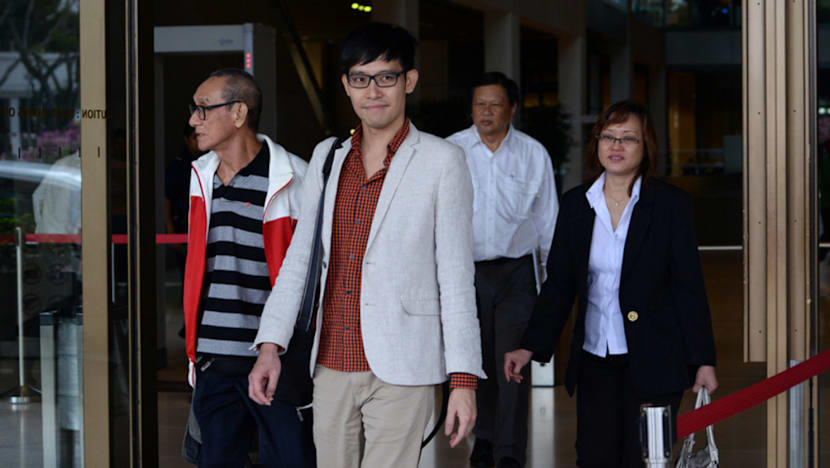
SINGAPORE — Blogger Roy Ngerng (picture) had received funding from a foreign organisation and used other such groups to apply pressure on the High Court not to award high damages to Prime Minister Lee Hsien Loong, the court heard yesterday.
Yesterday was the third and final day of the hearing to assess how much Mr Ngerng has to pay the Prime Minister for suggesting that he had misappropriated monies paid by Singaporeans to the Central Provident Fund.
During his cross-examination of Mr Ngerng, Senior Counsel Davinder Singh, who is representing Mr Lee, highlighted the blogger’s sources of funding for the lawsuit. The lawyer noted that the blogger had stated in his affidavit that he had limited financial means.
Mr Ngerng told the court that the Media Legal Defence Initiative (MLDI), a London-based human rights organisation, had given him £5,000 (S$10,500) as well as legal advice.





Mr Singh noted that Mr Ngerng had raised about S$110,000 from the public in June last year.
When asked how the money was spent, the blogger said S$70,000 was used to pay Mr M Ravi, one of the lawyers he had engaged for the case.
He used S$29,000 to pay costs to Mr Lee’s lawyers. Another S$6,000 was used in Mr Ngerng’s failed application for a Queen Counsel to represent him in the assessment of damages hearing.
The blogger had also used his savings to fund his legal costs.
Mr Ngerng said he had visited the MLDI after his trip to Norway, where he spoke at a students’ festival, at the invitation of the University of Trondheim. Another organisation in London, Article 19, had paid for his trip to London.
During the hearing, Mr Singh charged that Mr Ngerng had chosen to introduce briefs from foreign organisations so as to put pressure on the High Court.
In response, Mr Ngerng, who broke down twice during the cross-examination yesterday, said the briefs were intended to support his case, such as its moral considerations.
Mr Singh later said: “You chose to use foreign organisations to campaign against Singapore and to use this court process to advance that campaign.”
When Mr Ngerng questioned the relevance of Mr Singh’s remarks to the case, the Senior Counsel said: “It is about aggravation and about your claim to limited financial needs and the choices you’ve made.”
He later pointed out that Mr Ngerng had introduced briefs from the International Commission of Jurists (ICJ) in Thailand and the Center for International Law (CenterLaw) in Philippines, in his opening statement.
Mr Singh asked why there was a need to get foreign organisations to come up with such briefs, if Mr Ngerng had been sincere in his apology to Mr Lee.
When Justice Lee Seiu Kin questioned if Mr Singh was implying that Mr Ngerng intended to advance “some political agenda” and was thus not sincere in making the apology, the lawyer replied: “Yes, that’s one of the points.”
Justice Lee later said: “I just want to clarify … I feel absolutely no pressure, but to the extent that the material given by the (ICJ and Centerlaw in assisting Mr Ngerng) in making those points, I will look at it and consider those points.”
The court was yesterday adjourned to Aug 31, and both parties have to hand in their written submissions by then. As Mr Ngerng will be away for the next two weeks for reservist, Justice Lee gave him an additional six weeks after that to make his written submissions. AMANDA LEE