Patients with multiple chronic illnesses may reduce visits to TTSH
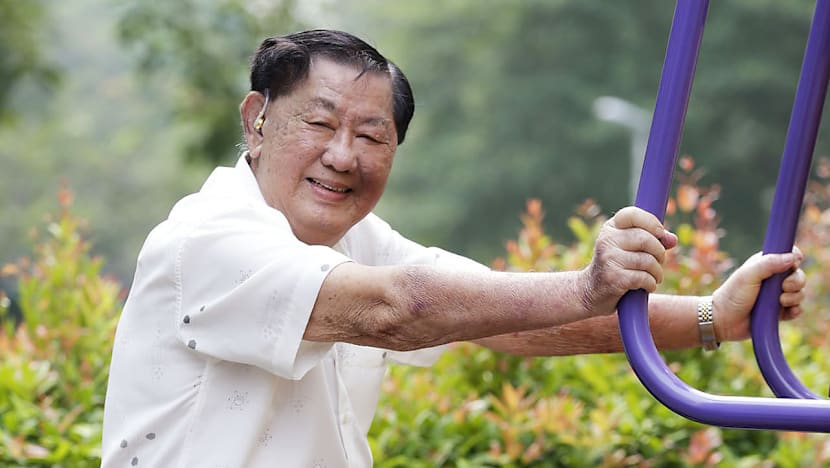
Under Tan Tock Seng Hospital’s new pilot, patient Loy Wen Ann, 80, has been able to save time and money with fewer hospital appointments. Photo: Wee Teck Hian
SINGAPORE — Struggling with multiple illnesses including diabetes, high blood pressure, gout attacks and chronic kidney disease for the past 20 years, Mr Loy Wen Ann, 80, had to make trips to Tan Tock Seng Hospital (TTSH) every month — sometimes even a few times a month — for follow-up appointments with different doctors for each of his conditions.
His wife and main caregiver, Mdm Ho Leong Pong, 78, told TODAY that they had a hard time keeping track of all the different appointments and would sometimes miss a few.
But under a new initiative piloted by TTSH, which allows her husband to be treated by a single general medicine (GM) doctor, the couple has been able to save time and money with fewer hospital appointments.
Patients like Mr Loy are exactly who TTSH wants to help with their General Medicine Complex Care Clinic (GMCC) programme. Initiated by the hospital’s Department of General Medicine, the hospital started the pilot in January, and has 65 patients as of July. GM doctors under this initiative become the primary physician for patients with at least three different complex medical conditions that were previously managed by other specialists.





This month, the clinic is also starting a medication reconciliation service under the initiative, for pharmacists to advise patients on complex medication regimes, which have at least five different types of medication.
Associate Professor Tan Thai Lian, divisional chairman of medicine at TTSH, said current care models see patients with multiple conditions — what doctors refer to as comorbidities — having to go to different clinics for each condition.
“We can imagine in a frail, older person, it becomes very difficult when you have to attend many clinics and listen to many separate instructions from different clinics,” said Assoc Prof Tan. “That can get very confusing and it becomes an issue with regards to patients’ management of multiple chronic illnesses.”
There have been overseas studies to show that coordinated care of these patients can reduce a patient’s chance of needing to go to the emergency room or ending up hospitalised. “Since the profile of our patients (are older) and … have multiple comorbidities, it makes sense to start this initiative to consolidate (and) streamline care as much as possible within appropriate capabilities,” he said.
A check with other public hospitals found that the National University Hospital also has a similar one-stop Internal Medicine clinic run by a multidisciplinary team of GM doctors, specially trained Advanced Practice Nurses and dieticians. Pharmacists were also brought in for patients on more than five types of medication. Changi General Hospital will be rolling out its Continuity Care Clinic (CCC) initiative by the end of this year, where the CCC doctor will be the primary coordinator with other specialists for patient with complex care.
On how patients were identified for the programme, Dr Teong Hui Hwang, senior consultant at TTSH’s Department of General Medicine, said they looked out for GM patients who also had appointments with other departments — endocrinology, gastroenterology, cardiology, renal medicine and respiratory and critical care medicine.
“For example, if the patient has heart failure and the symptoms are now controlled with medication, the patient can be transferred to the GMCC clinic where other conditions, for example gout or diabetes, are also being actively managed,” she said.
In the case of Mr Loy, Mdm Ho said he now visits the hospital once every two to three months, compared with up a few times a month before. His condition has not deteriorated, she added.
Not all patients can be treated by a single GM doctor. Patients with complex cases will be co-managed by a GM doctor with other specialists and alternate appointments among themselves. For instance, Dr Teong, who is in charge of Mr Loy’s care, manages his conditions such as his diabetes, blood pressure, poorly controlled gout while alternating appointments with a kidney specialist.
Dr Teong also noted that involving pharmacists in the initiative will help coordinate medicine more clearly, especially in cases where there are overlaps in prescription or patients confuse adjusted medication with previous prescriptions.
The GMCC programme also helps cut down more than a week’s worth of appointments for patients, and save on hospital resources such as the unnecessary repetition of blood tests, noted Dr Teong.
“If we are successful in this model, where the GMCC can take over from (other departments), we may actually in fact create more capacity among the other specialities to see more patients,” added Assoc Prof Tan.