'First overt challenge' to Pritam Singh's WP leadership could bring closure one way or the other: Analysts
The closeness in the timing of the special cadre members conference and the party’s biennial Central Executive Committee election on Jun 28 means that by the end of that day, there would be absolute clarity on the WP leadership, said political observers.
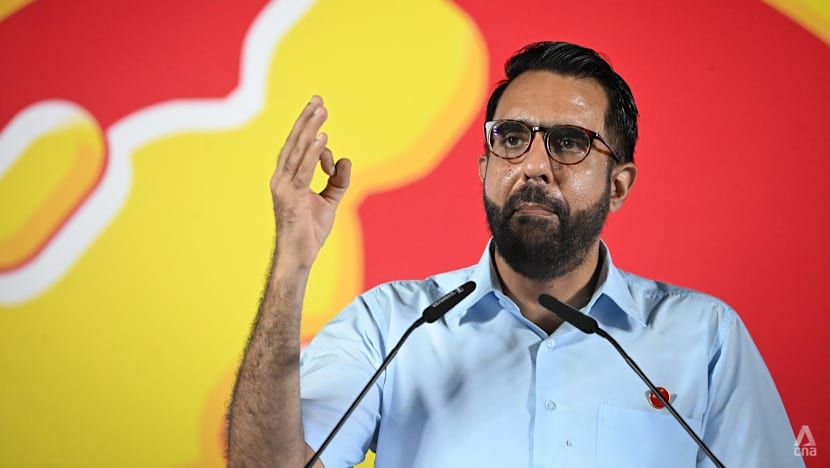
WP chief and candidate for Aljunied GRC Pritam Singh speaks at a rally at Anderson Serangoon Junior College on May 1, 2025. (Photo: CNA/Syamil Sapari)

This audio is generated by an AI tool.


SINGAPORE: The Workers’ Party’s (WP) special cadres meeting on Jun 28 is the first time there has been a real challenge to Pritam Singh’s position at the helm of the party, said political observers.
With the special conference and a Central Executive Committee (CEC) election scheduled for later that day, the leadership of Singapore’s only opposition party in parliament will be decided by the end of the day, said observers.
“The special meeting is the first overt challenge to the Pritam Singh-led WP leadership since Mr Singh succeeded Mr Low Thia Khiang as party chief in 2018,” said Singapore Management University associate professor of law Eugene Tan.
Mr Singh was re-elected unopposed as secretary-general in the biennial party elections in 2020, 2022 and 2024.





The last time the party saw a contest for the secretary-general position was in 2016, when Mr Chen Show Mao mounted a challenge to then party chief Low Thia Khiang, losing with a 61-45 vote.
The latest challenge reveals “a vocal but small segment” of the party’s inner circle who are visibly upset by how the WP leadership had handled the saga, which goes back to former Member of Parliament (MP) Raeesah Khan’s lies to parliament, said Assoc Prof Tan.
Such a special conference did not follow the disciplinary proceedings against Ms Khan and other fellow members Leon Perera and Nicole Seah, he noted.
The agenda for the Jun 28 special cadres meeting includes asking Mr Singh to account for the convicted charges of lying to a Committee of Privileges.
They are also calling for him to step down immediately for breaching the party’s constitution. Should he not do so, there will be a “secret vote” to decide if he should remain or step down.
The conference came from “a requisition of 25 cadre members”. It was previously reported that the WP has about 100 cadres.
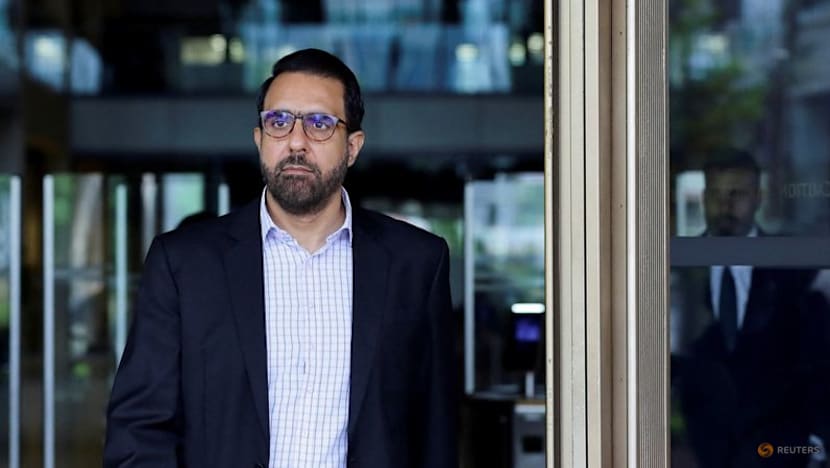
RANGE OF POSSIBLE OUTCOMES
Dr Teo Kay Key, senior research fellow at the Institute of Policy Studies, said that if Mr Singh stays in power with a narrow margin in the cadres’ secret vote, he would have “a lot of work to do to regain the trust that has been lost”.
“His position will be much less assured compared to when he was just appointed,” she said.
“This sense of uncertainty will also likely trickle down to the ordinary members, who probably will be watching the results of this meeting closely.”
Independent political analyst Dr Felix Tan said that if Mr Singh remains at the helm, the WP may continue facing questions about its internal unity, and unresolved tensions could deepen internal factionalism or lead to some members leaving.
“Such a scenario risks reinforcing perceptions of instability at a time when the WP is positioning itself as Singapore’s most credible opposition force,” he said.
Mr Singh continuing as party chief may also raise questions about leadership renewal and whether there is currently a successor with the stature and support to take the party forward, said Dr Tan.
Observers said that one possible compromise would be that Mr Singh steps down as secretary-general, but remains in the party CEC, its top decision-making body.
“Even if they do not want Pritam to continue leading the party, it does not mean that they have fully lost faith in him as a politician or as part of the CEC,” said Dr Teo.
Dr Tan said that it would allow the party to signal leadership renewal without “completely moving away from one of its most influential figures” in Mr Singh.
“As an elected MP and arguably the party’s most recognisable leader, Mr Singh still carries considerable weight both within the party and with the broader public,” he said.
“Even if he were not re-elected to the CEC, it is hard to imagine him being entirely removed from the party’s leadership circle, and he could still play a valuable advisory or mentoring role.”
Dr Teo noted that there is a provision in the WP’s constitution for the CEC to co-opt cadre members, which “could be a potential option if things come to that”.
"EVERYTHING SETTLED IN ONE DAY"
Observers also noted the significance of the timings of the special cadre members conference and the ordinary biennial conference.
The special conference is set to take place at noon, while the ordinary meeting is scheduled hours later on the same day.
Party cadres called upon to cast the secret vote – in the event it comes to that – during the special conference would then be asked to elect the secretary-general, chairperson and CEC members in the later meeting.
“It may be historically unprecedented for the WP to hold those two conferences back to back consecutively,” said Dr Mustafa Izzuddin, senior international affairs analyst at policy and business consultancy Solaris Strategies Singapore.
The timing makes the two conferences “hugely significant” due to their combined relevance, he added.
“The scheduling of the CEC elections after the special conference is, to me, both deliberate and expedient,” said Assoc Prof Tan.
Should Mr Singh be forced to resign as party chief, the CEC elections that follow would allow a new leader to be installed.
Alternatively, should Mr Singh survive the secret vote, the CEC elections may serve to reaffirm that the cadres want him at the helm of the party for another two years, said Assoc Prof Tan.
Such a sequence of events will convey to the public that the WP cadres have closed ranks and have trust and confidence in Mr Singh’s leadership, he added.
“Where the WP MPs and CEC are concerned, the Pritam Singh saga was over with the conclusion of the disciplinary proceedings; the special cadre conference is a procedural requirement to be tolerated and proceeded with,” he said.
The arrangement also means that by the end of Jun 28, there would be absolute clarity on the leadership taking the party forward, said observers.
“Given the schedule, if anything major happens to leadership positions at the special meeting, there'd be no need to wait and guess more, while waiting for the ordinary conference. Everything should be settled in one day,” said Dr Teo.
It signals that the party wants to resolve the issue as quickly and efficiently as possible, said Dr Tan.
After all, the matter has been hanging over the party for some time, and there is a sense among WP members and the wider public that it is time to reach a conclusion and move forward, he said.
“Holding the relevant discussions and decisions on the same day could therefore be seen as an attempt to bring closure to the episode, minimise further speculation and allow the party to refocus on its broader political priorities,” he said.

A PLATFORM TO SEEK ACCOUNTABILITY
Earlier this year, the party’s central executive committee issued Mr Singh a letter of reprimand, following an internal disciplinary process stemming from his court conviction.
The disciplinary panel found that Mr Singh had contravened Articles 20(1) and 30 of the party constitution – which relate to members' conduct and discipline – based on the court’s findings.
The central executive committee said it accepted the panel’s findings, and also assessed that Mr Singh did not intend to act against the party's principles, aims or interests.
The observers noted that there may be some cadres who are not seeking to remove Mr Singh as WP chief, but just want to use the special conference to seek accountability from him directly and have him clarify his position on the entire saga.
“It indicates that there are sentiments within the WP that desire more discussion and engagement about this issue, beyond the letter of reprimand,” said Dr Teo.
She added that it would be a chance for the party’s inner circle to discuss some issues more thoroughly, such as the party’s future, leadership transition and how to handle future crises that are highly publicised.
Dr Mustafa noted that the call for the special cadre members conference was made before the letter of reprimand was issued to Mr Singh by the WP CEC, suggesting that there were already conflicting perspectives and split opinions about the party’s handling of “Pritam-gate”.
While internal debate and differing views are common in political parties, the WP’s “current situation is likely to attract attention given the party’s growing prominence in Singapore’s political landscape”, said Dr Tan.
“The decisions taken in the coming period could have significant implications for the party’s future direction, potentially resulting in leadership adjustments or shifts in internal alignments,” he said.