Public Service ‘must evolve to meet changing needs’
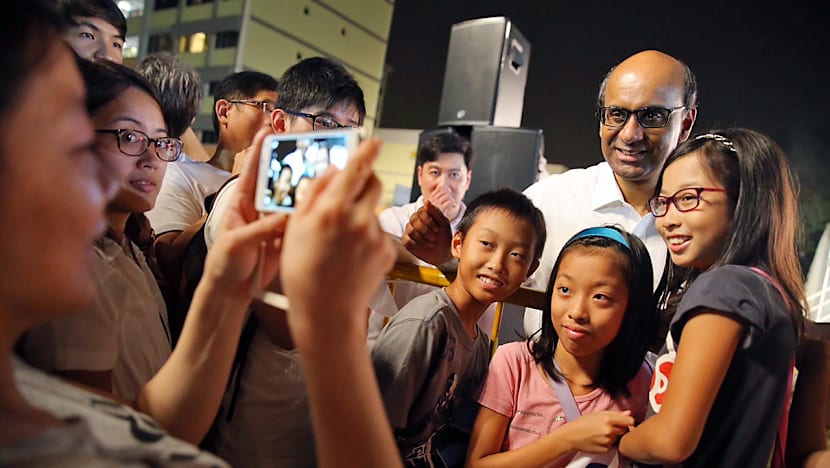
DPM Tharman Shanmugaratnam. TODAY file photo


SINGAPORE — Looking at issues from the ordinary citizen’s perspective, and gathering the inputs and contributions of the community, private sector and civil society are among the main steps the Public Service must take to evolve its way of doing things, said Deputy Prime Minister Tharman Shanmugaratnam.
This is so that it can keep up with citizens’ changing needs and aspirations in a new terrain where solutions to problems are both more complex and less assured of results. While the public sector will also face the same manpower constraints as the wider economy.
Addressing about 600 public officers at the annual Public Service Leadership dinner at Orchard Hotel today (Oct 27), Mr Tharman, who is also the Coordinating Minister for Economic and Social Policies, said: “The Public Service will need strategic vision, deep capabilities as well as close and continuous connections to the ground. We also have to stay open to ideas from others, and co-develop solutions with the community, the private sector and civil society and people from all walks of life.”
To get a clear idea of citizens’ needs, public servants must walk in the shoes of people from different walks of life whenever possible and bear in mind that the issues they face often do not fall under a single agency. The best solutions, Mr Tharman said, are ones that bring agencies together and that cut across policy disciplines.





At the same time, the thoughts, suggestions and initiatives of others, from the community to the private sector and civil society, should be sought so there is broad ownership over Singapore’s future, he added.
“We must be close to the ground, listening to feedback, sensing the deeper concerns that often underlie that feedback, and spotting the gaps in policy delivery that should not be there,” said Mr Tharman.
“Developing and coordinating solutions together ... must be second nature to public servants.”
Head of Civil Service Peter Ong, who also spoke at the dinner, made the same emphases, saying that public service leaders need to be able to manage diversity, collaborate as a team across agencies and build for the future.
Tackling diversity requires a more nuanced take on policies and more time, as public officers could be required to hold competing interests and tensions at the same time, while solutions would also no longer be as clear cut as before, he said.
“We must never cease to find new ways to harness the energies and ideas of our citizenry, while meeting the needs of our diverse population in a rapidly changing environment,” Mr Ong said. “We will need both the courage to make tough decisions, and the empathy to understand when it might not be prudent to impose a one-size-fits-all solution. The need for constant communications will be ever present, and fostering partnership with the people will be a key skill.”
Mr Ong added that in order to overcome challenges thrown up by developments elsewhere that will inevitably affect us, public servants “must appreciate the importance of building our future together — firstly, the citizenry with one another, secondly, the Government with the people”.
Mr Tharman also spoke of the need to develop deeper pools of expertise among public servants. Every public agency must also build a culture that allows its servants to learn and develop themselves continually.
To that end, the Public Service Division is now working with five government agencies to develop a common service competency framework. This can be used as a guide to developing officers and working with the Civil Service College to curate relevant training programmes for frontline officers and supervisors.
Mr Ong added that next year, the Public Service targets to kick-start “career conversations” with officers so as to map out the roles that they can aspire to, and what experiences and training they will need to get there.
The dinner was attended by leaders across the public service, as well as officers on the Public Service Leadership Programme (PSLP). About 120 officers were appointed this year, bringing the total number of officers on board the programme to 700. These officers come from agencies across the Public Service, including both ministries and statutory boards.
The PSLP, launched in 2013, aims to develop officers for key positions in five sectors — economy building, infrastructure and environment, security, social, and central administration. Under the programme, officers are groomed to become specialist leaders with an in-depth knowledge of their fields.