Rail reliability improvement has ‘some way to go’
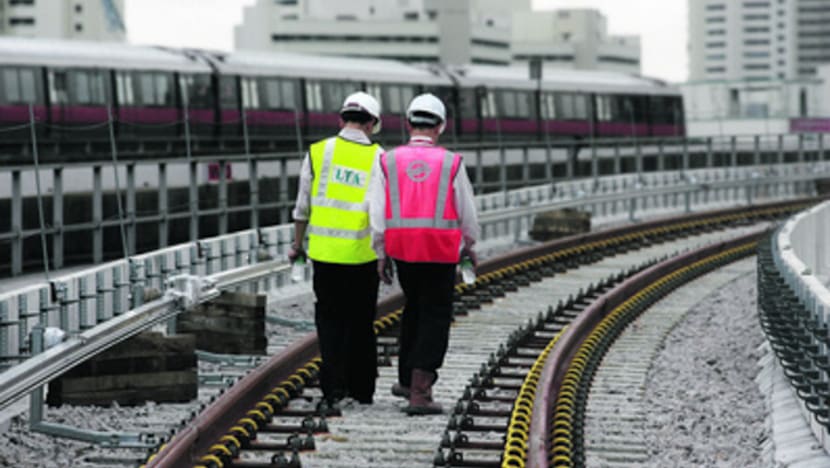
SINGAPORE — Addressing Parliament on his ministry’s plans right on the heels of a spate of MRT disruptions, Transport Minister Lui Tuck Yew yesterday expressed his unhappiness about the situation and described the incidents — including a 23-hour Bukit Panjang LRT system breakdown that occurred over Monday and Tuesday — as “stark reminders” that there is still some way to go in improving train reliability.
The Bukit Panjang LRT disruption was the sixth in 16 days, excluding another delay yesterday on the North East Line after a student’s leg was stuck in the gap between the platform and train at Hougang MRT station.
“While I can accept the occasional breakdown or even a more severe disruption if it occurs very rarely, I am really upset with the current situation in the past few weeks,” Mr Lui said during the Ministry of Transport’s Committee of Supply debate. “The incidents have inconvenienced too many commuters, disrupted their routines and schedules and, once again, undermined confidence in the transport network and the progress we have made.”
Pioneer Member of Parliament Cedric Foo, who chairs the Government Parliamentary Committee for transport, said the recent breakdowns are “very disappointing” to the public, in light of the efforts undertaken by the Government and operators.





Trotting out statistics that showed that there had been improvements in rail reliability, Mr Lui said the incidents showed the range of problems and the scale of the task confronting the authorities and operators. “This is despite the intensive efforts that the LTA (Land Transport Authority) and rail operators have put in over the past few years,” he said. For example, for the North-South and East-West Lines, the rate of train withdrawals fell by half to 1.1 per 100,000 train-km last year from 2.2 in 2013. The withdrawal rate for the Bukit Panjang LRT system also fell to 4.5 per 100,000 car-km last year from 6.1 in 2012.
The latest Public Transport Customer Satisfaction Survey also showed that Singaporeans’ overall satisfaction with public transport increased to 91.3 per cent last year from 88.5 per cent in 2013. Satisfaction with the rail network, in particular, had improved by four percentage points, reversing a four-year decline, said Mr Lui. “The recent spate of disruptions, coming against a trend of general improvement in train reliability, really pains me,” he added. “We will spare no effort to find out the cause ... and stem the problems.”
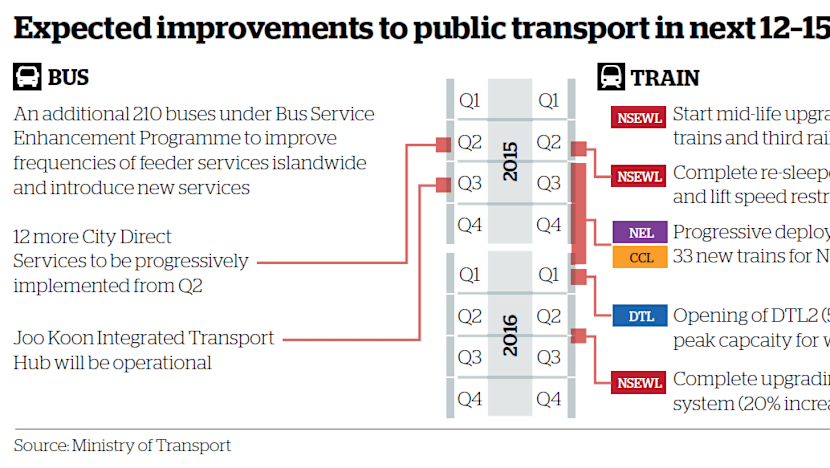
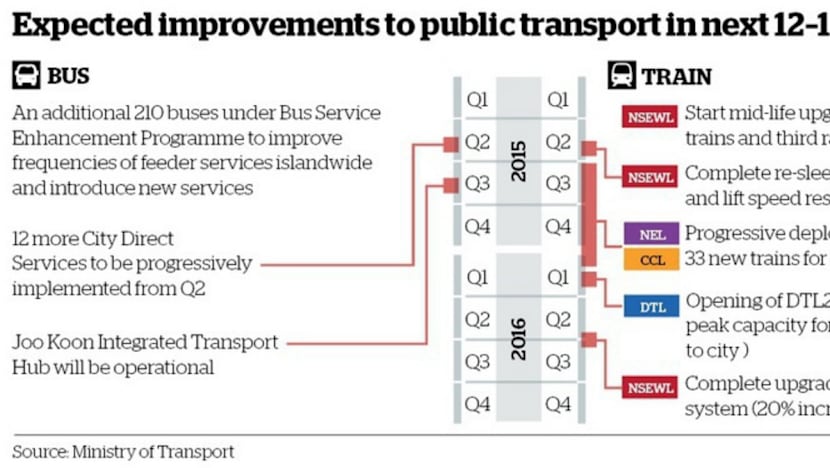
On what can be done to minimise disruptions, he said: “The operators must persevere and redouble their efforts to do better. They need to intensify their maintenance regime, undertake additional preventive and detection measures, as well as improve their processes to enable prompt and effective response to maintenance issues.” The authorities will work with operators to continue with track renewal and mid-life upgrades of trains, Mr Lui said. The LTA will also augment SMRT with additional engineering expertise where required and step up audits of the operator’s maintenance procedures and resources.
Besides rail reliability, Mr Lui responded to calls from Workers’ Party (WP) chief Low Thia Khiang and Tanjong Pagar GRC MP Lily Neo for women-only cabins on MRT during peak hours. He said the suggestion had been raised previously and had been looked at carefully. However, there are practical challenges, such as the enforcement of the rule, he noted.
Also, based on the experience of other countries, women-only cabins are often less utilised, which means “more commuters will have to crowd into the other cabins or wait for the next train”, Mr Lui said.
WP MP Sylvia Lim and Ang Mo Kio GRC MP Seng Han Thong also raised concerns about the safety and security of commuters on the public transport system. In response, Mr Lui said the recent intrusions at SMRT’s Bishan Depot and on the North-South Line showed that “determined intruders will probe for the slightest weakness in our system”. “I agree, however, that we can and must do better ... We have added multiple layers of security, so if one layer fails, the next layers will prevent an intrusion or at least mitigate the consequences,” he said.