Review of laws on attempted suicide and other areas to be completed this year
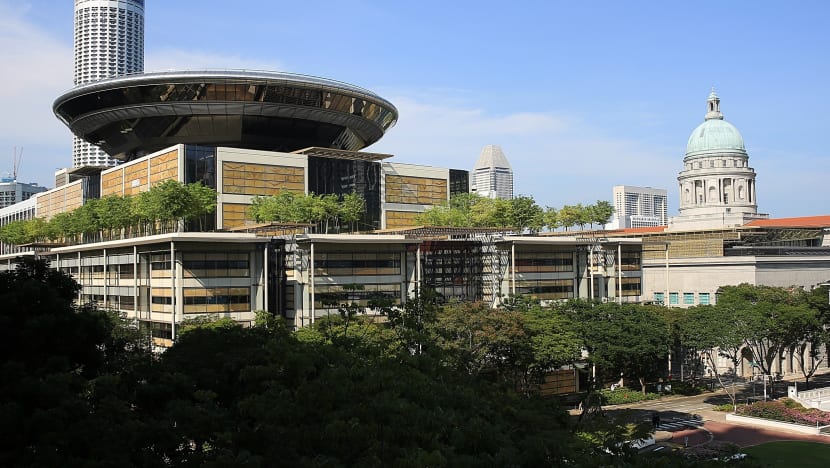
The Government aims to complete its review of laws on attempted suicide, marital immunity for rape, punishments for sex offenders and other areas of the Penal Code this year, as well as the need to create new criminal offences to deal with the changing crime environment. TODAY file photo


SINGAPORE – The committee reviewing the criminalisation of attempted suicide, marital immunity for rape, punishments for sex offenders and other areas of the Penal Code aims to complete its work this year.
Its recommendations will then be put up for public feedback, said Law and Home Affairs Minister K Shanmugam in Parliament on Tuesday (Jan 9).
Mr Shanmugam was responding to questions from Nominated Member of Parliament Kok Heng Leun on the outcome of the review. Mr Kok wanted to know if laws relating to attempted suicide and marital immunity for rape would be changed.
The committee will also look at the need to create new criminal offences to deal with the changing crime environment, said Mr Shanmugam.





Feedback from Members of Parliament and other parties on the areas being studied have been noted, and are being considered in the review, he said.
In addition, the committee is also undertaking a “fairly fundamental review” of the principles that form the basis of penal laws here. The principles include the elements of criminal liability, the required mental intention or knowledge and the scope of mental health defences, said Mr Shanmugam.
During the Ministry of Law’s addendum to the President’s Address in 2016, the Government said it wanted to undertake substantive reforms of Singapore’s criminal laws to ensure they remain relevant and up-to-date.
The Penal Code Review Committee was set up in July 2016 and is co-chaired by Senior Minister of State (Law) Indranee Rajah and Parliamentary Secretary (Home Affairs) Amrin Amin. Mr Amrin took over in September last year from former Second Home Affairs Minister Desmond Lee.
There are 14 other members in the committee. They include High Court judges See Kee Oon and Aedit Abdullah, law professors Amirthalingam Kumaralingam and Stanley Yeo, lawyers Amarjeet Singh and Wendell Wong, as well as representatives from the police force, Home Affairs ministry and Attorney-General’s Chambers.
Their tasks include proposals to update or remove outmoded offences and to review punishment provisions to ensure they are proportionate to the seriousness of the offence.
Mr Shanmugam also said on Tuesday the public will be given sufficient time to provide feedback, after Mr Kok suggested more time be given for stakeholders to discuss any proposed changes.
“We work fairly quickly, and stakeholders must also (respond) to us quickly but enough time will be given for feedback,” he said.
Last April, then-Minister for Social and Family Development Tan Chuan-Jin said the Government was “actively reviewing” the issue of marital immunity for rape, citing how married women should have the same access to protection from violence as unmarried women.
In November 2016, then-Senior Minister of State for Home Affairs Desmond Lee said in Parliament that the Government was prepared to review laws that criminalise suicide.
Under Section 309 of the Penal Code, an individual who attempts suicide can be jailed for up to a year and fined.
In 2012, the Penal Code was amended together with the Misuse of Drugs Act to remove the mandatory death penalty for certain types of homicide and drug trafficking offences.
Penal Code review won’t cover section 377A and the use of the death penalty
The committee tasked to undertake a review of the Penal Code will not be reviewing section 377A – the section of the Penal Code that criminalises sex between men – and the use of the death penalty.
In 2016, some delegations at the Universal Periodic Review of the human rights records of all United Nations Member States had recommended that Singapore abolish section 377A as well as the death penalty, caning and detention without trial.
The Singapore delegation responded with the context and rationale of policies particular to Singapore on these issues, and Ambassador-at-Large Chan Heng Chee was reported saying: “There are of course the usual recommendations urging us to abolish the death penalty and to sign more human rights conventions. But it is up to the state whether they want to accept or reject the recommendations.”
Last year, Prime Minister Lee Hsien Loong also told veteran BBC journalist Stephen Sackur the Government has no plans to repeal Section 377A for now. He said Singapore society is still “not that liberal on these matters”.
In 2007, Parliament passed the Bill for wide-ranging amendments to the Penal Code but had retained Section 377A amid fiery debates over the two-day parliamentary sitting. Outside Parliament, there were petitions urging the Government to change its mind about the gay laws.
Debates occur periodically over this section of the Penal Code. In 2014, the Court of Appeal rejected constitutional challenges against section 377A, ruling that the guarantee of equal protection under the law as enshrined in Article 12 of the Singapore Constitution touched only on issues relating to religion, race, place of birth and descent, not gender, sex and sexual orientation.
Neither does the statute violate the right to life and liberty — as stipulated in Article 9 — as this referred only to the personal liberty of a person from unlawful incarceration and not the right of privacy and personal autonomy, it ruled.