Rise in foreign worker levies to be deferred
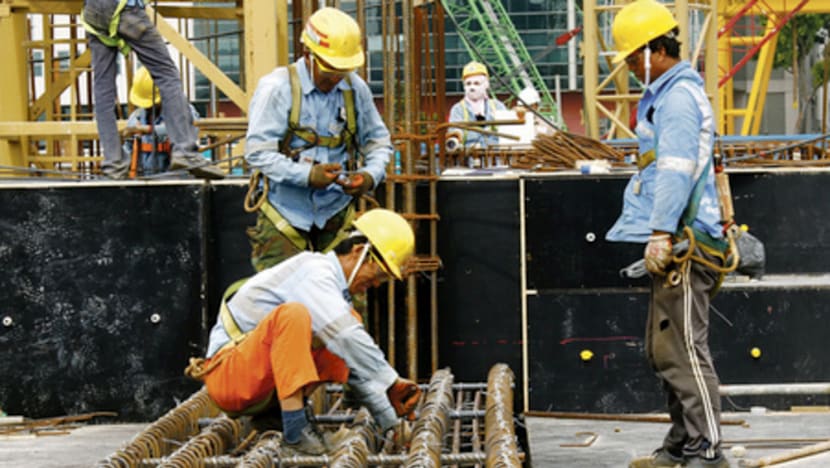
The R1 worker levy rate under the Man-Year-Entitlement waiver will be lowered from S$750 to S$600 from July 1 this year. Photo: Ernest Chua


SINGAPORE — Businesses feeling the strain of hikes to the foreign worker levy — which has been raised gradually since 2010 — will get a temporary reprieve, with the Government deferring the scheduled increase for this year for S Pass and Work Permit holders to next year.
This is so that companies, especially SMEs, have more time to adapt to the new normal of a permanently tight labour market, said Finance Minister Tharman Shanmugaratnam, who announced the move in his Budget Statement delivered yesterday.
Also, in recognition of the progress the manufacturing sector has been making in improving productivity, levies for Work Permit holders in this industry will be kept at the rate of July 1last year until 2017. The sector has not seen any increase in the number of Work Permit holders over the past year, Mr Tharman noted.
But construction firms will have to pay higher levies for Basic Skilled (R2) workers, as part of a bid to nudge companies to hire and retain more higher-skilled and productive R1 workers.





From July next year, levies for R2 workers will be raised from S$550 to S$650 and to S$700 in 2017.
The R1 worker levy rate under the Man-Year-Entitlement waiver will be lowered from S$750 to S$600 from July 1 this year. All other levy rates for construction will remain at 2014 levels.
Mr Tharman said progressive tightening of foreign labour policies since 2010 has shown success in reducing foreign workforce growth, with the net inflow of foreign workers — excluding the construction sector and foreign domestic workers — down from 60,000 in 2011 to 16,000 last year. “The significant slowdown we have seen in the past year gives us space to adjust the pace of our tightening measures,” he said.
But the minister stressed that the adjustment in the pace of such measures does not mean the Government is changing the direction of its policies.
“It remains crucial for Singapore that we restructure towards reducing our reliance on manpower and find new and more innovative ways to do business,” he said.
Levy rates have been raised progressively since 2010, when the Government introduced a two-tier levy framework, with adjustments to levy rates every six months over a three-year period.
While this has achieved what it set out to do, it has also drawn complaints from industry players, especially those in the construction sector, who say productivity has suffered because of limited manpower.
Mr Tharman said while Singapore has to stay the course in reducing its reliance on labour, especially unskilled foreign workers, the Government will continue to adjust its foreign worker policies according to the pace of inflows, quality of workers being employed and progress being made in raising productivity.
He assured businesses that the Government would continue to compensate them with more resources than what it is collecting in additional foreign worker levies, through incentives and grants to help companies upgrade and innovate.
Adding that most of the support will be targeted at small and medium enterprises (SMEs), the minister said that, this year alone, the amount being channelled back to SMEs is expected to be more than one-and-a-half times the additional foreign worker levies they will pay.
READ THE FULL BUDGET STATEMENT HERE
Other documents on Budget 2015 available on the Budget 2015 website.