Rowell Road mosquito outbreak eases after months of misery for residents
Experts say the Culex mosquito behind the outbreak poses limited public health risk, but residents should still eliminate stagnant water to cut breeding habitats.
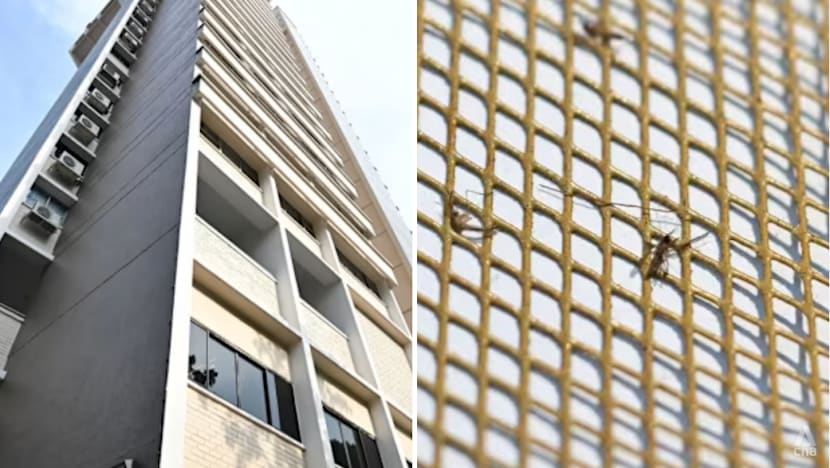
Dead mosquitoes at Block 642 Rowell Road on May 4, 2026. (Photos: CNA/Raydza Rahman)

This audio is generated by an AI tool.


SINGAPORE: Residents at a Jalan Besar housing block plagued by mosquitoes nightly say the infestation has largely improved, though the nuisance has not fully abated.
CNA reported in late April that the outbreak at Block 642 Rowell Road had sparked complaints from residents who said they were unable to sleep due to itchy bites.
Since as early as February, residents across multiple floors of the 25-storey block had been fending off nightly swarms with repellents, electronic traps and protective netting – to little avail.
The National Environment Agency (NEA) attributed the rise to the weather and an increase in breeding of Culex quinquefasciatus – a mosquito species common in Singapore's urban setting – and said it had cleared breeding sites earlier in April.
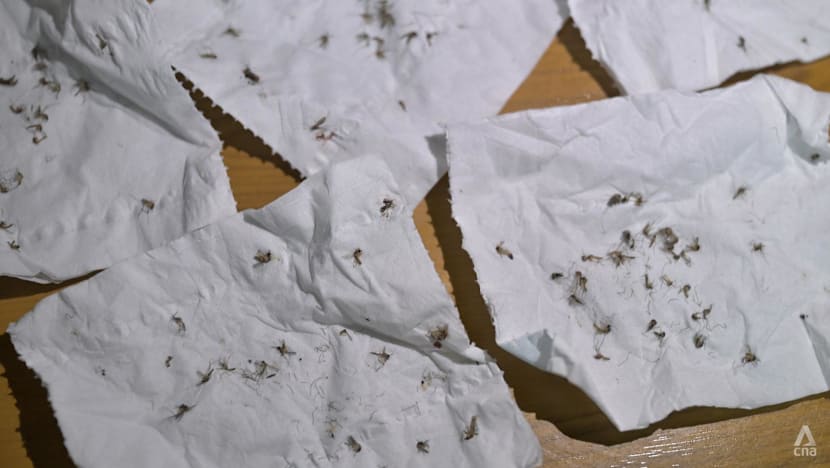
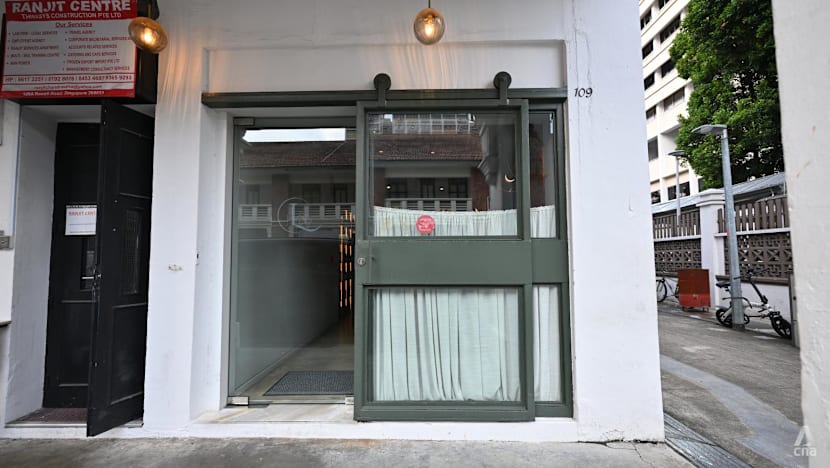
CNA revisited Rowell Road on May 4 and found fewer mosquitoes in common areas. At the darkened second-floor void deck, where mosquitoes had previously swarmed, only one or two remained. At least 25 mosquito carcasses littered a shoe rack outside a commercial door supplier, beside cans of insecticide.
Madam Sabrina Sow, 68, whose family had resorted to keeping windows shut at night, said the situation was "much improved".
At the height of the outbreak, her family took turns getting up through the night to swat insects with an electric bug zapper, and resorted to sleeping in individual mosquito tents.
On particularly bad nights, the family killed up to 80 mosquitoes, some of which had drawn blood.
Things are calmer now, though Mdm Sow and her family still get bitten while sleeping and in the kitchen. She hoped the authorities would stay vigilant with control measures, or the mosquitoes might "come back in full force".
Another resident CNA had spoken to previously, Mrs Joanna Yap, 37, also noticed the improvement.
Her husband still woke up with the occasional bite – four or five on some nights – but the couple and their young daughter were seeing far fewer mosquitoes in their flat and in common areas where the insects had previously swarmed.
"We've been here for about a couple of years, and we never experienced big issues with mosquitoes, except ... maybe throughout the month of April. All of a sudden, (there were) a lot of mosquitoes around and some customers complaining about it," operations manager Daniele Fiore said.
Mr Fiore said a pest control company he engaged was unable to identify the source of the problem, suggesting it may have been a wider issue.
On one of the highest floors of the block, resident Tan Yun said mosquitoes had swarmed her family at the lift lobby the month before.
"We stay at the higher floors. So they will actually follow us into the lift. You would think that the higher floors are a little bit better, but they still do follow," said Ms Tan, who has two young sons.
"My younger one suffered quite a bit from all the mosquito bites, but I think it's a lot better. Now you can basically see the reduction," added the 42-year-old, who works in communications.
CULEX BREEDING UP 55 PER CENT
The Rowell Road incident comes amid a broader increase in Culex mosquito breeding habitats across Singapore.
NEA data showed that while breeding habitats of the two most common Aedes species fell in the first 15 weeks of this year compared to the same period last year, Culex quinquefasciatus habitats rose by around 55 per cent over the same period.
Habitats detected for Aedes aegypti and Aedes albopictus fell by 65 per cent and 51 per cent respectively. Around 2,700 Aedes breeding habitats were identified across Singapore in this period.
"These numbers continue to pose significant localised dengue risk, and community vigilance in removing stagnant water remains critical," the NEA spokesperson said.
NEA attributed the Culex spike to prolonged hot weather interspersed with sudden thundershowers, which creates conditions conducive to Culex breeding.
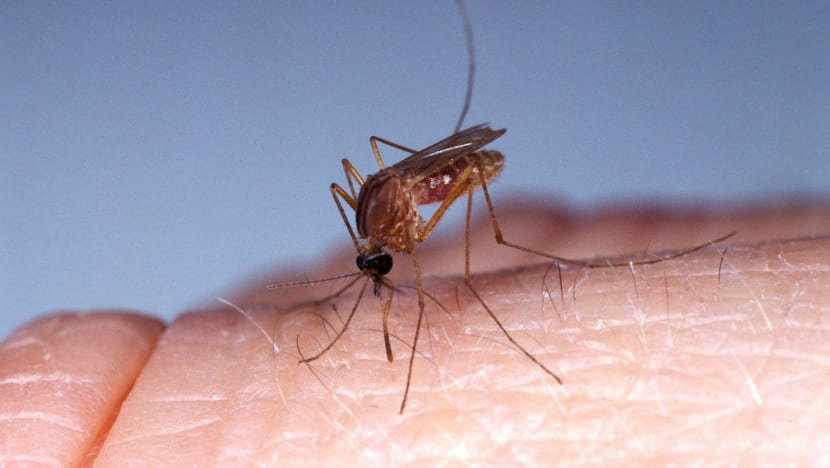
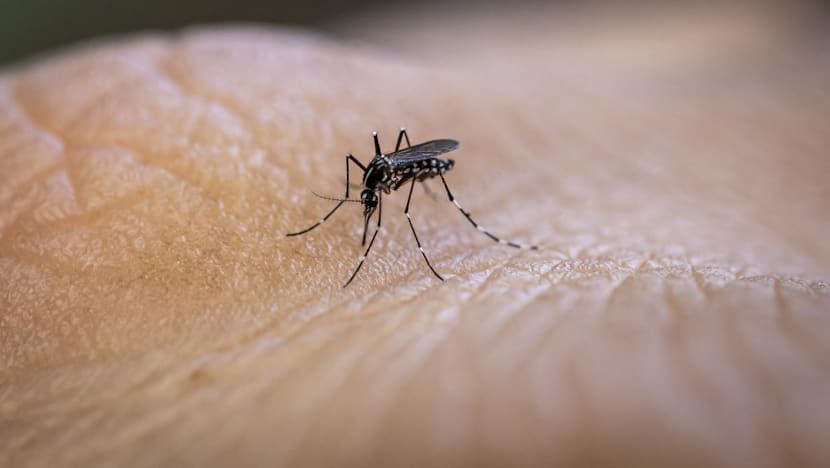
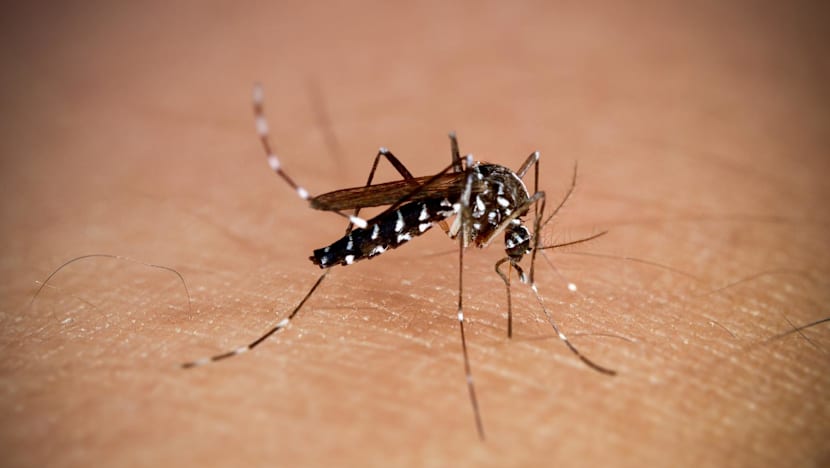
The Culex quinquefasciatus is a golden-brown mosquito with a dark proboscis, and the most common Culex species in Singapore. Primarily a night biter, it typically breeds in stagnant outdoor water such as blocked drains.
Aedes mosquitoes, best known for spreading dengue, zika and chikungunya, tend to breed in cleaner container habitats indoors and outdoors.
LIMITED PUBLIC HEALTH RISK
Despite the rise, experts said the situation does not pose a major public health risk.
The Communicable Diseases Agency (CDA) said the risk of Japanese encephalitis virus and West Nile virus – both transmitted by Culex mosquitoes – is currently low in Singapore. Culex mosquitoes do not spread dengue.
CDA's Group Director of Communicable Diseases Programmes, Associate Professor Lim Poh Lian, said no cases of West Nile virus have been reported in Singapore, while the last local case of Japanese encephalitis was in 2008 and the last imported case in 2015.
"For these diseases to take root in Singapore, there needs to be sustained presence of these viruses in Culex mosquitoes and animal reservoir hosts such as birds and pigs, as well as human exposure to infected vectors," Assoc Prof Lim said.
Duke-NUS Medical School Emeritus Professor Duane Gubler said Culex mosquitoes are primarily a nuisance rather than a disease-transmitting pest, and noted that Japanese encephalitis is a rural disease rarely found in urban areas.
"The major amplification host for Japanese encephalitis is pigs, and you don't grow many pigs in Singapore anymore," the chair of the Global Dengue and Aedes-Transmitted Diseases Consortium said, referring to the country’s past pig farming industry.

DIFFERENT PESTS, DIFFERENT STRATEGIES
Pest experts said Aedes and Culex mosquitoes prefer different breeding habitats, though some overlap exists.
"Unlike Aedes, which is closely associated with cleaner container habitats, Culex is more strongly linked to organically polluted stagnant water, especially blocked drains, dirty gullies, sumps, inspection chambers and similar outdoor water-holding structures," said Origin Exterminators' operation manager Lawrence Ng.
Problems with Culex mosquitoes are usually more pronounced in older urban pockets, back lanes, service areas and construction perimeters, he added.
Asked whether suppressing Aedes mosquitoes could have contributed to the rise in Culex populations, NEA said the two species have different breeding habitats and the suppression of Aedes aegypti does not drive Culex increases.
Prof Gubler agreed, saying the two species are ecologically distinct and do not significantly compete.
"Singapore is a highly dense population, so there's always people around, so there would be no competition at all for the blood meals that are needed to produce the eggs. The competition, if it occurred, would have been in the larval habitats, competing for that food," he added.
Given the higher disease risk from Aedes mosquitoes, experts said control efforts should prioritise them over Culex.
WHAT RESIDENTS CAN DO
Pest control experts said mosquito activity is largely seasonal and complaints tend to recur. Eliminating breeding habitats remains the most effective control measure.
"For Culex, we place more emphasis on drain-linked source reduction, restoring water flow, sludge removal, larval control and targeted adult control where needed," said Origin Exterminators' Mr Ng.
Entomologist Calvin Wong from Aardwolf Pestkare noted that fallen leaves and debris are often washed into drains and may not be cleared regularly, clogging them and creating stagnant conditions that become breeding grounds.
At the government level, NEA conducts mosquito surveillance and tailors control strategies to the type of mosquitoes detected.
For Culex, it works with town councils to clear blocked drains, fix uneven ground to prevent water ponding, flush drains and apply larvicides where water cannot be removed. Fogging is used judiciously, as indiscriminate use may lead to insecticide resistance.
Prof Gubler said traps effective against Aedes mosquitoes are less so against Culex. He suggested light traps with dry ice emitting carbon dioxide, as well as mosquito coils. Window and door screens can also help keep outdoor mosquitoes out.
Common household measures offer only limited relief, pest control firms cautioned.
"Using repellent is more of a short-term reprieve. You can put repellent so that they do not come to you but then again you still have so many mosquitoes outside, when the repellent wears off, they will still come to you and bite you," said Mr Wong.
"All these methods are not 100 per cent foolproof," said System Pest Control Services' sales director Leslie Chong.
"Mosquitoes are always a prevalent problem especially in a tropical climate like Singapore. There can never, ever be a situation where there is no mosquito at all," he said. "It's more of a situation where everybody has to really do their part."