Singapore, Malaysia call joint market-sensing exercise on HSR
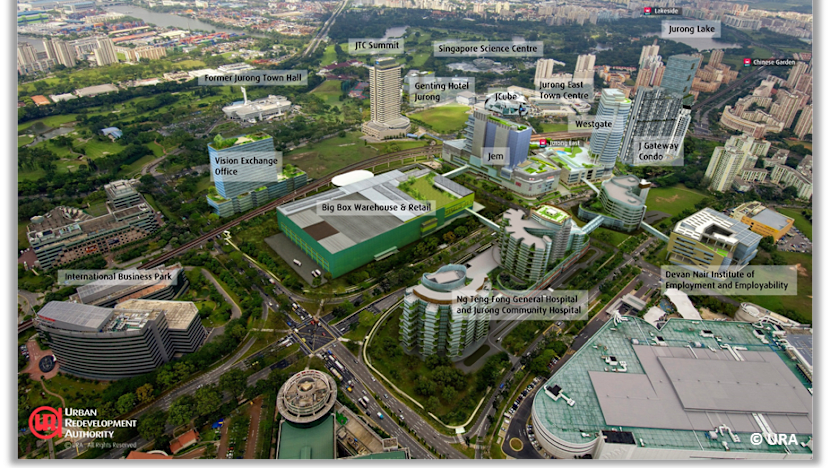
An overview of the area where the Kuala Lumpur-Singapore High Speed Rail will be built at. Graphic: Urban Redevelopment Authority
SINGAPORE — Singapore and Malaysia have called a joint exercise to suss out market sentiment on the Kuala Lumpur-Singapore High Speed Rail (HSR) project, and gather industry opinion on commercial and technical aspects of the project.
The Request for Information (RFI) exercise, which will wrap up by the end of the year, will help inform the subsequent formal tender process. It will also help the governments understand how to structure the project commercially, said Minister for Transport Khaw Boon Wan. Mr Khaw co-chairs the ministerial committee overseeing the project with Malaysian Minister in the Prime Minister’s Department Abdul Wahid Omar.
In a post on the Ministry of Transport’s blog, Mr Khaw said that while the potential of a HSR includes catalysing economic growth and unlocking new opportunities, he noted that it is also a “large, complex infrastructure project”.
“There are many examples of countries that have failed in their HSR aspirations or their HSRs have run into serious financial problems. A common reason is the gulf between the government’s ambitions and the market reality,” said Mr Khaw, who is also Coordinating Minister for Infrastructure. “This market-sensing exercise is intended to close that gulf.”





He added that the Ministry of National Development had seen benefits in conducting market sensing before implementing large-scale projects, such as the integrated resorts at Marina Bay and Sentosa.
The exercise is being conducted by the Land Transport Authority and Malaysia’s Land Public Transport Commission.
Companies or consortiums that fulfil the qualification criteria can register their interest in taking part in the exercise before Oct 16. Those deemed eligible to participate in this exercise will be notified by email. The deadline for submission of responses to the RFI documents is on Nov 18 at 12pm.
The project was first announced by Malaysian Prime Minister Najib Razak and Prime Minister Lee Hsien Loong in February 2013.
The HSR link aims to cut the travel time between the two cities to 90 minutes, with terminus stations in Kuala Lumpur’s Bandar Malaysia and in Singapore’s Jurong East.
The leaders of China and Japan have indicated an interest in taking part in the project, and firms reportedly keen on the project include China Railway Construction Corporation, CRRC Corporation — formed from a merger of two Chinese rail giants — and East Japan Railway Company. When contacted, a spokesperson from the East Japan Railway Company said it could not comment at this time whether the firm was interested in the exercise, or putting in a bid. CRRC was unable to respond by press time.
Commenting on the market-sensing exercise, Mr Oliver Redrup, director (Transport) at PricewaterhouseCoopers Singapore said: “It allows the governments to test the analysis and studies they have done so far and also enables them to incorporate private-sector expertise at an early stage of the design and specification of the line and the commercial model.”
This will contribute to “robust preparation” and tendering of a project that is attractive to construction companies, operators and financiers whilst meeting the governments’ objectives, he said.
“For this partnership between the public and private sectors to be successful and sustainable in the long term requires collaboration and close working. It is good the governments are formally starting that process now,” he added.