Social cohesion could be compromised if S'poreans are swayed by divisive falsehoods: Dr Maliki
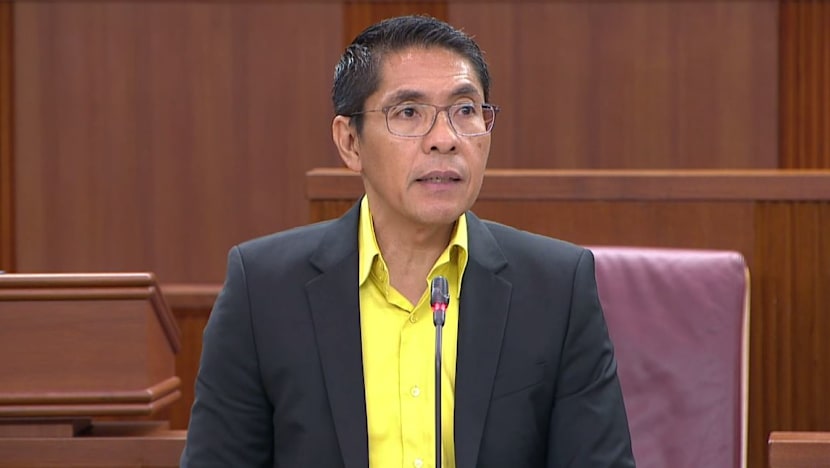
Dr Maliki noted that “in an interconnected world”, Singaporeans are “more easily exposed to pressures that could unsettle their willingness to uphold...national interests, including racial and religious harmony”. Photo: Sreencap from Parliament
SINGAPORE — Fake news and online falsehoods not only “tear at our interfaith unity”, it can have a detrimental impact on national security and social cohesion, and has the potential to “undermine us from within”, said Senior Minister of State for Defence Maliki Osman.
Speaking at his ministry’s Committee of Supply debate on Friday (March 2), Dr Maliki noted that “in an interconnected world”, Singaporeans are “more easily exposed to pressures that could unsettle their willingness to uphold... national interests, including racial and religious harmony”.
He stressed that falsehoods could “weaken our trust in public institutions and confidence in a shared future, or incite fear”.
Social cohesion here could be compromised if Singaporeans let themselves get swayed by “divisive falsehoods, or stigmatise particular social groups in the wake of a violent attack”, he added.





On Friday, Dr Maliki told the House that threats in social and psychological domains “are very real, but often unapparent”.
“They have a creeping yet significant impact on our ability to defend,” he added.
And while the Singapore Armed Forces is expanding to respond to threats, “aggressors can put pressure on a target nation in many way … increasingly (directing) this pressure at ordinary citizens”, Dr Maliki, who is also Senior Minister of State for Foreign Affairs, noted.
Thus, he said Total Defence will shift towards the new security environment, “according greater attention to social and psychological defence”.
Highlighting the example of 39-year-old Megat Shahdan Abdul Samad, the Singaporean fighter in Syria, Dr Maliki wondered aloud how Singaporeans should and would react to such news and images.
Megat was featured in two ISIS propaganda videos. The first was of him exhorting fighters to join the ISIS, and the other showing him shooting three men at close range.
While Dr Maliki noted that the “immediate reaction” would be that of worry, disbelief, fear and even distrust, the minister said these reactions “could be mitigated, depending on how strong we are psychologically, as individuals, and socially, as a community”.
He reiterated the same message in Malay, noting: “Military and civil domains are most intuitively associated with defence, (but) it is increasingly important today that we broaden our definition of what it means to safeguard Singapore.”
The essence of social and psychological defence, Dr Maliki added, is to “stand united to safeguard the harmony we hold dear”.
Responding to a subsequent clarification from Mr Vikram Nair (Sembawang) about what steps Mindef would be taking to weed out threats of the unconventional kind, like falsehoods and fake news, Dr Maliki reassured the House that different agencies in the Government were “looking at it…in various domains”.
“We also need to start looking at how Singaporeans respond to fake news on social media. That’s one of the bigger challenges — the skillsets required by the individuals to respond to such (posts). Once you see something on your FB feed... or something from your WhatsApp group, do you verify? Where do you verify?” he said.
Equally as important on an individual level, Dr Maliki stressed the need to “be aware of our own reactions, and (to) take... steps to learn more about such issues, as well as build trust and relationships with all the other communities”.