S’pore to experience penumbral lunar eclipse on Wednesday
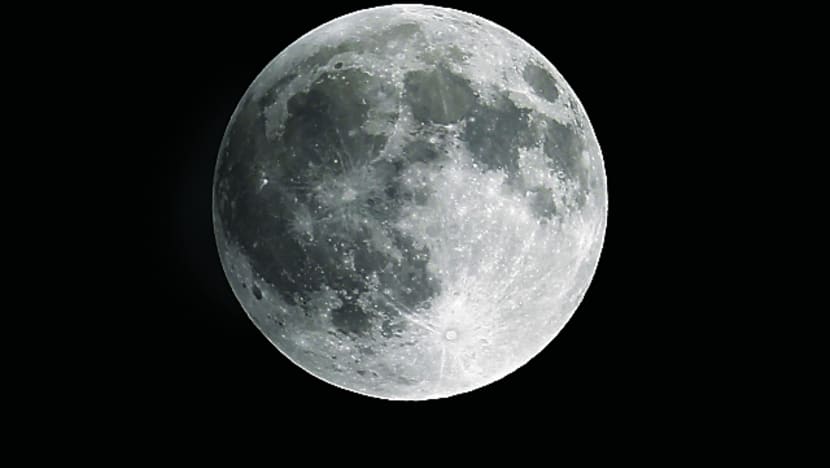
A shadow falls on the moon as it undergoes a lunar eclipse. Photo: Reuters


SINGAPORE — Astronomy enthusiasts are in for a challenge on Wednesday night (March 23): A penumbral lunar eclipse — where the moon is darkened slightly — is set to take place across the Singapore sky and it will be hard to spot.
It is expected to take place between 7.47pm and 9.55pm.
A lunar eclipse happens when the moon enters the earth’s shadow. During a penumbral lunar eclipse, the moon enters the outer part of the earth’s shadow, called the penumbra. This is unlike a total lunar eclipse, where the moon enters the darkest part of the earth’s shadow, called the umbra, and results in a “blood moon”.
Highlighting the occurrence of a penumbral lunar eclipse in a Facebook post on Monday, the Science Centre Singapore (SCS) had said: “This is going to be one very very difficult lunar eclipse to spot - you may not even notice it happening at all!





“The Moon will not enter the deepest part of the Earth’s shadow, but only the penumbral shadow. So you will see only a slight dimming of the Moon, and definitely not the blood-red moon of a total eclipse.”
Dr Tan Ei-Leen, Deputy Director, Physical Sciences, SCS, told TODAY: “In Singapore, you’ll get about one to two lunar eclipses per year. Some years, they can be spectacular when they are total eclipses and start after moonrise (for example, last year), other years (like this year) you may just get a penumbral eclipse that starts early (about half an hour after moonrise).”
As the view will be mostly blocked by trees and buildings at the Science Centre Observatory, the SCS is not hosting any viewing session for Wednesday’s lunar eclipse.
For those raring to catch Wednesday’s eclipse, Dr Tan advised: Find a place where it’s possible to see down to the horizon, like the beaches on the eastern side of Singapore or from the top of a very tall building.
Just early this month, parts of Asia, including Singapore, were treated to the rare sight of a partial solar eclipse.