S’pore’s factory activity slumps to lowest level since Dec 2012
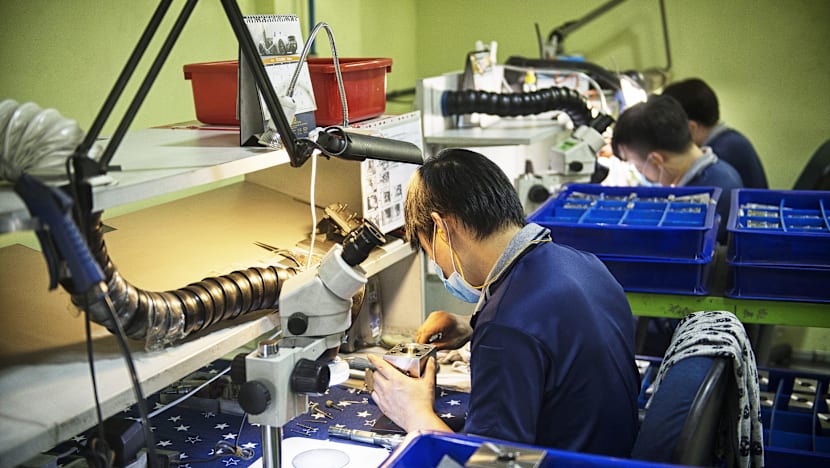
Bloomberg file photo


SINGAPORE — Manufacturing activity for the Republic shrank for the second consecutive month in August to its lowest reading since December 2012, as global financial market volatility, the devaluation of the yuan and a shorter working month added pressure to factories here.
The Purchasing Managers’ Index (PMI) slid to 49.3 points for last month, contracting further from 49.7 points in July on broad-based weakness, said the Singapore Institute of Purchasing and Materials Management today (Sept 2). A score above 50 indicates expansion, while a reading below that reflects contraction.
“New orders, new export orders, production output, inventories, imports and employment and prices declined further. This is indicative of broad-based weakness, so there is no light at the end of the tunnel at this juncture,” said Ms Selena Ling, head of Treasury Research and Strategy at OCBC Bank.
“The volatility from the Chinese stock market and the yuan devaluation add to worries about the state of economy for China … These impacted consumer’s confidence (regionally), as well as for Singapore. Also, the SG50 celebrations saw fewer working days, which adds to why key components for last month’s PMI declined across the board,” said Mr Song Seng Wun, an economist at CIMB Private Banking.





The electronics sector continued to be shaky, with its PMI sub-index extending its contraction to 49 points, or a 0.5 point dip from the previous month, because of a further decline in new orders from both domestic and overseas markets.
Taking the PMI figures together with industrial production data, which shrank for the sixth consecutive month in July, the drag from manufacturing output could extend into August and September, which could in turn raise the odds for a technical recession in the third quarter should the other engines of growth, namely services, also falter amid a slowdown in China and uncertainties from the US Fed, said Ms Ling.
A technical recession is defined by two consecutive quarter-on-quarter contractions. On a seasonally adjusted basis, second-quarter gross domestic product declined an annualised 4 per cent in the three months through June, the Ministry of Trade and Industry said last month, reversing from 4.1 per cent growth in the preceding quarter.
That said, Mr Song pointed out that it would take a lot of underperformance from the manufacturing sector to see a technical recession. “A technical recession is still unlikely. Based on calculations, the manufacturing sector is required to decline 7 per cent year-on-year for the third quarter to take Singapore’s GDP down to a quarter-to-quarter decline. The decline is not impossible … but we see only a small chance of it happening.”
August’s readings were consistent with global manufacturing cues, as many parts of Asia registered a slowdown in their factory activities.
China, Singapore’s No 1 export destination, saw its official manufacturing PMI slump to a three-year-low, easing to 49.7 points last month from 50 points in July, while the private-sector Caixin Markit China PMI fell to a six-and-a-half year low of 47.3 points from 47.8 points in July.
Other regional PMI numbers showed factory activity in Taiwan, South Korea, Malaysia and Indonesia had also continued to shrink.
Going forward, manufacturers will have to look to the year-end festive period for factory activities to gain speed. “As the seasonal year-end period approaches, we have to see orders picking up. Hopefully, some cheer would be there, but ongoing market volatility may still hold on to business decisions,” said Mr Song.