Survivor’s guilt complex normal in near term, say experts
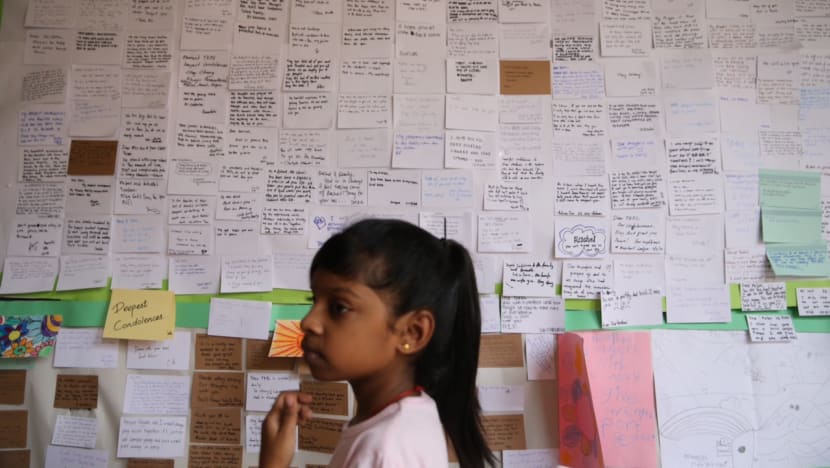
Condolence messages left behind on a tribute wall at Tanjong Katong Primary School. Photo: Don Wong/TODAY


SINGAPORE — The days and weeks ahead are crucial in terms of managing the immediate psychological reactions the children would feel from surviving an earthquake that claimed some of their friends, experts said.
For most, the typical symptoms of insomnia, nightmares, a loss of appetite and mood swings should go after a couple of weeks. But there could be a few who could continue suffering these symptoms or worse long after, they added.
Psychologists, psychiatrists and counsellors said professional help is crucial for those who continue to have nightmares and flashbacks of the accident, or have trouble focusing, for more than a few weeks.
The parents and friends of these survivors should also look out for signs that they have difficulty connecting or relating to others, or if they suffer from severe fear, anxiety or depression for longer than six weeks.





“If the trauma is not processed and resolved, this sense of fear and helplessness may carry over into adulthood,” said consultant psychologist Elizabeth Ho from The Resilienz Clinic.
Experts said it is too early to determine the extent of the psychological effects on these students given that this remains the “acute stage” after the quake. But one possible symptom the Tanjong Katong Primary School students and teachers could face is survivor’s guilt complex — the fact that “they survived but their friends died”, said consultant psychiatrist at Mount Elizabeth Medical Centre Brian Yeo.
Teachers may also develop a sense of “self-blame” for not being able to protect all the students, senior principal clinical psychologist Clare Yeo with the Institute of Mental Health added.
Parents who lost their children in this quake could also experience stronger reactions such as shock, anger and guilt for sending their children on the trip. “When we talk about psychological reactions involving child victims, the parents who are affected are going to (have) very strong reactions as opposed to, say, an adult who is a victim of a crisis,” she added.
The magnitude-6 earthquake that struck Mount Kinabalu last Friday (June 5) killed six Primary 6 students and a teacher from the school, as well as a Singaporean adventure guide they had hired. A teacher and student remain missing.
Senior social worker Joyz Tan Dunlin, 34, from Fei Yue Community Services said some students may recall their last interactions with those who died and feel guilty for not treating them better. They may also develop mixed feelings, she added, of relief at coming back safe and missing their friends who did not survive.
In the near term, Dr Yeo said it would be quite common for the young students to be disturbed by reminders of the incident, where such stresses can be triggered by looking at pictures of the trip or noticing their friends’ belongings.
“Not everyone will experience situations like this, that extreme, for that long. But it’s a normal thing to have nightmares, fears and anxieties especially when there are triggers of the reminders,” he said.
Counsellors can provide parents with psycho-education and give them the airtime to release their frustrations so they can become calmer and support their children, said Ms Yeo.
Both Dr Yeo and Ms Tan said the upcoming Primary School Leaving Examination could be a source of additional stress for the Primary 6 students. While some parents may struggle with attending to their children’s emotional needs and preparing them for the examinations, Ms Tan said others might realise there are other more important priorities than examinations.
Said Dr Yeo: “Ultimately, many of these children would get over it and get on with their lives.”