Terminus cities will reap rich rewards: Analysts
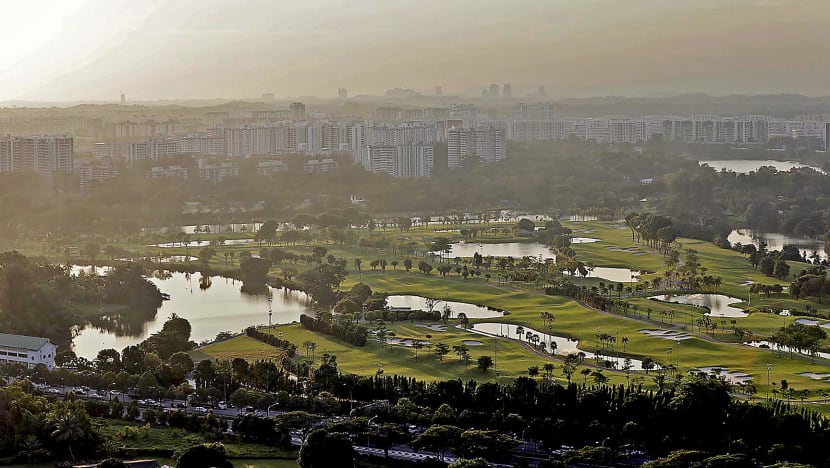
Jurong East, where the Singapore terminus station will be located. The HSR offers more options for Singaporeans to invest in Malaysian properties, said an analyst. Photo: Wee Teck Hian
SINGAPORE — Buying a second home or even working in Malaysia will be a much more attractive prospect for Singaporeans when the high-speed rail (HSR) is completed in 2026, said analysts, though they noted the advantages the link brings will most likely be reaped by the terminus cities.
Since travel time between Kuala Lumpur and Singapore under the direct service will be a mere 90 minutes by then, tourists, property hunters, workers and firms looking to relocate are likely to hone in on these two locations, they explained.
Meanwhile, the intermediate cities along the HSR line could be left in the dust, bypassed by travellers on the direct service and deserted by portions of their population, who could seek the potentially more bountiful job or business opportunities in Kuala Lumpur.
United Overseas Bank economist Francis Tan said the HSR provides options for Singaporeans to invest in Malaysian properties because the journey will become much faster. And because most people are likely to take the direct service — instead of the slower domestic service, which stops at six stations in Malaysia before terminating at Kuala Lumpur — he expects investors to eye properties in Putrajaya, 25km outside Kuala Lumpur, or near the Bandar Malaysia terminus station.





For the same reason, local businesses could relocate to Kuala Lumpur to seize on the weaker ringgit to cut operating costs, said Mr Alan Cheong, research head at property firm Savills Singapore.
Mr Tan said Putrajaya and Bandar Malaysia are developed locales with larger populations and are known as tourist hubs, which means they will be viewed as suitable for property investments, including weekend homes.
More details of the proposed 350km double-track HSR line were announced as Singapore and Malaysian signed a seven-point memorandum of understanding on Tuesday (July 19). Apart from the two terminus stations, there will be six transit stations in Putrajaya, Seremban, Ayer Keroh, Muar, Batu Pahat, and Iskandar Puteri.
Century 21 chief executive Ku Swee Yong said that when HSR lines are built, intermediate cities “sometimes get completely bypassed, irrelevant and become service stops”, as even their dwellers move out to look for opportunities in the cities for the terminus stations.
Agreeing, Mr Tan cited an example of a Malacca resident who could possibly take a job in Kuala Lumpur since the daily commute would be quick. One of the stops on the HSR route is Ayer Keroh in the state of Malacca.
Iskandar in Johor could be the exception, he added, as Singaporeans could consider retiring there. There are plans for the construction of retirement homes and medical hubs there, which “may increase its status as a retirement place ... and see a positive spillover from the HSR”.
CIMB Private Bank economist Song Seng Wun pointed out that, in general, Singaporeans would consider the political and economic landscape in Malaysia when they consider investing in properties there.
“Political and economic uncertainties can affect valuations of properties,” he added. “You may be reluctant to pay for something if you are not sure whether the underlying economy is going to be stronger or weaker.”
But whether the HSR will make Singapore a more attractive destination for a much larger group of Malaysians hinges on the price of a ticket, said Mr Tan.
“No doubt there is time saving when they take the train, but pricing is still quite critical,” he added. “It will impact an individual’s choice of coming to Singapore, whether it’s for leisure or work.”