Vetting Muslim workers differently is very wrong, says Shanmugam
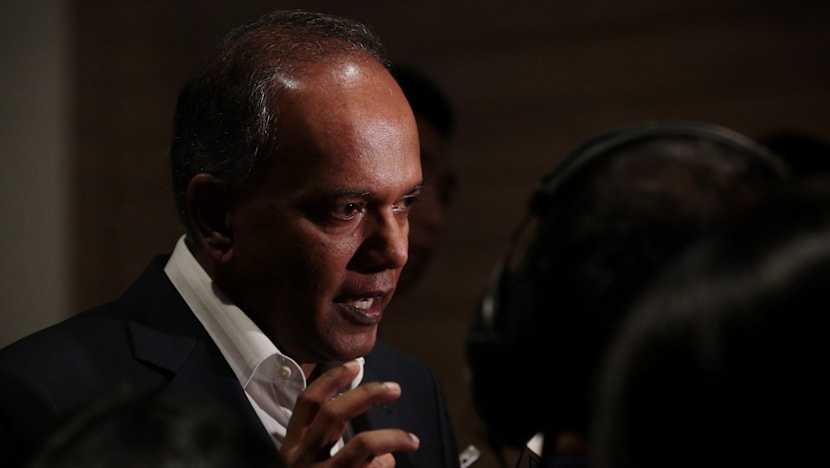
Minister K Shanmugam. Photo: Jason Quah/TODAY
SINGAPORE — Not only is it not possible, but it is also “very wrong” to suggest that employers vet Muslim workers differently to pick up radicalised individuals, said Home Affairs and Law Minister K Shanmugam on Tuesday (June 20).
The “serious responsibility” of picking up signs of radicalism falls on family and friends, Mr Shanmugam said.
He was speaking to reporters about the Ministry of Home Affairs’ announcement that it has dealt with two auxiliary police officers under the Internal Security Act (ISA) for radicalism. The news came about a week after the ministry announced the first radicalised Singaporean woman detained under the ISA for radicalism.
Muhammad Khairul Mohamed, 24, was issued with an Order of Detention for his intention to undertake armed violence overseas, while his colleague Mohamad Rizal Wahid was issued with a Restriction Order for supporting Khairul’s intentions. Both were Aetos auxiliary police officers.





Investigations found that Khairul started his path towards radicalism three years before he was hired by Aetos.
Mr Shanmugam said: “I am not sure that any vetting process would have picked it up at the time (Khairul) joined (Aetos) in 2015 … There were no obvious signs, and would have been difficult to pick it up. I think it would be very wrong to suggest that employers start vetting Muslim candidates in a different way. That will have the very opposite effect of what you want.”
On whether the latest cases could give rise to Islamophobia, Mr Shanmugam said he was thankful that Singapore society is “far away from that”. Nevertheless, “we have to be very watchful and mindful”, he stressed.
“We got to make sure that the non-Muslim community understands that we have to continue as we have in the past,” he said, adding that a “substantial majority” of the Muslim community here are peace-loving.
However, Mr Shanmugam expressed worry that the latest cases may have an impact on the police force. Noting that Singaporeans generally do not make a distinction between auxiliary police officers and fully fledged ones with the Singapore Police Force, Mr Shanmugam pointed out that Singaporeans have a high level of trust in the men in blue.
“When they look at a police officer to deal with a problem, they don’t say it is a Malay officer, it’s a Chinese officer, or Indian officer,” he said. “You don’t want our people to think along those lines. Incidents like these may cause (some) to think like that, (and) may cause employers to start looking at the race or religion of their employees they are seeking to employ.”
Speaking to TODAY, Association of Muslim Professionals chairman Abdul Hamid Abdullah shared the concern that employers could become “more suspicious in employing Muslim candidates”. This may be especially so in companies that deal with sensitive matters, such as security firms, where employers could “subject Muslim candidates to stricter scrutiny” compared with their non-Muslim counterparts.
He stressed that vetting processes, if applied, “should be objective, and should apply to all, regardless of race or religious beliefs”.
Human resources professionals urged companies to ensure fair employment processes while keeping in mind security considerations.
Mr David Ang, director of corporate services at Human Capital Singapore, noted that some companies will need to carry out background checks on potential hires. But these have to be justified, he said.
Agreeing, Singapore Human Resource Institute president Erman Tan reiterated that such checks should depend on the nature of the job, and not single out people of a particular race or religion. At the workplace, there should be greater engagement between employers and their staff, as well as among workers from different races and religions, he said.
Ultimately, the onus falls on family and friends to alert the authorities of individuals at risk of becoming radicalised, Mr Shanmugam said. “It is not possible for intelligence agencies to know everything that is going on … (family members) have to come forward … (because) they are helping the individual, they are helping us, (and) they are helping the country,” he added.