A vulnerability that will not go away
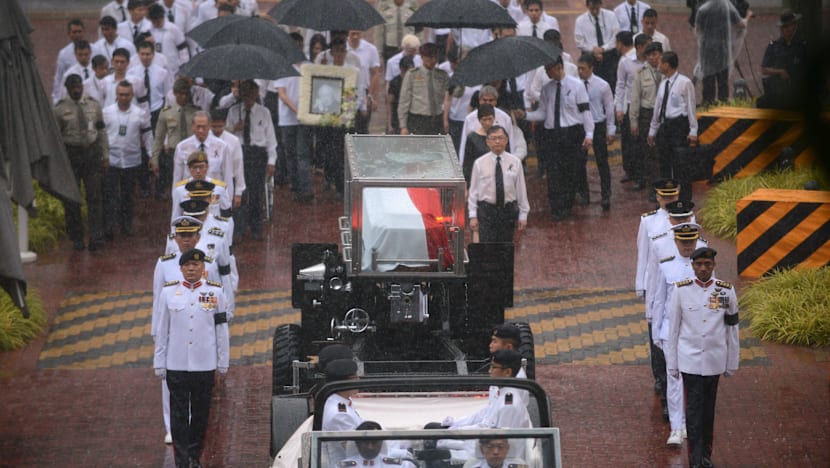
The body of Singapore's former prime minister Lee Kuan Yew is transferred atop a gun carriage as they leave Parliament House during a funeral procession in Singapore on March 29, 2015. Photo: AFP


Having risen through the ranks — all the way to the pinnacle — in the military, it was perhaps no surprise that Acting Education Minister (Schools) Ng Chee Meng identified a robust national defence, apart from a strong economy, as the foundation envisaged by Mr Lee Kuan Yew and the other founding fathers to underpin Singapore’s success.
And as the country enters its next phase, a third ingredient, a “strong Singapore heartbeat”, is needed to propel the nation forward, said Mr Ng, returning to a topic he had brought up during his maiden Parliamentary speech in January.
Mr Ng had stressed in the House the need to ensure unity in society and forge deep bonds of kinship in order to preserve Singapore’s inner strength and core.
During the interview with TODAY, Mr Ng noted that protecting Singapore’s security and having a robust economy go hand in hand in keeping Singapore successful. While some might have doubted the importance of national defence to a strong and prospering country, the former Chief of Defence Force noted that the current security climate has brought a realisation that Mr Lee had “never lost sight of”.





Mr Ng recalled a meeting with Mr Lee in 2010 at the Singapore Air Show. Mr Ng was then the Chief of Air Force while Mr Lee was Minister Mentor. He recalled Mr Lee’s curiosity and inquisitiveness about the operational details of the Republic of Singapore Air Force.
“You see that ... his core principle remains that Singapore needs a strong defence, but (Mr Lee) attempts to keep (himself) updated — from the changing context of technology to (military) relationships, to help him understand how to do things right.”
Citing the decision by Mr Lee and former Deputy Prime Minister Goh Keng Swee to establish the Singapore Armed Forces in 1965, Mr Ng said the founding fathers were aware of Singapore’s strategic vulnerabilities. “Singapore is vulnerable and there are no two ways about it,” he said.
Another astute decision in the nascent years, in Mr Ng’s opinion, was the move to invite multinational corporations to come to the Republic, instead of pursuing import substitution, which was commonly adopted by developing countries at that time.
Decades on, Singaporeans from all economic strata are enjoying the fruits of the country’s success. “Without a strong economy, how do you do social transfers? Without a strong defence, how do you have a robust economy?” Mr Ng said.
NG JING YNG