Wide-ranging impact on the whole nation
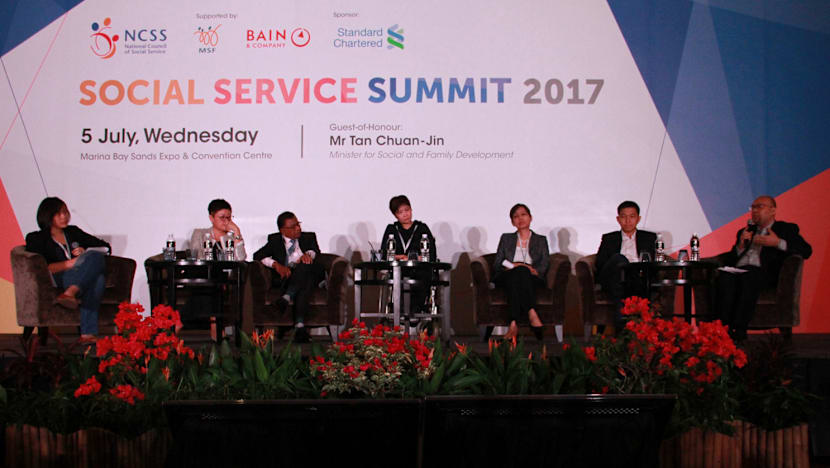
Panelists of the Sector Leaders Panel Discussions speaking at the NCSS Social Service Summit 2017 on July 5, 2017. Photo: Esther Leong/TODAY


SINGAPORE — The five-year road map for the social service sector that was unveiled by the National Council of Social Service (NCSS) yesterday is aimed at empowering individuals as well as encouraging innovation and collaboration.
Known as the Social Service Sector Strategic Thrusts (4ST), it was developed by a 21-member steering committee following consultations with about 1,000 stakeholders from the government and business sectors, the community and social enterprises.
Initiatives in the road map, launched at the Social Service Summit, include enhancing career and professional development pathways for those in the social service sector, sharing and integrating existing databases and forming partnerships to encourage social innovation through the use of technology.
Ms Anita Fam, co-chair of the 4ST steering committee and NCSS vice-president, said: “The 4ST road map will have wide and long-ranging impact, not just for vulnerable populations, but for the entire nation as a whole, in which every person is empowered to live with dignity in a caring and inclusive society.”
In his opening address at the summit, Minister for Social and Family Development Tan Chuan-Jin noted that the social service sector needs to nurture an “enterprising spirit”.
“Whenever we talk about efficiency, productivity, enterprise, some of us may start rolling our eyes at all these ‘economic ideas’, or (say) ‘our sector is very different’, but these are fundamental realities that affect every sector … So it is very important for us to embrace systems and processes, not to look at them as economic-speak, but to encourage all of us to do better.”
Mr Tan also said there is a need for social service organisations to think how they can support the individual, “rather than expect the individual to navigate the system”.