More rice for less methane? This Singapore lab is already seeing success with regional rice farmers
Rice cultivation has long been a notable contributor to global emissions. Singapore scientists are now trialling new methods that cut emissions while boosting income for farmers through better harvests.

This audio is generated by an AI tool.


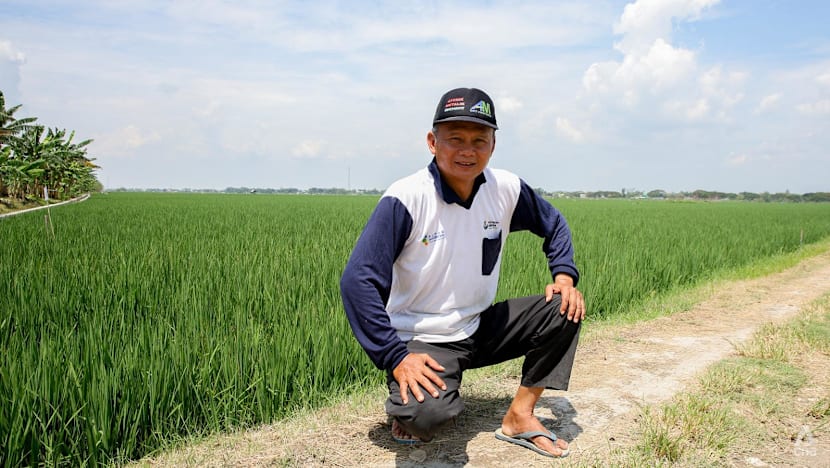
Mr Kasno, 55, was only a child when he started working in his parents' paddy fields in the Grobogan area in Central Java, in Indonesia.
That means he's had a front-row seat to observe how rice planting processes have evolved over decades.
The use of machinery has lightened once labour-intensive processes such as ploughing, harvesting and milling, making up for the growing manpower crunch as farmers' children migrate to urban centres seeking better careers.
The underlying traditional principles, though, have remained largely the same "according to our ancestors' methods", which involve keeping the fields flooded from seed planting to harvest.





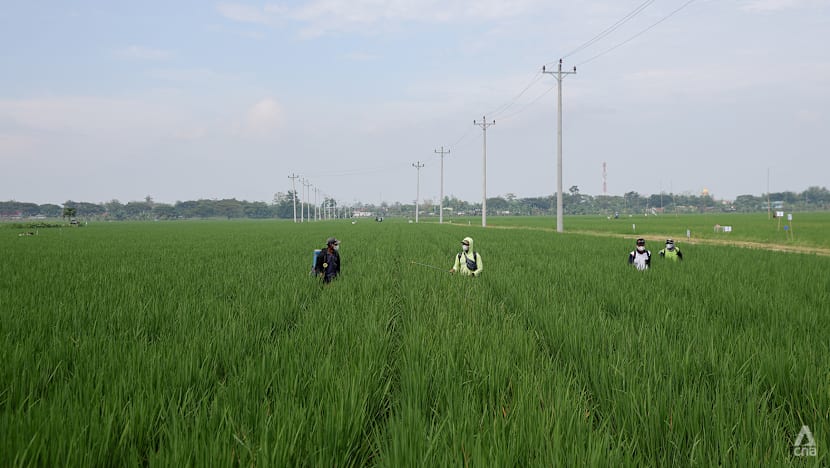
That is until September last year, when he and about 170 other rice farmers in Indonesia tried a different way of farming as part of a large-scale trial spearheaded by Singapore's Temasek Life Sciences Laboratory (TLL).
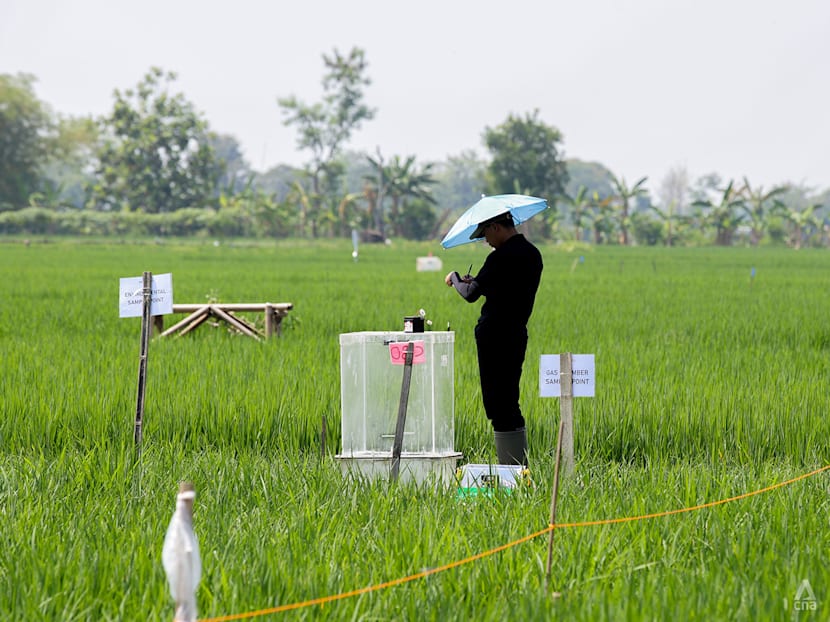
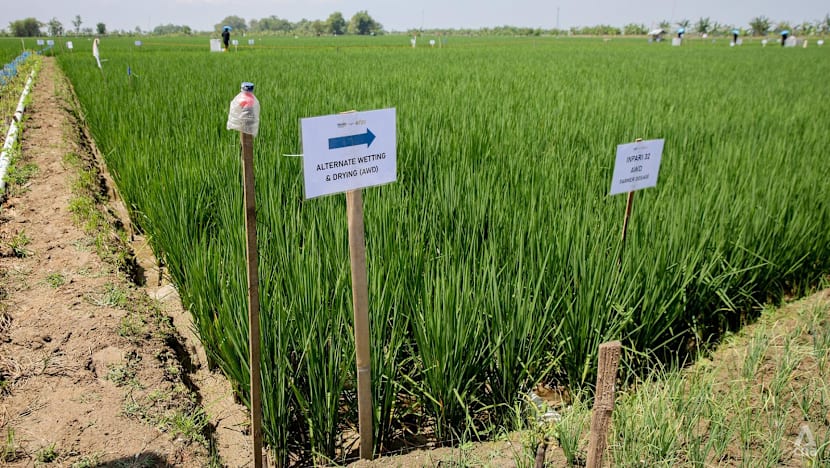
TLL scientists, with the help of local partners, introduced to the farmers a new method involving a different concoction of fertiliser, a more weather-resilient rice variety and a different irrigation method called alternate wetting and drying (AWD).
"Typically one hectare produces about six or seven tonnes of rice. With this TLL project, it went up to about eight or nine tonnes," Mr Kasno said during CNA TODAY's visit to the rice fields in April.
The farmers could see the positive impact for them immediately, given the reduced amount of water and fertiliser required by this method. At the same time, TLL is also aiming for something loftier: to cut the emission of methane from the rice production process.
CAN GROWING RICE PRODUCE LESS METHANE?
Methane is about 27 to 30 times more potent as a greenhouse gas than carbon dioxide, and rice cultivation has long been a notable contributor to global emissions.
The United Nations Food and Agriculture Organisation estimates that 600 million tonnes of methane is emitted annually, of which 60 per cent comes from human activity.
Of that figure, the rearing of ruminants like cattle or sheep account for about 32 per cent, followed by rice cultivation at about 8 per cent.
TLL's Decarbonising Rice Project received an environmental award at the World Economic Forum's Giving to Amplify Earth Action Awards in January last year.
Now the project is in large-scale trials in not only Indonesia but also Laos and India – all so far showing positive results in increasing rice yield and reducing the environmental impact.
Mr Peter Chia, TLL chief executive officer, said that the starting point for the team was "to place the farmers first".
Rather than pressuring farmers to adopt unfamiliar methods for climate intervention purposes, he said, TLL's focus was on improving their livelihoods by increasing their yields and income while lowering their inputs, thus achieving more savings and making the land more productive.
"The bonus really is the climate intervention (and) emission reductions – a consequence of what science can help make happen."
MORE RICE FOR LESS EMISSIONS
Rice is a staple for about half the global population, with demand expected to surge another 30 per cent by 2050, making it even more important to find ways of growing more rice while shrinking its carbon footprint.
Dr Ramachandran Srinivasan, senior principal investigator and lead for the project, said: "How do we control the environmental impact, while still feeding billions of people? That's one of our goals."
Rice plants can thrive in flooded plains, which is why farmers traditionally keep paddy fields flooded, partly to minimise weed growth.
However, this creates low-oxygen conditions in the soil that allow microbes to break down organic matter, producing methane gas which is then released through the rice plants.
The AWD method reduces the period of time where the low-oxygen condition in standing water is sustained, thereby cutting methane production.
It's not the only methane-reducing factor in TLL's low-carbon rice growing method.
Typically one hectare produces about six or seven tonnes of rice. With this project, it went up to about eight or nine tonnes.
For instance, rice plant genetics play a part. Dr Yin Zhongchao, a senior principal investigator in the Decarbonising Rice Project, said the plant roots produce organic secretion that the underwater microbes feed on and produce methane.
At the same time, oxygen in the root system can also suppress the production of methane. Breeding and picking the right variety of rice plant that has more oxygen in the root system can hence reduce methane production.
Dr Srinivasan said that existing local rice varieties were used across all locations in Laos, Indonesia and India in this large-scale trial to ensure the results are relevant to local farming conditions and practices.
"A TLL-developed Temasek Rice variety was also included in the Laos and Indonesia trials alongside two selected local varieties, allowing comparative evaluation under the same field conditions," he added.
Additionally, project manager Dr Goh Phuay Yee said that using the right amount of specially concocted fertiliser with added micronutrients will also help to increase the rice yield.
"As a holistic package, TLL is approaching this as a solution to bring better incomes to farmers and also, at the same time, mitigate greenhouse emissions and climate change," said Dr Goh.
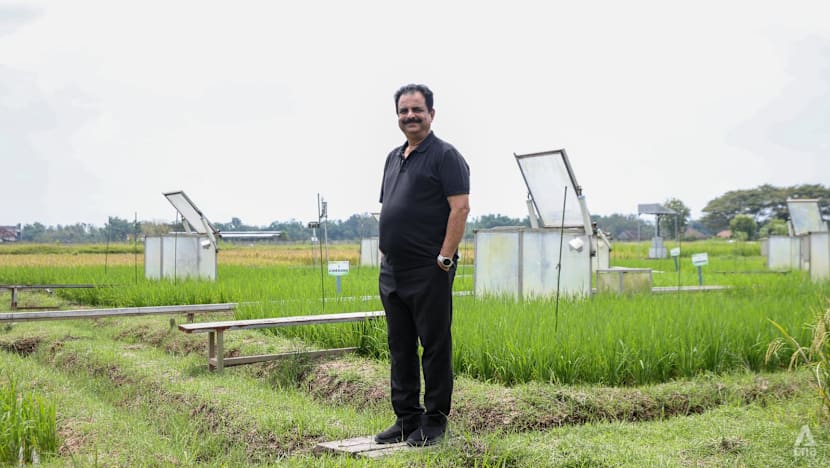
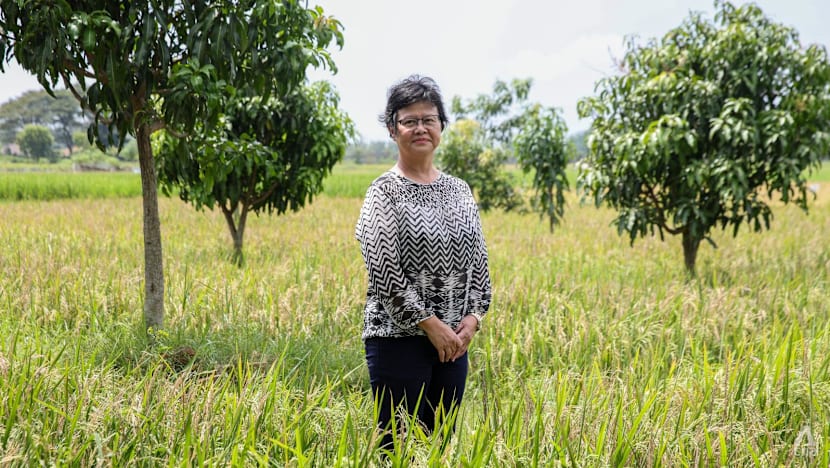
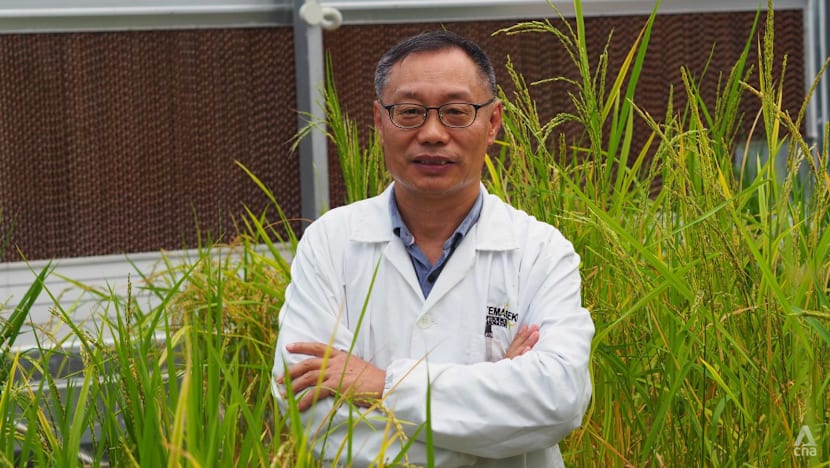
While TLL's underlying methodology is similar across trial sites, they adjust to account for the differing soil and weather conditions in each country.
The results have largely been positive across all three sites.
Greenhouse emissions and water usage were reduced by about a third across all locations, while rice yield went up by about 6 per cent for Indonesia, 10 per cent for India and 25 per cent for Laos.
FEAR OF FAILURE
Besides AWD, another method called drip irrigation has the potential to reduce greenhouse-gas production in rice farming more drastically.
"We have found around 86 per cent reduction in methane emissions using drip irrigation compared to 50 per cent in AWD, with no change in yield levels," says Dr Kins Varghese from TLL.
"But the problem and major difference, is the cost. In Indonesia, it will cost around US$10,000 (S$12,775) to implement in one hectare, compared to AWD's US$10," he said.
The high costs hence become a hindrance for farmers to take up the much greener irrigation alternative.
In the bigger scheme of things, the team pointed to getting farmers' buy-in as the major hurdles they had to overcome to reach this point of the trials.
As many rice farmers in Indonesia are smallholders, this meant having to get over 100 of them on board to eventually get the desired 100ha of land.
"Most of the farmers here are traditional. We are used to methods that we have inherited from our ancestors," said Mr Kasno. "Naturally, we were worried that changing the methods would lead to a decline or failure in harvest.
"But the team took time to meet us, explaining how their method would be better. The conversations took about one to two months before we could achieve a consensus."
Assisting TLL on the ground is agricultural technology company Rize, which tapped its vast network of rice farmers in Indonesia for this project.
Dr Sheetal Sharma from Rize said that one way to assure the farmers was to highlight how earlier small-scale trials have been successful.
What sealed the deal for farmers like Mr Kasno was that the project organisers had provided the rice seeds, pesticides and fertilisers for the farmers to start off with.
This essentially helped minimise upfront risks for them – and the returns were clear.
"In past harvests, we would see some of the rice plants yellowing over time. But with this new method and the special fertiliser, it's all green," said Mr Kasno.
Mr Supardi, chief of Desa Jatilor village where Mr Kasno and the other farmers live, also worked together with Rize to help get farmers on board with the programme.
"The first harvest season (using the new method) showed clear improvements compared to the years before, not only in terms of productivity (yield) but the quality of the plants and grains as well," said Mr Supardi.
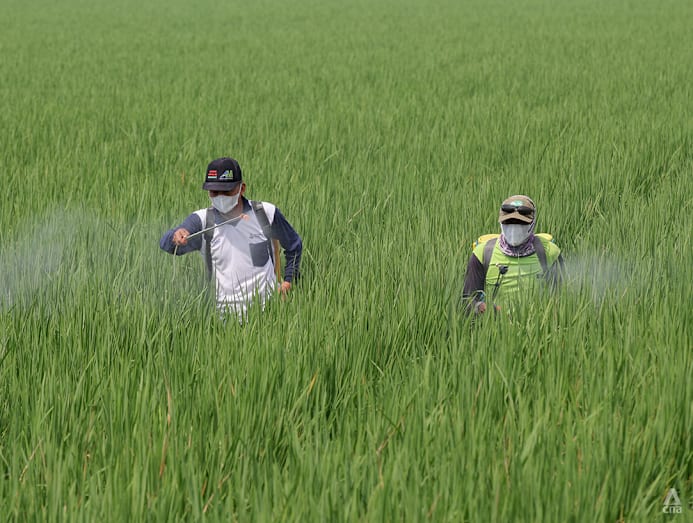
During CNA TODAY's visit to the fields, the scientists and farmers pointed out how the rice plants grown via TLL's method were greener and visibly denser than those planted by other farmers in the adjacent plot using the traditional method.
"Initially of course it was difficult to convince farmers because there were no results to be observed," said Mr Supardi. "After observation, the other farmers are not just open, but hopeful to get a chance to try the new method."
This bodes well for TLL as it moves to the next phase of the trial next year, which looks to scale production even further to produce 50,000 tonnes of rice. Eventually, they hope to reach one million tonnes.
DECARBONISING ALL FOOD
Philanthropy Asia Alliance (PAA), an initiative by Temasek Trust and one of the Decarbonising Rice Project's backers, hopes to see such low-emission rice widely accepted by the community.
"We want to make sure that the climate-friendly rice, (which is) less deleterious to the environment, will eventually be actually bought in supermarkets," said PAA's CEO Shaun Seow.
Rize is also registering with the Indonesian national registry network platform for carbon offset credits, said Dr Sheetal, which should go a long way towards further boosting farmers' income.
"Once that is done, we aim to share around 70 per cent of the revenue that we make from the credits with the farmers."
TLL's CEO Mr Chia attributed the successes of the Decarbonising Rice Project so far to the scientists' painstaking research work, a network of partners pitching in to work on "hard problems" together and a common vision that the long-term benefits "should accrue back to the people".
He also sees scope for extending this beyond rice growing to other crops and aquaculture.
On the significance of such a project for Singapore, Dr Srinivasan said: "Singapore, though a non-agricultural country, is well-positioned as a regional hub for biotechnology, agri-food innovation and sustainable agriculture research."
Multi-sector collaborations and partnerships like this project, he said, create a more stable and sustainable regional food system for Singapore consumers, as well as opening doors for the country to stronger trade relationships with rice-producing nations across Asia.
In the meantime, rice farmers who are already on board this programme are glad to be among the first to jump on the green bandwagon.
"We're all happy that we learnt a lot from this process, and learnt a new method that helps to improve our yields," said Mr Kasno.
"At the same time, we're so grateful that we are also able to play a small part to mitigate global warming and make the world a better place."