

S’pore and Rwanda share the same governance model
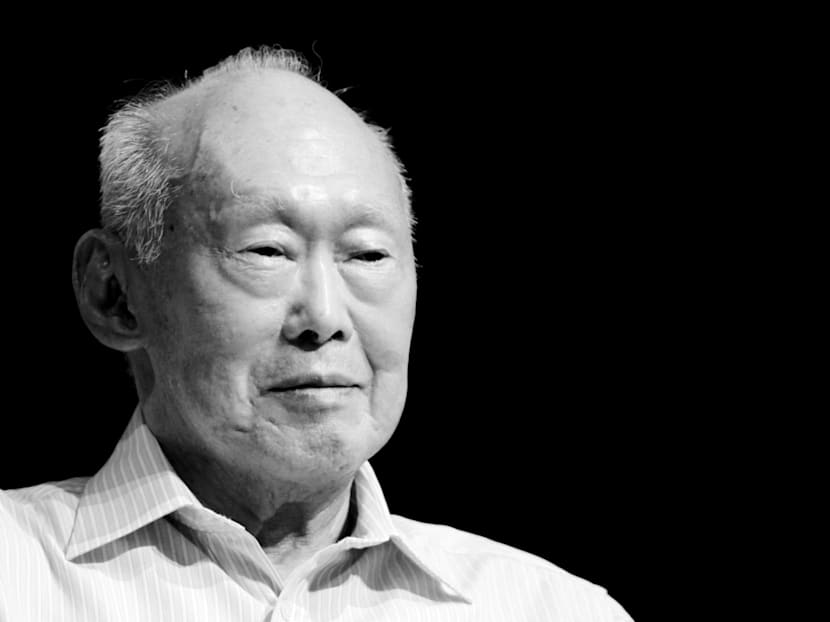
The late Mr Lee Kuan Yew is regarded as an inspiration in Rwanda because of his governance style. Photo: Reuters
A few months ago, I attended a seminar titled “The African Mindset: An Indian Perspective”, organised by the NTU-SBF Centre for African Studies. The guest speaker raised the point of how India had a long history with Africa through the existence of an Indian Diaspora in Africa, particularly in southern and eastern Africa.
The speaker also reminded the audience that Mahatma Gandhi started his human rights civil actions in South Africa before becoming an activist in India. The Gandhi connection has contributed to making Africa “closer” to the Indian mind and heart.
A seminar participant raised a comment from the floor that Singapore, unlike India, had no diaspora in Africa, and neither had historical links nor a “Gandhi”. This, in his view, was an obstacle to understanding and doing business with Africa.
Does Singapore really have no historical links with Africa?





Singapore is made up of many “old” migrant communities. How can a nation whose people are made up mainly of migrant diaspora communities have no community links with Africa?
The participant’s remark got me reflecting on my first visit to Rwanda back in 2005. I flew via Nairobi, Kenya and from there to Kigali, Rwanda. In Nairobi, next to the hotel I stayed in, was “Al-Junied Mosque”, named after the same Al-Junied family that has been in Singapore since the early 1800s.
The Al-Junieds were wealthy merchants in Palembang, Indonesia who set up base in Singapore immediately after Stamford Raffles set up a trading post in Singapore in 1819.
The Al-Junieds hailed from Hadramaut, Yemen. Many Hadrami merchant families followed in the Al-Junieds’ footsteps in setting up base in Singapore.
As part of the Singapore Arab-Hadrami community myself, I am indeed very aware of the historical and current family networks between the Singapore Hadrami community and the Hadrami communities in East Africa. The “Cape Malays” of Cape Town are an evident reminder of the historical linkages.
The Legacy of Lee Kuan Yew and Rwanda
Apart from these ethnic linkages, Singapore has another important asset, the legacy of Mr Lee Kuan Yew. This is particularly evident in Rwanda. Singapore is a role model for Rwanda and its Vision 2020 drive is to emulate Singapore; as such, Rwanda refers to itself as “the Singapore of Africa”!
After the demise of Mr Lee, when President Paul Kagame of Rwanda was asked whether he regarded the former as a role model, he said: “Evidently an inspiration. A great man, driven by great principles and who achieved great things with a small country. Lee Kuan Yew has transformed Singapore and the lives of his people. This is also what we are doing in Rwanda.”
The “Development first, Democracy later” Singapore model has served as a governance standard for a number of African countries including Nigeria, Rwanda and Ethiopia.
Mr Lee has argued that Western-style democracy might not be suitable for all nations, and that “young” countries need stability and economic development before they can afford the luxuries of (liberal) democracy and (Western-style) personal liberties.
This authoritarian, yet economically successful, style of governance appeals to African leaders. Singapore has successfully managed its stability and economic development with the gradual relaxation on (liberal) democracy and (responsible) freedom of speech.
President Kagame has been, for years, drawing parallels with Singapore. On the surface, Rwanda seems to have little in common with Singapore. Rwanda is a land-locked state remotely nested in the mountains of Central Africa, while Singapore is an island situated on a busy sea lane, making it naturally predisposed to trading.
However, both countries have a relatively small population; Rwanda’s 12 million is slightly double Singapore’s. Both countries started their economic transformation from a low per capita GDP: Singapore’s was US$516 (S$694) — adjusted for current dollar values — in 1965 at independence, while Rwanda’s was US$638 in 2013.
Rwanda tries to cultivate Singapore’s expertise on everything from urban planning to the police. Singapore and its work ethics and efficiency are highly regarded in Rwanda.
Apart from the involvement of Singapore government-linked companies in Rwanda, currently there are Singapore investors in logistics, as well as poultry farming. A Singaporean entrepreneur is also packaging Rwandan honey. Singapore’s resolute focus and determination is evident in Rwanda. Singapore banned chewing gum, Rwanda banned plastic bags for over a decade. Kigali, the capital of Rwanda, is clean and tidy.
Rwanda embraced English (in place of French) and the government officials and entrepreneurs display a distinctly Singaporean attitude and vigour as they tout their country’s business-friendly philosophy. Rwanda has been successful in curbing corruption and cultivating the rule of law.
Harvard Business School Professor Michael Porter has been quoted in Harvard Business Review as saying: “I also think that Rwanda is unique, in my experience, in (the) government being able to actually get things done ... the government is very disciplined, very focused on plans. Very focused on accountability.” It does sound like he could be talking about Singapore!
In conclusion, India has the modern-day legacy of Mahatma Gandhi for its connections and comfort with Africa. Singapore has the legacy of its founding father Mr Lee Kuan Yew and his ideology of governance to embrace the welcoming arms of Rwanda and Africa.
ABOUT THE AUTHOR:
Dr Ameen Talib is a senior lecturer at the School of Business, SIM University.




