Hantavirus: Spread by rodents, potentially fatal, with no specific cure
There are no vaccines or specific medications to combat hantaviruses, which means that treatment consists solely of trying to relieve the symptoms.
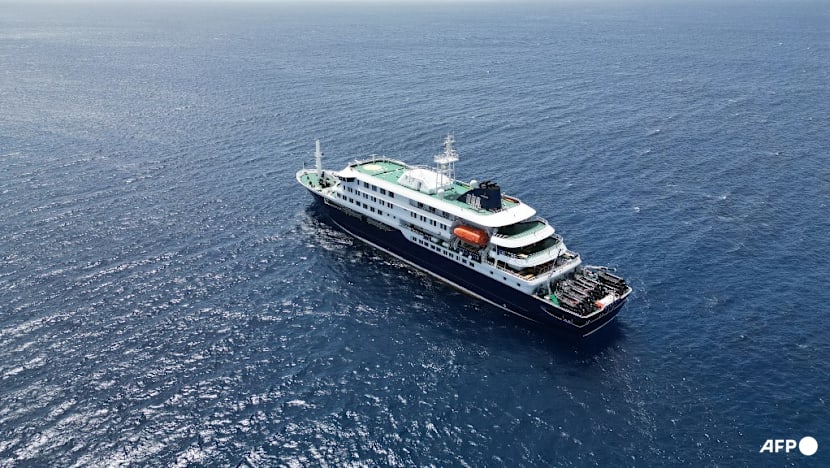
An aerial picture showing a general view of the cruise ship MV Hondius, stationary off the port of Praia, the capital of Cape Verde, on May 4, 2026. (Photo: AFP)
Two Singapore residents were on board a cruise ship, which has been the centre of a suspected Andes hantavirus outbreak that has killed three, authorities said on Thursday (May 7).
Dutch cruise operator Oceanwide Expeditions had confirmed on Monday that it was dealing with "a serious medical situation" on board the MV Hondius, travelling from Argentina to Cape Verde.
One of the individuals, a 67-year-old Singaporean man, arrived in Singapore on May 2, while the other, a 65-year-old Singapore Permanent Resident, arrived on May 6.
Both had disembarked from the ship and were also on the same flight as a confirmed hantavirus case on Apr 25, following which the infected person died.





According to Singapore's Communicable Diseases Agency (CDA), the Andes hantavirus can cause breathing difficulty and progress rapidly to shock and death.
There are no vaccines or specific medications to combat hantaviruses, which means that treatment consists solely of trying to relieve the symptoms.
HANTAVIRUSES
Each hantavirus is associated with a specific rodent reservoir species, in which it can cause long-term infection without apparent illness.
Only a few hantavirus species are known to cause human disease.
The virus is named after the Hantan River in South Korea, where more than 3,000 troops fell seriously ill after becoming infected with it during the 1950 to 1953 Korean War, Switzerland's FOPH health ministry says.
TRANSMISSION
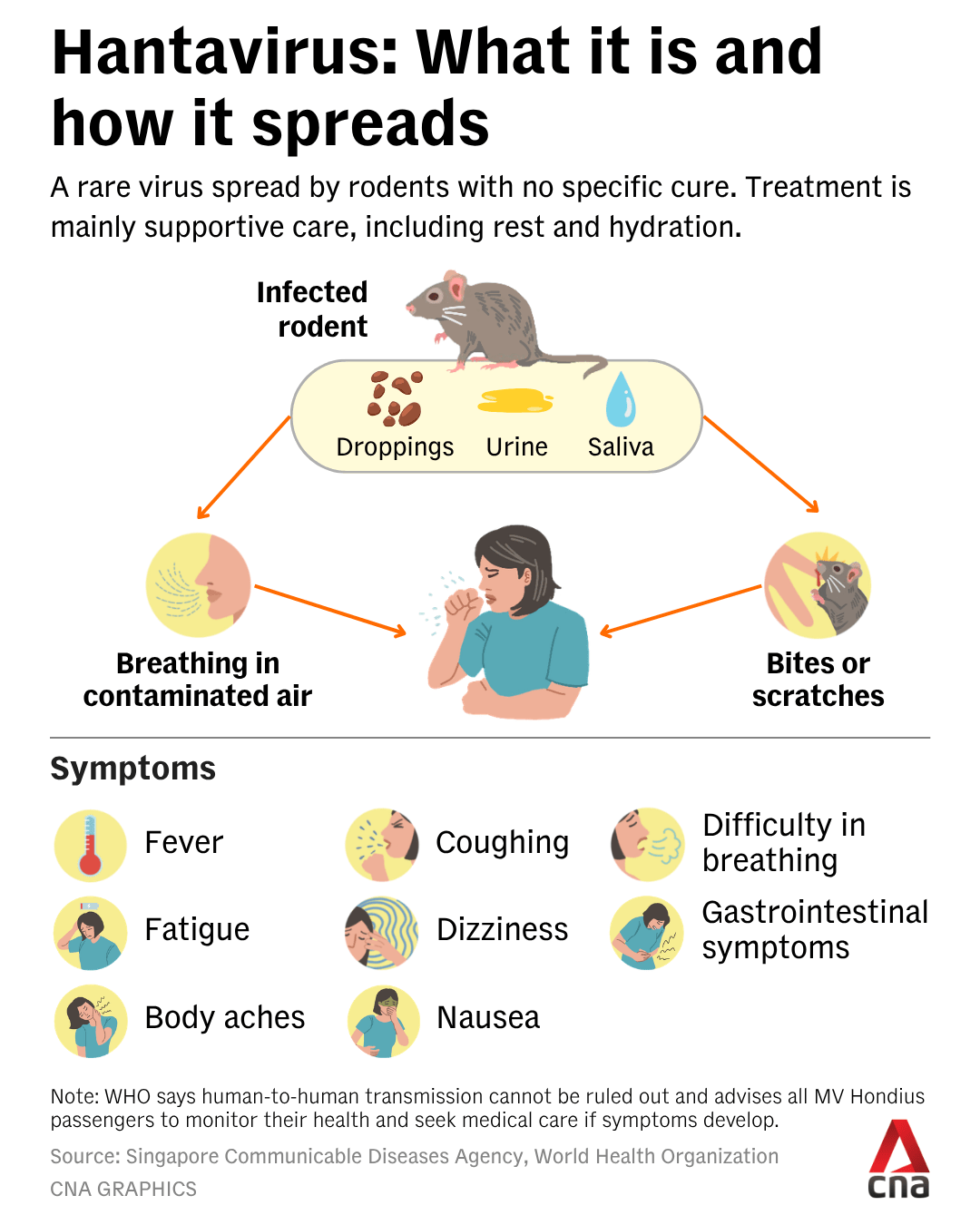
Transmission of hantaviruses to humans happens when people breathe in dust contaminated with urine, droppings or saliva from infected rodents, especially when cleaning or disturbing areas with rodent activity, CDA said.
To reduce the risk of infection, those travelling to areas with known hantavirus transmission should avoid contact with rodents and contaminated areas, keep accommodation areas clean, use a damp cloth or mop to clean surfaces instead of dry sweeping, maintain good personal hygiene and avoid close contact with people who are unwell.
The Andes hantavirus, found in parts of South America, has been associated with human-to-human infection, CDA said.
"The mode of transmission for the cases linked to the MV Hondius remains under investigation," CDA added.
The agency also cautioned that the World Health Organization (WHO) has indicated that human-to-human transmission cannot be excluded and has advised all people who have been on the MV Hondius to monitor their health and seek medical attention promptly if experiencing symptoms.
The WHO's epidemic preparedness chief Maria Van Kerkhove said on Monday that based on previous outbreaks, "the overall risk to the public is low".


DIAGNOSIS
The WHO says early diagnosis "can be challenging" as the symptoms resemble several other respiratory illnesses, such as COVID-19.
Suspected cases can be confirmed through various laboratory tests, according to the WHO, including through "the presence of hantavirus-specific IgM antibodies".
Van Kerkhove said the WHO was working to understand the source of exposure through epidemiological investigations, along with contact tracing and lab tests.
SYMPTOMS
Symptoms of infection with the Andes hantavirus typically include fever, body aches, fatigue, gastrointestinal symptoms and difficulty breathing, CDA said. This may progress rapidly to shock and death.
"In the Americas, infection has been known to lead to hantavirus cardiopulmonary syndrome (HCPS), a rapidly progressive condition affecting the lungs and heart," according to the WHO.
In Europe and Asia, hantaviruses have been known to cause haemorrhagic fever with renal syndrome (HFRS), which primarily affects the kidneys and blood vessels, the WHO added.
In HCPS, the disease may progress rapidly to cough, shortness of breath, accumulation of fluid in the lungs and shock, says the WHO, while with HFRS, later stages may include low blood pressure, bleeding disorders and kidney failure.
CDA said that the two men, should they test negative, will be quarantined for 30 days from the date of last exposure to the virus, "as the majority of hantavirus cases are expected to become symptomatic within this period".
Testing will be conducted again before release from quarantine, and the men will then undergo phone surveillance for the remaining monitoring period of 45 days from the date of last exposure, which is the maximum incubation period for hantavirus exposure, the agency added.
.jpg?itok=cAFlReEz)
CASE NUMBERS, FATALITY RATE
Worldwide, it is estimated that from 10,000 to over 100,000 infections occur each year, with the largest burden in Asia and Europe, says the WHO.
HFRS accounts for many thousands of cases annually in East Asia, particularly in China and South Korea.
The case fatality rate is between less than 1 per cent and 15 per cent in Asia and Europe, the WHO says.
Despite the much lower incidence, HCPS has a case fatality rate commonly between 20 and 40 per cent, says the WHO, making it a disease of major public health concern.