Why Singapore’s fuel supply holds steady but not prices, and when cost pressures may ease
The global chokepoint in the Strait of Hormuz is having a ripple effect on everyday people and everyday life — from drivers to school bus operators, from air travel to grocery shopping. CNA’s Talking Point dives into the rising fuel prices.
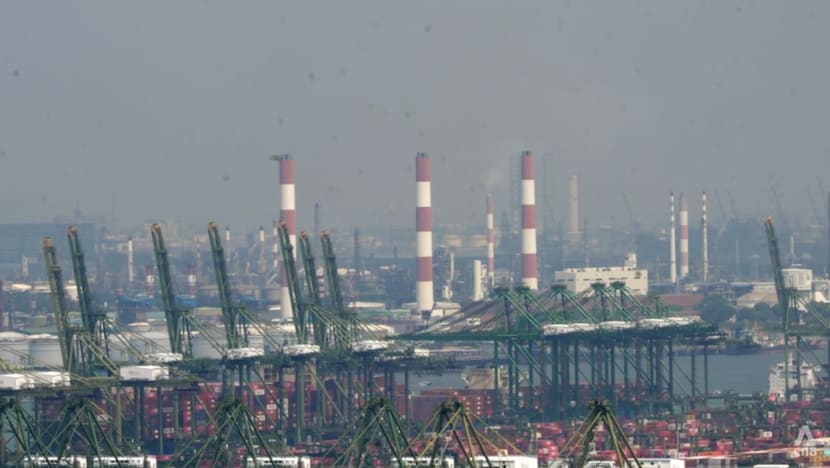
The fuel crisis has not led to shortages in Singapore, largely because it is a major oil trading and refining hub. But prices have risen.

This audio is generated by an AI tool.


SINGAPORE: Not enough — that has been a refrain of cabbies, private-hire vehicle drivers and school bus operators since the government stepped in to provide financial support to them because of rising fuel costs.
A one-off S$200 (US$157) cash payout has been given out from the end of last month to private-hire and taxi drivers. But it “doesn’t go a very long way”, said private-hire driver Norman Then, 38.
“The S$200 probably offsets only a month or even less of a driver’s overall fuel cost increase.”
Even with taxi and ride-hailing companies offering fuel discounts of around 30 per cent or more, costs have still risen.





“The discounts don’t shield you from the overall cost increase,” he said. “If the cost goes up for everybody, so does it for us.”

What has helped to offset the cost increase is the passenger fuel surcharge temporarily nearly doubling to 90 cents per trip for him, which means higher fares.
For some drivers, however, driving more to make up the difference is not an option.
School buses, for instance, operate on fixed routes and hours. They also rely largely on diesel, whose retail prices have risen more than 75 per cent, whereas petrol prices have increased by about 20 per cent.
With disruptions in the Strait of Hormuz choking off the supply of Gulf crude, many Asian refineries — built to maximise diesel output from Middle Eastern oil — are extracting lower yields from replacement supplies from the Americas or West Africa.
WATCH: Why prices are rising across Singapore — and it starts with fuel (22:08)
Demand from transport and logistics operators, meanwhile, remains high. According to Singapore School Transport Association chairman Edmund Lee, operating costs have risen by 30 to 40 per cent of revenues, outpacing the government’s temporary financial support of 13 per cent.
“All the bus vendors … are suffering,” said the 53-year-old. “We can (add) a surcharge, but the thing is, (if we do so), some parents will maybe withdraw (their children). … So the bus will not (be) fully occupied.”
Lee, who runs a company with 60 school bus drivers transporting about 2,000 students daily, said some operators may need a business loan to sustain their running costs.
He called for further support, such as waivers of the foreign worker levy, parking and Electronic Road Pricing charges and diesel taxes. If not, he warned, some smaller operators may have no choice but to quit “because they can’t survive”.

The impact of rising fuel costs does not stop on the roads. In the first of a two-part special, CNA’s Talking Point looks at what could be next and when relief might come.
BRACE FOR THE GROCERY BILL
Further up the chain, jet fuel prices have more than doubled since the war on Iran started, so airfares are rising.
“Typically, now on any given flight anywhere around the world, (fares have increased) by about 30 (to) 40 per cent, depending on which class you’re sitting in,” aviation analyst Shukor Yusof observed.
Air freight prices have also gone up, in some cases by two to four times the pre-war rates, said Sean Wong, the supply chain director of food supplier Phoon Huat. At the same time capacity has tightened as Gulf carriers cut back on flights.
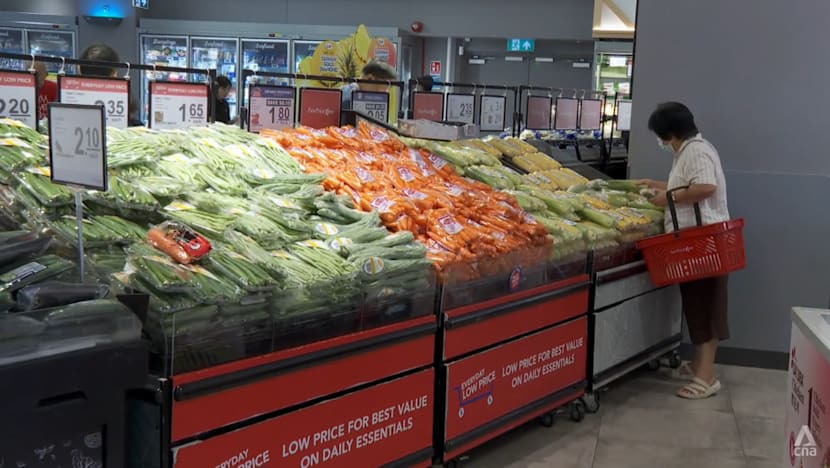
Affected food items include cheeses — he expects prices to start increasing by 15 to 20 per cent.
Some ingredients are being pulled in different directions. Vegetable oils, for example, are increasingly being diverted to biofuel production. “In many countries, up to 20 per cent of petrol … at the station has sunflower oil inside,” he highlighted.
“Instead of selling it to consumers to use at home, (a lot of producers) would rather sell it to a refinery or to a petrol station because they’re going to get better prices for their oil.”
As a result, prices of seed oils have already risen by about 5 to 10 per cent, he observed.

Similarly, cane sugar can be turned into ethanol, and more of it is being channelled into fuel than before. He has seen prices rise by 3 to 5 per cent so far and expects another 5 to 10 per cent increase in the coming months.
As a third of the world’s traded fertiliser passes through the Strait of Hormuz, the reduction in supply now will also affect crops such as wheat, grown for flour and other products, including feed.
“For every 5 per cent decline in fertiliser, … we have a 2.5 per cent decline in (wheat) yield,” said Wong, who is seeing a 3 to 5 per cent increase in wheat futures.
He expects the impact to be more gradual in other food categories. For example, it may take six to nine months for meat prices to rise.

“It’s what we call a second-order effect, where we see an increase in the price of animal feed, and that then trickles into the increase in the cost of meat,” he said.
Packaging is not spared either. With plastics generally derived from oil, Phoon Huat has seen these costs rise by at least 15 per cent, and further increases are expected.
“Everything … has come (to us) either by plane, by sea or by truck,” Wong added. “Given the fuel oil prices, we expect everything to be impacted.”
SECURING FUEL SUPPLY
The supply shock has not, however, led to a fuel shortage for Singapore, largely because it is a major oil trading and refining hub.
Unlike some of its Asian neighbours, which depend heavily on the Middle East, Singapore draws its imports of gas and crude oil from a wider range of sources, including the Americas and Africa.
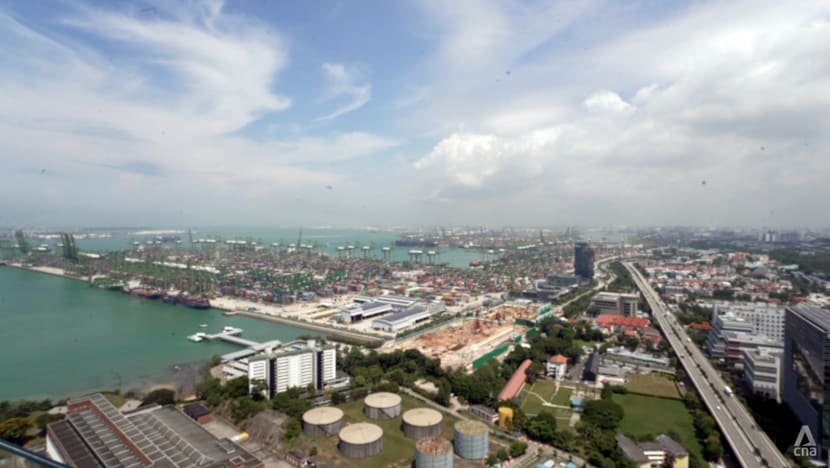
There is also flexibility in the way fuel is sourced. Diesel, for instance, can be imported directly or produced from crude at refineries here, which means more options when supply from one source is disrupted.
If there is a crunch, Singapore’s contractual arrangements with suppliers based here also give it priority access.
“In fact, for our gas contracts, the (power generation companies) do have prearranged contracts … to acquire additional fuel when we need,” said Minister of State for Trade and Industry Gan Siow Huang.
Finally, Singapore maintains reserves that can last for months, covering natural gas, diesel and other refined products, such as aviation fuel and liquefied petroleum gas. But there has been no need to fall back on this line of defence yet.
LISTEN: Understanding oil stockpiling and pricing strategies (11:26)
“We’re seeing a healthy inflow of oil and gas into Singapore, which allows us to sustain our needs without dipping into our reserves,” confirmed Gan, who is in the Ministry of Trade and Industry team responsible for Singapore’s energy resilience.
Still, the system depends on continued global flows, which is where the risks lie. “We’re watching … how other countries are responding,” she said. “Perhaps some countries, out of their own self-interest, might start curbing exports of oil and gas.”
To mitigate the risk, Singapore has been working on bilateral agreements to secure essential supplies. Last week, Singapore and New Zealand signed the world’s first legally binding pact to keep critical goods, including fuel, flowing even during crises.
For now, the problem is not the supply flow but the prices, Gan noted. “We aren’t endowed with our own natural gas or fuel or oil, so we have to import every drop.
“It means that we’re also subject to global prices.”


TURNAROUND UNLIKELY THIS YEAR
Fuel costs are expected to remain elevated throughout the year.
About 10 million to 11 million barrels per day of crude oil — roughly 10 per cent of global demand — are temporarily no longer in production. Refineries in the Middle East have also been damaged. Resuming these operations will take time.
“Recovery isn’t a quick snap of the finger,” cautioned Sparta Commodities senior oil market analyst June Goh, who reckoned it would take six to 12 months after the war ends.
“We’re still at war, so nobody can predict how long that will take as well.”
Also, not all fuels will recover at the same speed. Petrol would be the fastest as demand can be reduced through behavioural changes such as driving less or working from home.

Jet fuel may follow as airlines cut flights and travellers scale back discretionary travel. Diesel, however, is likely to remain under pressure. Its wide use across industries means demand is hard to cut even when prices rise.
Against that backdrop, the government’s approach is unlikely to shift towards broad-based fuel subsidies.
“Those who drive bigger vehicles or … drive more would benefit more (from such subsidies),” Gan said. “That may not necessarily be the fairest way of distributing the government resources.”
The focus is on “targeted support” instead. “We’ve been in close touch with companies and the various groups that are affected,” she said, noting that there have been a few requests and suggestions. “We’re ready to do more.”

While acknowledging the strain on school bus owners, private-hire drivers and other platform workers, she emphasised the importance of cost-sharing. “Consumers also, I think, have a part to play in bearing the price increase,” she added.
What the government also wants is healthy competition among retailers so that petrol prices, for instance, are reflective of demand and supply.
“The Competition and Consumer Commission of Singapore does regular surveillance of these companies to make sure that there’s no anti-competitive behaviour,” she highlighted.
Watch this episode of Talking Point here. The programme airs on Channel 5 every Thursday at 9.30pm.